
Uncategorized
Is Hydrafacial for Dehydrated Skin Worth It?
May
Skin can look shiny, feel tight, and still be dehydrated. That mismatch is often what brings people in for treatment – makeup sits unevenly, fine lines look sharper by midday, and no amount of moisturizer seems to create that smooth, rested glow. In cases like these, hydrafacial for dehydrated skin is often considered because it addresses more than surface dryness alone. It focuses on cleansing, exfoliation, extraction, and hydration in one treatment, which can be especially helpful when the skin barrier feels fatigued, congested, or out of balance.
Why dehydrated skin is often misunderstood
Dehydrated skin is not the same as dry skin. Dry skin is a skin type that lacks oil, while dehydrated skin is a condition marked by a lack of water. You can have oily skin, acne-prone skin, or combination skin and still be dehydrated.
This distinction matters because the wrong approach can make the problem worse. Rich creams alone may not fully correct dehydration if dead skin buildup, clogged pores, or inflammation are preventing proper absorption. On the other hand, aggressive exfoliation can leave skin feeling smoother for a day or two but more reactive afterward. The best treatment plan usually balances renewal with barrier support.
In a city climate that combines air conditioning, humidity, sun exposure, and frequent cleansing, dehydration is common. It often shows up as dullness, tightness after washing, rough texture, makeup pilling, and a crepey look around the eyes or mouth. For some patients, it also makes pores appear more obvious because the skin around them lacks plumpness.
How hydrafacial for dehydrated skin works
A Hydrafacial is designed to treat several issues in a single session. Rather than relying on one step, it uses a sequence that clears away buildup while delivering hydration back into the skin. For dehydrated skin, that sequence can be especially useful because hydration tends to perform better when the surface is clean, smooth, and less congested.
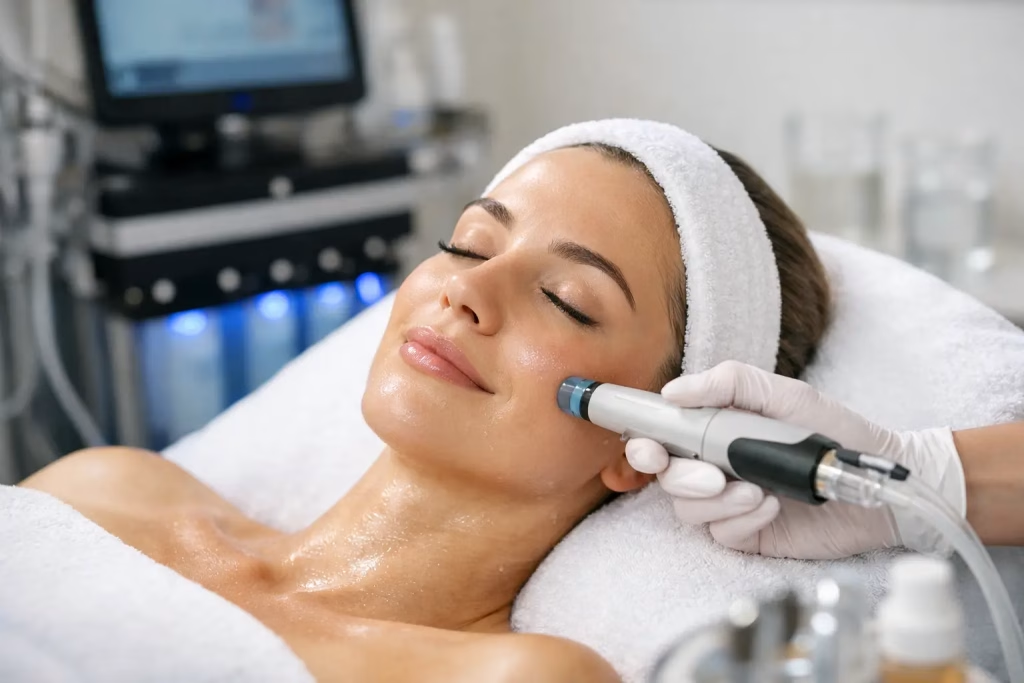
The treatment generally begins with gentle cleansing and exfoliation to remove dull, dead skin cells. This is followed by a painless vortex-style extraction step that helps lift debris from pores without the squeezing and trauma that some traditional facials can involve. Hydrating serums are then infused into the skin.
The appeal is not simply that the skin feels refreshed afterward. It is that the skin is being treated in a way that is both active and controlled. For patients who want visible improvement without the downtime of more intensive resurfacing, this makes Hydrafacial a strong option.
What it can improve
When chosen appropriately, hydrafacial for dehydrated skin can help improve dullness, rough texture, superficial congestion, and that tight, tired appearance that often comes from a compromised moisture balance. Many patients also notice that skin looks clearer and more reflective after treatment, with makeup applying more evenly.
It may also soften the look of fine dehydration lines. These are not the same as deeper expression lines or age-related folds, but they can make the face look drawn and less vibrant. By restoring hydration and refining the skin surface, the complexion often appears fresher quite quickly.
What it does not do
A Hydrafacial is not a substitute for every skin concern. If dehydration is being driven by a severely impaired skin barrier, eczema tendencies, overuse of retinoids or acids, or significant inflammation, the skin may first need a calmer, reparative approach. Likewise, if the main issue is skin laxity, pigmentation, acne scarring, or deep wrinkles, Hydrafacial may be only one part of a broader treatment journey.
This is where tailored care matters. A treatment can be excellent and still not be the complete answer.
Who is a good candidate?
Hydrafacial tends to suit a wide range of skin types, including busy professionals who want a polished result with little interruption to their schedule. It is often a good match for people whose skin feels dehydrated but also congested, or for those who want maintenance between more intensive doctor-led treatments.
It can be particularly appealing before events because the skin usually looks smoother and more luminous without the peeling or social downtime associated with stronger resurfacing procedures. For men and women alike, it offers a refined form of skin maintenance that feels results-oriented rather than indulgent for its own sake.
That said, suitability still depends on the skin’s current condition. Highly sensitized skin, active rashes, certain infections, or recent procedures may call for postponement or modification. In a medically guided setting, this evaluation is part of protecting results as much as protecting the skin.
What a session typically feels like
One reason Hydrafacial remains popular is that it is comfortable. Most patients describe the treatment as cool, cleansing, and satisfying rather than intense. There is a sense of thoroughness to it – the skin feels deeply cleaned, then replenished.
Afterward, many notice immediate softness and a cleaner, brighter look. The complexion often appears more hydrated on the same day, although the degree of visible glow depends on the baseline condition of the skin. If the skin has been severely neglected, dehydrated, or stressed, it may take a few sessions and a better home routine to achieve more stable improvement.
How long results last
This depends on why the skin is dehydrated in the first place. If dehydration is mainly due to travel, stress, inconsistent skincare, or temporary environmental exposure, results may hold nicely with proper maintenance. If it is tied to chronic barrier disruption, acne treatments, frequent exfoliation, or lifestyle habits, the skin can revert more quickly.
That is why experienced clinics rarely frame hydration as a one-time fix. Healthy skin is usually built through consistency. Regular treatments, paired with the right cleanser, moisturizer, and sun protection, tend to produce the best longer-term outcome.
When to combine Hydrafacial with other treatments
For some patients, Hydrafacial works beautifully on its own. For others, the smartest plan is combination care. Dehydration does not always exist in isolation. It often sits alongside enlarged pores, redness, fine lines, pigmentation, or mild textural irregularities.
In those cases, Hydrafacial may be used as a preparatory or maintenance treatment within a larger aesthetic program. For example, if the skin is congested and dehydrated, it can help optimize the skin before other rejuvenating procedures. If the skin is healing from a more intensive course of treatment, it may also support ongoing skin quality when timed appropriately.
In a premium clinical setting such as Kelly Oriental Aesthetic Clinic, that kind of treatment planning is where the difference is felt. The value is not only in the technology itself, but in knowing when to use it alone, when to pair it, and when to choose something else entirely.
How to get better results after your appointment
Post-treatment care is straightforward, but it matters. The skin tends to respond best when you avoid over-exfoliating for several days and keep your routine focused on hydration and barrier support. Gentle cleansing, a well-formulated moisturizer, and daily sunscreen are usually the essentials.
If your current skincare lineup includes multiple active ingredients, it may be wise to reintroduce them gradually rather than all at once. Dehydrated skin often benefits from restraint. More products do not always mean better skin.
It also helps to pay attention to habits outside the bathroom cabinet. Long hours in air-conditioned environments, inadequate sleep, frequent hot showers, and over-cleansing can quietly undermine results. A treatment can reset the skin, but daily habits help preserve that reset.
Is hydrafacial for dehydrated skin worth it?
For the right patient, yes. It can be an elegant, effective way to restore comfort, smoothness, and visible freshness to skin that feels depleted. The reason it appeals to so many patients is that it offers immediate refinement while still fitting into a modern, time-conscious lifestyle.
But the real answer is more nuanced. If your skin is mildly to moderately dehydrated and also dull or congested, Hydrafacial can be a very worthwhile choice. If your dehydration is part of a more complex skin issue, it may still help, but usually as one element of a personalized plan rather than the entire solution.
The best aesthetic decisions are rarely about chasing the most popular treatment. They are about choosing the one that suits your skin as it is now, with the right level of expertise behind it. When hydration is approached thoughtfully, the result is not just glow – it is skin that feels balanced, comfortable, and quietly confident again.
