
Uncategorized
Skin Booster vs Filler: What to Choose
A patient sits down for a consultation wanting to look fresher, smoother, and less tired – but not obviously “done.” That is usually where the skin booster vs filler conversation begins. Both are injectable treatments, and both can improve the way skin looks, yet they serve very different purposes. Choosing well is less about what is trending and more about what your face, skin quality, and goals genuinely need.
In a premium aesthetic setting, this distinction matters. The best outcomes rarely come from chasing a single product. They come from understanding whether the concern is dehydration, crepey texture, dullness, early fine lines, or actual volume loss and contour changes. Those are not the same issue, so they should not be treated as if they are.
Skin booster vs filler: the core difference
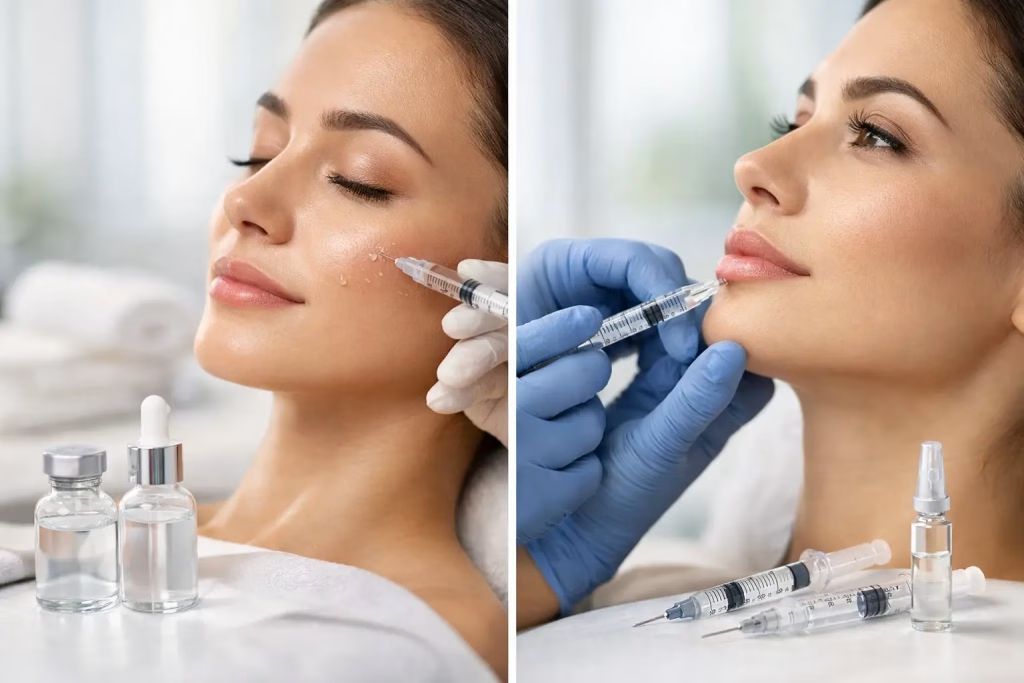
The simplest way to understand skin booster vs filler is this: skin boosters improve skin quality, while fillers restore or create structure. Both may contain hyaluronic acid, but the way they behave in the skin is very different.
Skin boosters are placed more superficially and are designed to improve hydration, elasticity, and overall radiance. They do not typically reshape the face. Instead, they help skin appear smoother, more refined, and better supported from within. Patients often notice a rested glow rather than a dramatic change in facial contours.
Fillers, by contrast, are used to replace lost volume, define features, and support areas that have started to flatten or sag. Think cheeks that have hollowed, lips that need shape, or nasolabial folds that have deepened with age. Filler has more structure and projection. It is about architecture, not just skin finish.
That distinction is why one treatment is not automatically better than the other. They are simply answering different aesthetic questions.
What skin boosters are best for
Skin boosters are especially appealing to patients who say their skin looks tired even when they are well rested. If the complexion feels dehydrated, slightly crepey, uneven in texture, or less luminous than it used to be, a skin booster can be a very elegant option.
These treatments are often chosen for the cheeks, under-eye area, lower face, neck, and sometimes the hands. They suit patients who want their skin to look healthier rather than noticeably altered. In many cases, the effect is subtle in the best possible way. Makeup sits better. Skin reflects light more beautifully. Fine lines caused by dryness can look softened.
This makes skin boosters particularly attractive for younger patients starting preventive aesthetic care, as well as for more mature patients who want to improve skin quality alongside other anti-aging treatments. They also fit beautifully into a long-term maintenance plan because they support the complexion without changing facial identity.
There is a trade-off, of course. If the issue is significant hollowing, jowling from structural loss, or a desire for stronger cheek or chin definition, a skin booster will not deliver enough lift or shape. It can improve the canvas, but it cannot replace volume where volume is missing.
When filler makes more sense
Filler is the better choice when the face needs support. With age, bone, fat, collagen, and skin elasticity all change. The result is not just wrinkles. It is also shadowing, flattening, and a gradual shift in facial proportions.
In those cases, filler can restore balance in a precise and strategic way. Midface filler may help lift and soften heaviness. Chin filler can refine profile harmony. Lip filler can enhance shape and hydration, depending on technique and product selection. Tear trough filler may reduce hollowness in carefully selected patients, though this area requires a particularly experienced injector.
The key word is precision. Good filler should look refined, not inflated. In a doctor-led clinic, treatment planning is about respecting anatomy, proportion, and movement. The goal is not simply to add product. It is to place the right amount in the right layer for a result that feels polished and believable.
Filler does come with considerations. It is more sculptural, so poor placement or overcorrection can be more obvious than with skin boosters. Not every face benefits from more volume, especially if puffiness or heaviness is already present. In some patients, skin tightening or collagen-stimulating treatments may be more suitable before considering filler.
Skin booster vs filler for common concerns
If your main complaint is dullness, dehydration, rough texture, or fine lines that worsen when skin is dry, skin boosters are often the more intuitive choice. They are designed to improve the quality of the skin itself.
If your concern is that you look sunken, tired, less lifted, or less defined than before, filler is often more effective because the issue is structural. The face may need support, not just hydration.
For acne scarring or enlarged pores, the answer may be neither treatment alone. Skin boosters can help with surface quality and suppleness, but technologies such as microneedling radiofrequency, laser treatments, or collagen remodeling procedures may be more impactful depending on scar type. For very thin, crepey skin around the eyes or neck, skin boosters can be useful, though treatment choice still depends on anatomy and severity.
For lips, the distinction becomes especially clear. A skin booster-style injectable may improve lip hydration and softness, while a filler is used when actual shape, border, projection, or volume is the priority.
Which lasts longer?
In general, filler tends to last longer than skin boosters, though longevity varies by product, treatment area, metabolism, and technique. Many fillers can last several months to well over a year in some areas. Skin boosters usually require an initial course followed by maintenance sessions, because their purpose is ongoing skin improvement rather than structural persistence.
That does not make skin boosters less worthwhile. It simply means expectations should be aligned. Skin boosters are more like a skin health investment. Results build and are maintained over time. Filler often offers a more immediate visible shift in shape or support.
For many patients, the question is not which lasts longer, but which gives the most relevant result. A longer-lasting treatment is not necessarily the better one if it is solving the wrong problem.
Can you have both?
Absolutely – and often, that is where the most sophisticated results happen. A face can need structural support and better skin quality at the same time. In fact, this is common.
A patient may benefit from filler in the cheeks or chin to restore proportion, then skin boosters to improve luminosity, elasticity, and texture. Another patient may start with skin boosters because they want a fresher look with minimal change, then consider filler later if contouring becomes a priority.
Combination plans tend to feel more bespoke because they respect the idea that beauty is layered. Skin, volume, collagen, muscle movement, and facial shape all contribute to how youthful or refined someone appears. Treating only one dimension can help, but treating the right dimensions often gives a more complete result.
At Kelly Oriental Aesthetic Clinic, this kind of planning is where a consultation becomes especially valuable. A tailored approach helps distinguish what can be improved with hydration and skin renewal, and what truly requires structural correction.
What to ask before choosing
Before deciding between a skin booster and filler, ask what is actually bothering you when you look in the mirror. Is it dryness and tired-looking skin, or is it loss of shape and support? Are you hoping for glow, or for contour? Do you want a subtle enhancement that people cannot quite place, or a more defined correction in a specific area?
It is also worth asking how much downtime, maintenance, and change you are comfortable with. Skin boosters may involve a series and suit patients who enjoy gradual refinement. Filler may offer a more noticeable result sooner, but it also demands careful product selection and restraint.
Most importantly, choose a provider who assesses the face comprehensively rather than recommending the same injectable to everyone. Elegant outcomes are rarely formulaic.
The most flattering treatment is the one that matches the reason you came in. When that match is right, you do not just look improved – you still look like yourself, only fresher, smoother, and more confident.
