
Uncategorized
Guide to Face Contouring Treatments
May
A well-contoured face rarely comes down to one feature alone. More often, it is the balance between the jawline, cheeks, chin, skin firmness, and the way light falls across the face. That is why any thoughtful guide to face contouring treatments should start with a simple truth – contouring is not about changing your identity. It is about refining proportions so your features look more defined, rested, and harmonious.
For some people, the concern is a softer jawline or early jowling. For others, it is cheek volume loss, fullness under the chin, or facial width caused by overactive jaw muscles. These concerns may look similar in photos, but the underlying causes are often very different. The right treatment plan depends on whether the issue comes from skin laxity, fat, muscle, bone structure, or volume depletion.
What face contouring really means
Face contouring treatments are non-surgical or minimally invasive procedures designed to improve definition and balance. In practice, that can mean lifting loose skin, slimming the lower face, restoring support to the mid-face, or refining the profile of the chin and jawline.
A common misconception is that contouring always means adding volume. In reality, effective contouring often involves a combination of reduction and support. Someone with a fuller lower face may benefit from jaw muscle slimming or treatment for a double chin, while someone with a tired, flattened mid-face may need subtle restoration in the cheeks to create a more sculpted silhouette.
This is also why a cookie-cutter approach tends to disappoint. A treatment that sharpens one person’s profile can make another look overfilled or unbalanced. Precision matters, especially in the face.
A guide to face contouring treatments by concern
The easiest way to understand your options is to group treatments by what they address.
If your jawline looks softer than it used to
When the jawline loses definition with age, skin laxity is often part of the picture. Collagen declines, deeper support weakens, and the lower face can begin to blur. In this case, skin-tightening treatments are often more useful than simply adding filler.
Ultrasound and radiofrequency-based treatments are commonly used to tighten and lift the skin by stimulating collagen remodeling. These treatments can be especially helpful for mild to moderate sagging around the jawline and lower cheeks. Results are not instant, and that is part of the trade-off. They develop gradually over weeks to months, but the outcome can look more natural because the change comes from your own tissue response.
If laxity is more advanced, a non-surgical option may still improve contour, but expectations need to be realistic. Some patients want a sharply snatched jawline, but if the issue is significant skin heaviness, subtle refinement may be the more honest goal.
If the lower face looks wide or square
A broad lower face is not always caused by fat. In many adults, it comes from enlarged masseter muscles, often related to clenching or grinding. In those cases, slimming the jawline is typically achieved with muscle-relaxing injectables placed into the masseters.
This approach can soften a square jaw and create a more tapered lower face over time. It may also relieve tension for patients who experience jaw discomfort. The key is restraint. Over-treatment can affect chewing comfort or create an overly narrow look that does not suit the rest of the face.
This is where facial assessment becomes essential. A slimmer jaw is not always the same as a better-contoured face. If the cheeks are already hollow or the temples are losing volume, excessive lower-face slimming can make the overall appearance look older rather than more refined.
If fullness under the chin is the main issue
A double chin can come from submental fat, loose skin, genetics, posture, or a naturally smaller chin. Those causes may overlap, which is why this area often needs more than one strategy.
If the concern is primarily localized fat, fat-reduction treatments may help reduce fullness and improve profile definition. If loose skin is also present, pairing fat reduction with skin tightening often produces a cleaner result. Treating fat alone without addressing laxity can leave the area looking less heavy but not necessarily more sculpted.
Chin projection matters too. Some people assume they need to remove fullness below the chin, when what they actually need is better structural support at the chin itself. A slightly recessed chin can make the neck-jaw angle appear less defined, even in a relatively lean face.
If the cheeks have flattened or descended
Youthful contour is not just about a slim lower face. It also depends on support through the mid-face. As cheek volume shifts downward with age, the face can look heavier around the mouth and jawline, even without significant weight gain.
Subtle cheek enhancement with dermal filler can restore lift and shape when done conservatively. The aim is not to create prominent cheeks for their own sake. It is to rebuild support so the face appears fresher and more structured. In the right patient, this can also soften the appearance of nasolabial folds and reduce heaviness in the lower face.
However, filler is not the answer to every contouring concern. In a face that is already full, adding volume may make features look broader. That is why experienced injectors assess the whole face, not just the area being treated.
If skin quality is affecting facial definition
Contour is not only about shape. Skin texture, elasticity, and hydration change the way the face reflects light, which strongly influences how defined features appear. Crepey skin along the jawline or lower cheeks can make contour look less crisp, even if the underlying structure is good.
Biostimulating treatments, skin boosters, and energy-based procedures can improve skin quality and firmness, making facial contours look cleaner and more refined. These treatments are often overlooked by patients who focus only on slimming or lifting, but they can make a meaningful difference, especially when combined with more structural work.
How treatment planning should work
The best guide to face contouring treatments is not a menu of procedures. It is a method for deciding what matters most on your face.
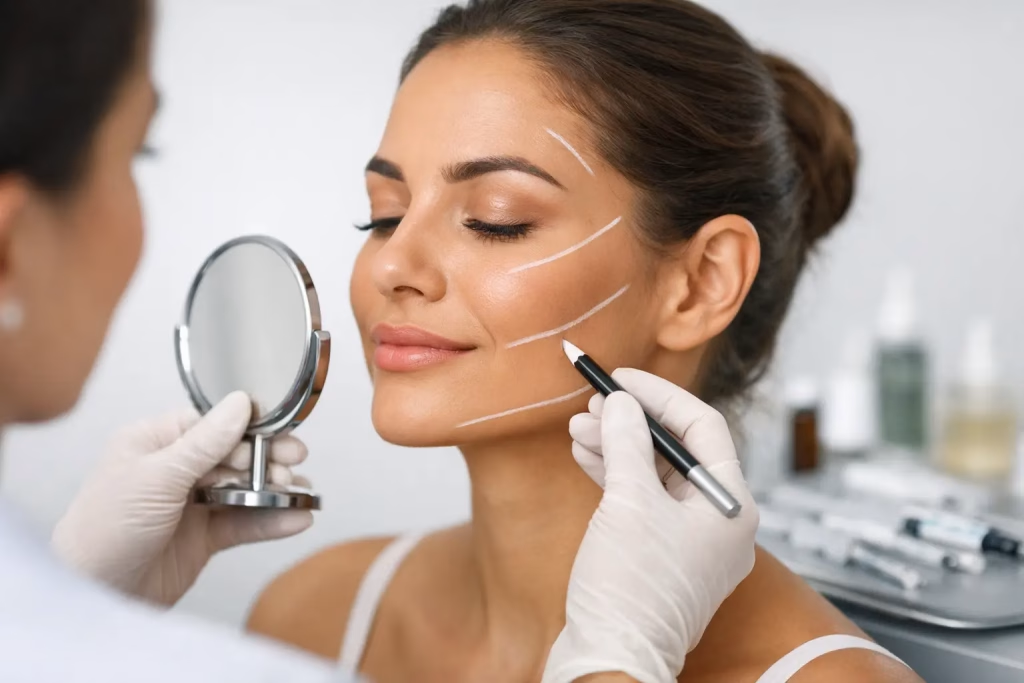
A careful consultation should look at facial proportions from the front and side, assess muscle activity, identify where volume has been lost or retained, and distinguish between fat and sagging. Good planning also considers your lifestyle, tolerance for downtime, timeline, and appetite for maintenance.
Some patients want a treatment with little to no recovery and are comfortable waiting for gradual improvement. Others want a more immediate change for an upcoming event. Neither is wrong, but the plan should reflect that priority.
Combination treatment is often where the most elegant results happen. A softer jawline may respond best to skin tightening plus chin support. A fuller lower face may benefit from masseter slimming plus skin-quality work. Someone with early aging through the mid-face may look more sculpted with subtle cheek restoration and collagen stimulation rather than aggressive jawline treatment.
At a doctor-led clinic such as Kelly Oriental Aesthetic Clinic, that level of customization is where contouring becomes more precise and more reassuring. The goal is not to chase trends, but to shape a treatment journey that suits your anatomy and your idea of refinement.
What natural-looking contouring should look like
The most successful contouring does not announce itself. Friends may say you look fresher, more defined, or more rested without being able to pinpoint why. That is usually a sign the work respected the natural architecture of the face.
A refined result keeps movement, preserves softness where it belongs, and avoids extremes. A jawline can be sharper without looking harsh. Cheeks can be lifted without looking puffy. A profile can look cleaner without appearing dramatically altered.
This matters because trends move faster than faces do. The features that photograph well for a season are not always the ones that age well over time. Thoughtful contouring favors balance over drama and proportion over novelty.
Before you choose a treatment
If you are considering facial contouring, it helps to arrive with goals rather than treatment names. Saying you want a more defined jawline, less heaviness under the chin, or a softer lower face is more useful than asking for a specific procedure you saw online.
That opens the door to better recommendations. It also protects you from treating the wrong problem. A face can look heavy for very different reasons, and the best solution is not always the most popular one.
The right contouring plan should feel measured, personalized, and credible. When treatment matches anatomy, the face does not look done. It simply looks more like itself on a very good day.
