

Uncategorized
Laser Tattoo Removal Process Explained
May
A tattoo can feel very different a few years after it is done. Sometimes the artwork no longer reflects your style. Sometimes the ink has faded unevenly, shifted in color, or simply sits in a place you would rather leave clear. In those moments, understanding the laser tattoo removal process helps you move forward with realistic expectations and a treatment plan that respects both your skin and your schedule.
Laser tattoo removal is not a single-visit fix. It is a staged medical aesthetic treatment designed to break down tattoo pigment gradually, allowing your body to clear the ink over time. When done thoughtfully, the goal is not just fading the tattoo, but doing so with careful attention to skin quality, comfort, and safety.
How the laser tattoo removal process works
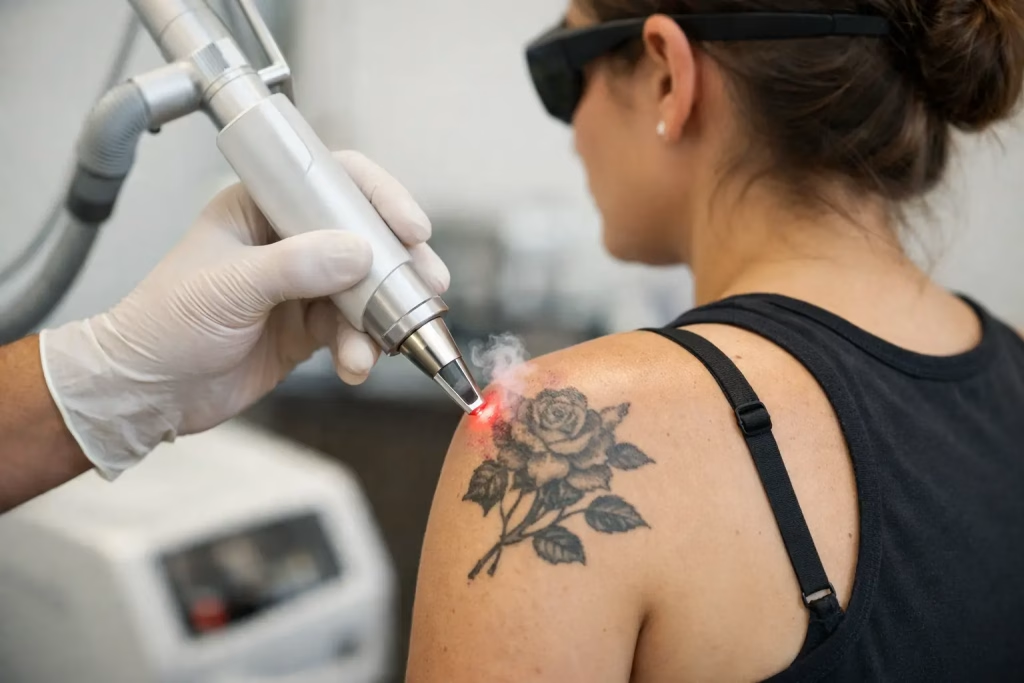
At its core, the laser tattoo removal process uses highly concentrated light energy to target tattoo ink beneath the skin. The laser delivers short pulses that are absorbed by the pigment particles. Those particles then fracture into smaller fragments, which your body’s natural immune system slowly removes in the weeks that follow.
This is why results are progressive rather than immediate. Right after treatment, the tattoo may look frosted, slightly raised, or temporarily lighter. That does not mean the ink is gone on the spot. It means the laser has interacted with the pigment and started the clearance process.
Different ink colors respond differently because each shade absorbs light at a different wavelength. Black ink typically clears most efficiently because it absorbs a broad range of laser energy. Blues and dark greens may also respond well with the right settings. Lighter shades such as yellow, white, turquoise, and certain reds can be more resistant and may need more sessions, or they may only partially clear.
Why one tattoo can clear faster than another
Two people can have tattoos of similar size and still see very different timelines. That is completely normal. Tattoo removal is shaped by several factors, and this is where a personalized assessment matters.
Professional tattoos often sit deeper in the skin and contain denser, more layered pigment than amateur tattoos. That can make them more complex to remove, even if the design looks small. Older tattoos may respond better than newer ones because some of the ink has already broken down over time.
Skin tone also influences treatment planning. On deeper skin tones, settings must be chosen with added care to reduce the risk of pigment changes in the surrounding skin. The location of the tattoo matters too. Areas with stronger circulation, such as the upper body, may clear more efficiently than extremities like the hands, ankles, or feet.
Your immune response plays a role as well. Since the body is responsible for clearing fragmented pigment after each laser session, factors such as overall health, smoking status, and spacing between treatments can influence progress.
What happens before treatment
A well-run tattoo removal journey starts with consultation, not the laser itself. Your practitioner should assess the tattoo’s size, color mix, age, depth, and location, along with your skin type and medical history. This is also the time to discuss whether your goal is complete removal or lightening for a cover-up.
That distinction matters. If the tattoo only needs to be faded enough for a new design, the treatment plan may be shorter and more conservative. If full clearance is the goal, you should expect a longer timeline and a more measured series of sessions.
A patch test may be recommended in some cases, especially when there are concerns about skin sensitivity, pigmentation risk, or unusual ink response. Pre-treatment guidance usually includes avoiding excessive sun exposure and arriving with clean skin free of creams, self-tanner, or occlusive products.
What a session feels like
The most common question after “How many sessions will I need?” is “Does it hurt?” The honest answer is that it can be uncomfortable, but most patients find it manageable. People often compare the sensation to repeated snaps of a rubber band against the skin, with a quick burst of heat.
The good news is that sessions are usually quite fast, especially for smaller tattoos. Cooling methods and comfort measures can make the experience much easier. The exact intensity depends on the tattoo’s location, the density of the ink, and your individual pain threshold.
Immediately after treatment, the area may appear white or frosted for a short period. Redness, swelling, warmth, and mild pinpoint bleeding can also occur. These are expected short-term responses and usually settle as the skin begins to heal.
Healing after each session
The period after treatment is just as important as the treatment itself. Your skin needs time to recover, and your body needs time to clear the fragmented ink. That is why sessions are spaced apart rather than performed too close together.
In the first few days, the treated area may feel tender and look red or slightly swollen. Some patients develop small blisters, scabs, or crusting. This can sound alarming, but these reactions are part of normal healing when managed properly. The key is not to pick, peel, or friction the area.
Keeping the skin clean, protected, and out of direct sun supports better recovery. You may also be advised to avoid hot workouts, swimming pools, saunas, and abrasive skincare for a short period. Healing time varies, but the surface often settles within one to two weeks, while deeper fading continues for several more weeks.
How many sessions are usually needed
There is no credible way to promise an exact number at the start. Some tattoos show meaningful fading after just a few sessions. Others take considerably longer, particularly if the pigment is dense, multicolored, or previously retouched.
A common estimate is anywhere from six to twelve sessions, though some tattoos fall outside that range. Cover-up tattoos, cosmetic tattoos, and designs with stubborn pigment blends may need more patience. It is better to think in terms of a treatment journey rather than a fixed count.
Spacing also affects the overall timeline. Many patients are treated every six to eight weeks, while some may benefit from even longer intervals depending on skin response and pigment clearance. More frequent treatment is not always better. In many cases, giving the skin and immune system adequate time leads to a better outcome.
Laser tattoo removal process and skin safety
The priority is not simply removing ink as quickly as possible. It is removing it responsibly. Safe treatment depends on proper laser selection, appropriate settings, and a practitioner who understands both tattoo physics and skin behavior.
Potential side effects can include temporary redness, swelling, blistering, and scabbing. There is also a risk of temporary or longer-lasting changes in skin pigmentation, especially in patients with more melanin-rich skin or in those who tan before or after treatment. Textural changes and scarring are less common when treatment is performed correctly and aftercare is followed, but they remain important considerations.
This is why aggressive treatment is not necessarily better treatment. A refined, medically guided approach often delivers more elegant results because it balances efficacy with skin preservation.
When complete removal may not be realistic
A polished consultation should include honesty, not overpromising. Some tattoos can be cleared almost completely. Others may leave a faint shadow, selective pigment residue, or subtle textural change even after multiple sessions.
White ink, fluorescent pigments, and certain cosmetic tattoo formulations can behave unpredictably. In some cases, these inks may darken temporarily after laser exposure before fading, and in others they may remain difficult to treat. Layered tattoos and scars within the tattooed area can also make final clearance less straightforward.
If your main concern is making the tattoo less visible rather than achieving perfect blank skin, that opens up more flexible treatment goals and can make the process feel far more satisfying.
Who is a good candidate
Most healthy adults with realistic expectations can be considered for treatment, but suitability still depends on a clinical review. Active skin infection, open wounds, recent sunburn, certain medications, and some medical conditions may delay treatment. Pregnancy policies vary by provider, but many clinics prefer to postpone elective laser procedures until later.
Patients who do especially well are usually those who understand the pace of the process, follow aftercare carefully, and protect the skin from sun exposure between visits. Good results are often a partnership between the laser technology, the practitioner’s judgment, and the patient’s consistency.
At a doctor-led aesthetic clinic such as KOAC, that partnership is particularly valuable because treatment planning can be tailored with precision rather than treated as a one-size-fits-all service.
Choosing tattoo removal is often less about erasing the past and more about creating room for what feels right now. The best approach is a calm, informed one – patient enough to respect the skin, precise enough to target the ink, and honest enough to recognize that excellent results come from thoughtful treatment, not rushed promises.
