
Uncategorized
Skin Boosters vs Profhilo: Which Fits You?
May
A familiar moment in any aesthetic consultation starts with a simple goal: you want skin that looks fresher, smoother, and more refined, but you do not want to look overdone. That is exactly where the skin boosters vs Profhilo conversation becomes relevant. Both are injectable treatments designed to improve skin quality, yet they are not interchangeable, and choosing well depends on what your skin is asking for.
For many patients, the confusion comes from how similar these treatments sound on the surface. Both are associated with hydration, glow, and rejuvenation. Both use hyaluronic acid. Both can fit into a non-surgical skin maintenance plan. But their texture, placement, treatment goals, and overall effect on the skin can be quite different.
Skin boosters vs Profhilo: the real difference
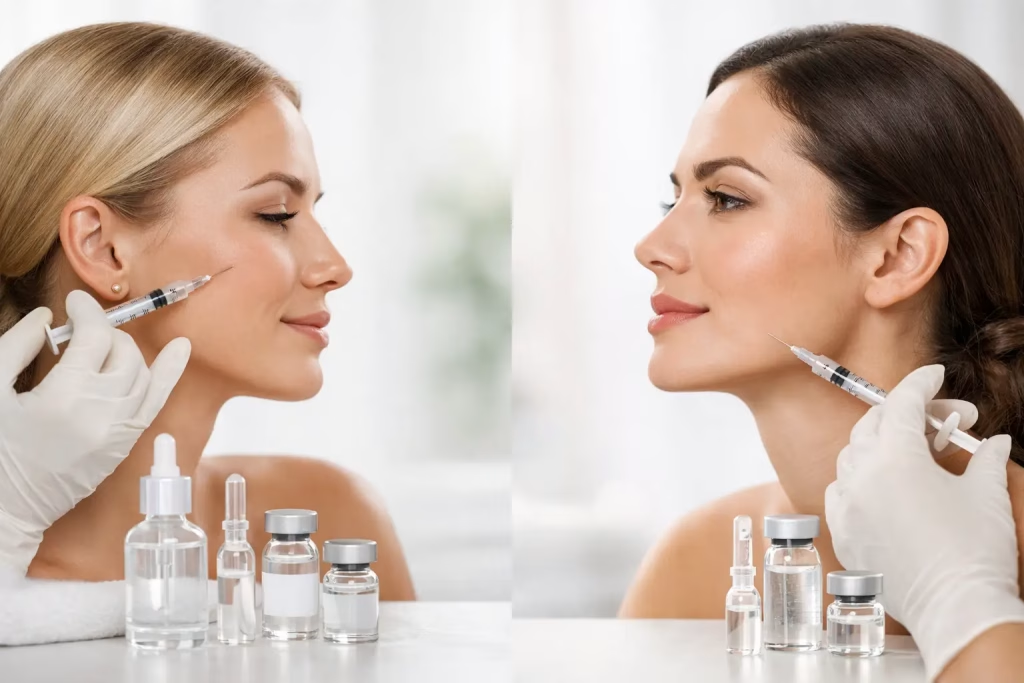
The easiest way to understand skin boosters vs Profhilo is to think in terms of treatment intention. Skin boosters are typically used to improve skin hydration, texture, and fine lines in a more targeted way. They are often placed in multiple small points across the skin to address concerns such as dehydration, crepey texture, enlarged pores, or acne-scarred areas.
Profhilo, by contrast, is often positioned as a bio-remodeling injectable. Rather than acting like a traditional filler, it spreads beneath the skin and is designed to stimulate hydration while supporting skin firmness and elasticity. The goal is not volume in the classic sense. It is a more diffuse, elegant improvement in skin laxity and overall quality.
That distinction matters. If your main concern is dull, thirsty skin with surface texture changes, skin boosters may be the more precise option. If your skin is beginning to look less firm, less springy, and subtly looser, Profhilo may be the more strategic choice.
What skin boosters are designed to do
Skin boosters are injectable hyaluronic acid treatments formulated to attract and retain moisture within the skin. Depending on the product chosen, they may focus primarily on hydration or offer added support for texture and fine lines. They are commonly used on the face, neck, under-eye area, and sometimes the hands.
The appeal of skin boosters is their versatility. They can be useful for younger patients whose skin is dehydrated from stress, travel, air conditioning, or a demanding work schedule. They can also suit more mature patients who are noticing fine lines, roughness, and a loss of skin smoothness.
Results tend to look refined rather than dramatic. Skin often appears plumper, more rested, and more luminous. Makeup may sit better. Pores may look softer. Fine dehydration lines can appear less obvious. The improvement is often described as healthier skin rather than changed facial structure.
That said, not all skin boosters are the same. Some are softer and more hydration-focused, while others are better for textural rejuvenation. This is why a tailored consultation matters. The best injectable is not just the one with the strongest reputation. It is the one that matches your skin condition, your tolerance for downtime, and the outcome you actually want.
What makes Profhilo different
Profhilo contains a high concentration of hyaluronic acid, but it behaves differently from many other injectables. It is not placed throughout the skin in the same micro-targeted pattern often used for skin boosters. Instead, it is injected at specific points and then diffuses through the tissue.
Its strength lies in skin remodeling. Profhilo is often chosen for patients who are seeing the early to moderate signs of skin laxity, especially in areas where the skin begins to look less taut. The cheeks, lower face, jawline, neck, and sometimes the hands are common treatment zones.
What many patients appreciate is that Profhilo can improve the quality of the skin without changing facial expression or adding obvious bulk. The skin may gradually look smoother, firmer, and more supple. In the right patient, this creates that polished, rested appearance that reads as naturally well-maintained.
The trade-off is that Profhilo is not a replacement for everything. If you need strong correction for deep lines, volume loss, or contour deficiency, it may need to sit alongside other treatments rather than replace them. It is best understood as part of a broader rejuvenation plan, not a universal answer.
Which treatment is better for hydration, texture, and firmness?
If hydration is your main concern, both can help, but they do so in different ways. Skin boosters usually offer a more direct approach to replenishing moisture within the skin, especially when the skin feels rough, tight, or visibly tired. They can be especially helpful when dehydration shows up as fine crinkling and a lack of radiance.
If firmness and elasticity are becoming the bigger issue, Profhilo often has the edge. This is particularly true for patients who feel their face still looks like them, but somehow less lifted and less smooth than before. It is that subtle shift in skin behavior, rather than severe sagging, where Profhilo tends to shine.
Texture is more nuanced. Skin boosters may be preferable when pores, superficial acne scarring, or fine surface irregularities are part of the picture. Profhilo can improve texture too, but usually as part of an overall enhancement in skin quality rather than precise textural correction.
This is why the right recommendation is often less about age and more about skin pattern. A younger patient with post-acne texture may benefit more from skin boosters. A patient in their 30s or 40s with early laxity and crepiness may lean toward Profhilo. Some patients genuinely suit both, just not always at the same stage.
Skin boosters vs Profhilo for downtime and comfort
Most patients considering injectable skin treatments want visible improvement with minimal disruption to work and social life. In that regard, both options are generally manageable, but the treatment experience is slightly different.
Skin boosters often involve multiple tiny injection points, so you may have small bumps, mild redness, or minor bruising for a short period afterward. Depending on the product and area treated, there may be a bit more visible aftermath on the day of treatment.
Profhilo is usually injected at fewer points, but because the product is designed to spread, you may notice small raised areas immediately after treatment before they settle. These typically improve fairly quickly, though timing can vary from person to person.
Neither should be booked casually right before a major event. Even premium, low-downtime procedures deserve sensible planning. If your calendar includes a wedding, presentation, gala, or close-up photography, it is wise to schedule treatment with a comfortable buffer.
How long do results last?
Longevity depends on the product used, your skin condition, metabolism, and whether you are doing this as a one-off or part of a consistent maintenance plan. In general, both skin boosters and Profhilo are often performed as a course initially, followed by maintenance sessions.
Skin boosters may require a series for best results, particularly when starting from very dehydrated or compromised skin. Profhilo is also commonly done as an initial two-session protocol spaced several weeks apart, then maintained as advised.
The more important question is not just how long results last, but how they age. These are not treatments that create a fixed result and then disappear overnight. Skin quality tends to improve gradually and then soften over time, which suits patients who prefer discreet, elegant rejuvenation.
Who is a good candidate?
Skin boosters are often well suited to patients who want fresher-looking skin, softer fine lines, better hydration, and improvement in superficial texture. They can work beautifully for busy professionals, frequent travelers, and anyone whose skin looks more fatigued than they feel.
Profhilo is often a strong fit for patients who want to address early skin laxity, crepiness, and a subtle loss of firmness without moving into a more volumizing treatment plan. It can be particularly appealing for those who want skin rejuvenation that feels sophisticated and understated.
There are, of course, patients who are not ideal candidates for either at a given time. Active skin infection, certain medical conditions, pregnancy, or unrealistic expectations may all affect treatment suitability. A clinically grounded assessment should always come first.
The best choice is rarely a trend
When patients ask whether skin boosters vs Profhilo is the better option, the most honest answer is often: it depends on the story your skin is telling. A treatment can be excellent and still be wrong for you. That is why doctor-led planning matters.
At a clinic such as KOAC, the value is not simply access to premium injectables. It is the ability to match the product to the skin, the timing, and the wider aesthetic plan. Sometimes the right answer is skin boosters. Sometimes it is Profhilo. Sometimes it is a staged combination with energy-based treatments or medical facials to build a more complete result.
Beautiful outcomes tend to come from precision, not excess. If you are choosing between these two treatments, focus less on what is most talked about and more on what will make your skin look quietly healthier, smoother, and more assured over time. That is usually where the best decisions begin.
