
Uncategorized
How Skin Boosters Improve Elasticity
When skin starts to feel thinner, less springy, or a little tired despite good skincare, the issue is often not just dryness. It is a gradual decline in the structures that keep skin resilient. That is exactly where understanding how skin boosters improve elasticity becomes useful, because these treatments are designed to work beneath the surface, where firmness and bounce are actually maintained.
For many patients, the first signs are subtle. Makeup no longer sits as smoothly along the cheeks. Fine lines seem more visible by late afternoon. The skin may still look healthy, but it does not rebound the way it once did. Elasticity loss rarely arrives all at once. It tends to show up as a slow change in texture, movement, and hydration.
What elasticity really means
Skin elasticity is the skin’s ability to stretch and return to its original shape. In younger skin, this rebound comes more easily because collagen, elastin, and hyaluronic acid are present in stronger supply. Over time, that support network weakens. Natural aging, sun exposure, stress, inflammation, and dehydration all play a role.
This matters because elastic skin does more than look firm. It tends to reflect light better, hold smoother contours, and tolerate facial movement without creasing as easily. When elasticity declines, skin can appear duller, looser, and more textured even before deeper wrinkles become obvious.
That is why a topical moisturizer alone may not fully address the concern. Surface hydration can improve comfort and appearance, but it cannot always replenish the deeper environment that helps skin behave like younger, healthier tissue.
How skin boosters improve elasticity at the source
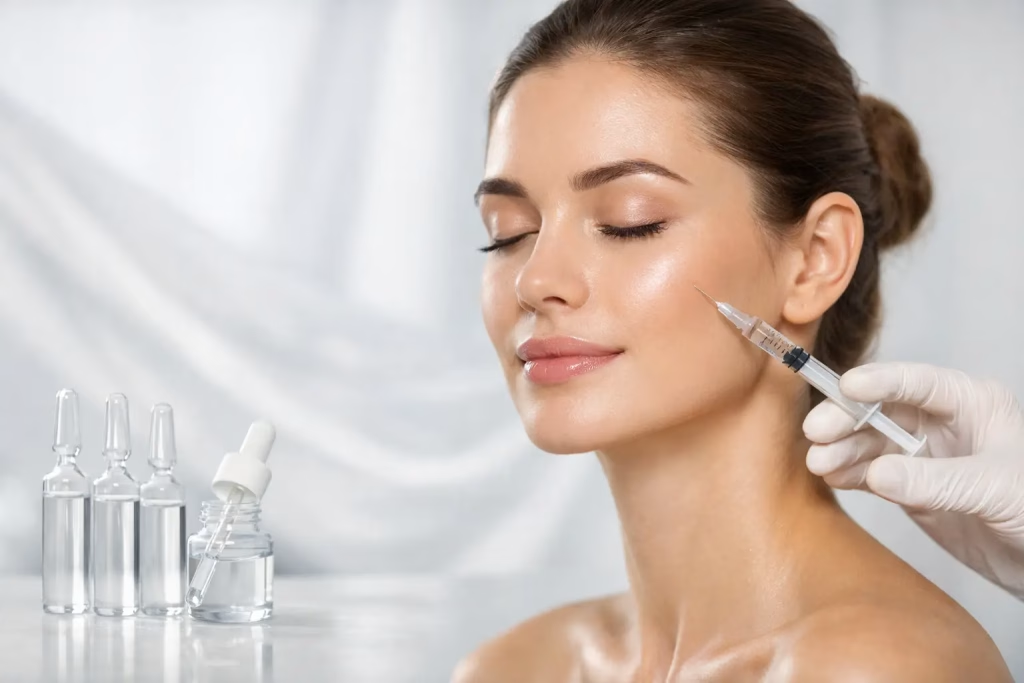
Skin boosters are injectable treatments designed to deliver hydrating and skin-supportive ingredients into the dermis, rather than adding volume in the way a traditional filler would. The goal is not to reshape the face. It is to improve skin quality.
When patients ask how skin boosters improve elasticity, the short answer is that they create a better biological environment for the skin to function well. Most formulations rely on hyaluronic acid, a molecule that attracts and holds water. Once introduced into the skin, it helps restore hydration where topical products cannot always reach effectively.
That deep hydration has a visible effect, but more importantly, it supports the skin matrix. Well-hydrated skin tends to appear plumper, smoother, and more supple. In many cases, this improved moisture balance also helps the skin support collagen activity more effectively, which contributes to a firmer feel over time.
Some skin boosters also include amino acids, antioxidants, minerals, or other regenerative ingredients that are chosen to support tissue repair and skin vitality. The exact effect depends on the product used, the treatment depth, and the patient’s baseline skin condition.
Why hydration and elasticity are closely linked
Hydration is often dismissed as a basic concern, but it is central to skin quality. Dehydrated skin can look crinkled, tired, and prematurely aged. It also tends to show movement lines more easily because the tissue lacks flexibility.
When the dermis has better water retention, the skin can behave differently. It feels less fragile. It creases less sharply. It often appears smoother even without dramatic changes in volume or contour. This is one reason skin boosters are frequently chosen by patients who want refinement rather than transformation.
That said, hydration alone is not the entire story. If a patient has significant laxity, heavy tissue descent, or advanced collagen loss, skin boosters may improve texture and suppleness without replacing the need for lifting-based treatments. In those cases, a more tailored plan may combine modalities instead of relying on one treatment category alone.
What changes patients usually notice
The results of skin boosters are typically progressive rather than immediate. There may be some early radiance from improved hydration, but elasticity-related changes often emerge more gradually over several weeks.
Patients commonly describe their skin as feeling bouncier, looking fresher, and appearing finer in texture. Areas that often benefit include the cheeks, lower face, under-eye region, neck, and sometimes the hands. Fine dehydration lines may soften. Pores can appear less obvious when the skin is smoother and better supported.
The effect is especially appealing for those who want to look well-rested and polished without looking treated. Because skin boosters are not primarily volumizing, the result is usually subtle in the best sense of the word. The skin looks healthier, not artificially altered.
Who tends to benefit most
Skin boosters can suit a wide range of patients, but the strongest candidates are often those dealing with early to moderate changes in skin quality. This includes dryness, fine lines, mild crepiness, dullness, and a gradual loss of spring in the skin.
They can also be valuable for younger patients who want prevention and maintenance. When used thoughtfully, they may help support the skin before laxity becomes more pronounced. For patients in their forties, fifties, and beyond, they are often used to complement other rejuvenation treatments by improving the skin itself rather than only addressing shape or sagging.
Lifestyle matters here too. Patients with frequent sun exposure, air-conditioned office environments, travel-related dehydration, or chronically stressed skin often notice that their complexion looks fatigued even when they are otherwise healthy. In these cases, skin boosters can be an elegant option for restoring softness and resilience.
How skin boosters compare with fillers and energy treatments
Confusion is common because injectables are often grouped together. Traditional dermal fillers are mainly used to restore lost volume, contour facial features, or support structural areas such as the cheeks, jawline, or nasolabial folds. Skin boosters serve a different purpose. They are focused on skin quality, hydration, and fine-textural improvement.
Energy-based treatments such as ultrasound, radiofrequency, or microneedling-based technologies may stimulate collagen or tighten tissue more directly. These can be excellent for laxity and contour concerns, but they do not replace the hydrating, skin-conditioning role of a booster treatment.
In a well-designed aesthetic plan, these categories often work beautifully together. A patient may need one treatment to improve firmness, another to refine texture, and another to address pigmentation or redness. The most refined outcomes usually come from matching the treatment to the actual cause of the concern rather than expecting one procedure to do everything.
Treatment planning matters more than trends
One reason results vary is that not all skin boosters are identical, and not all patients need the same approach. Injection technique, product selection, treatment intervals, and skin condition all influence the outcome.
A patient with very dehydrated skin may respond well to a series spaced over several weeks. Someone with more mature skin may benefit from combining boosters with collagen-stimulating or lifting technologies. Another patient may need barrier repair and skincare support first if inflammation is undermining the skin’s ability to recover well.
This is where a doctor-led consultation becomes important. Good treatment planning looks at facial movement, skin thickness, hydration, sensitivity, lifestyle, and the patient’s comfort level with downtime. At a clinic such as Kelly Oriental Aesthetic Clinic, that personalized approach is part of what makes aesthetic care feel considered rather than transactional.
What to expect after treatment
Most skin booster sessions are relatively manageable, with temporary redness, swelling, or small injection marks that usually settle within a few days. Some products and techniques may create tiny bumps initially as the material settles into the skin. These are generally expected and short-lived when the treatment is properly performed.
Maintenance is usually necessary. Skin boosters are not permanent, and the skin continues to age. Many patients begin with a short series and then move into periodic upkeep sessions. The cadence depends on the product used, the treatment area, and how quickly the patient’s skin tends to dehydrate or lose radiance.
The aim is not perfection. It is skin that looks stronger, smoother, and more refined in a way that fits the rest of the face naturally.
A more realistic way to think about results
The appeal of skin boosters lies in their restraint. They are not about dramatically changing features. They are about improving the canvas.
For patients who want fresher, firmer-looking skin without obvious augmentation, they can be one of the most intelligent additions to a long-term aesthetic plan. The best results tend to come when expectations are clear, the product is chosen carefully, and the treatment is part of a broader strategy for skin health. Sometimes the most luxurious result is not looking different. It is looking like your skin has regained some of the resilience it quietly lost over time.
