

Uncategorized
Rosacea Treatment Options That Actually Help
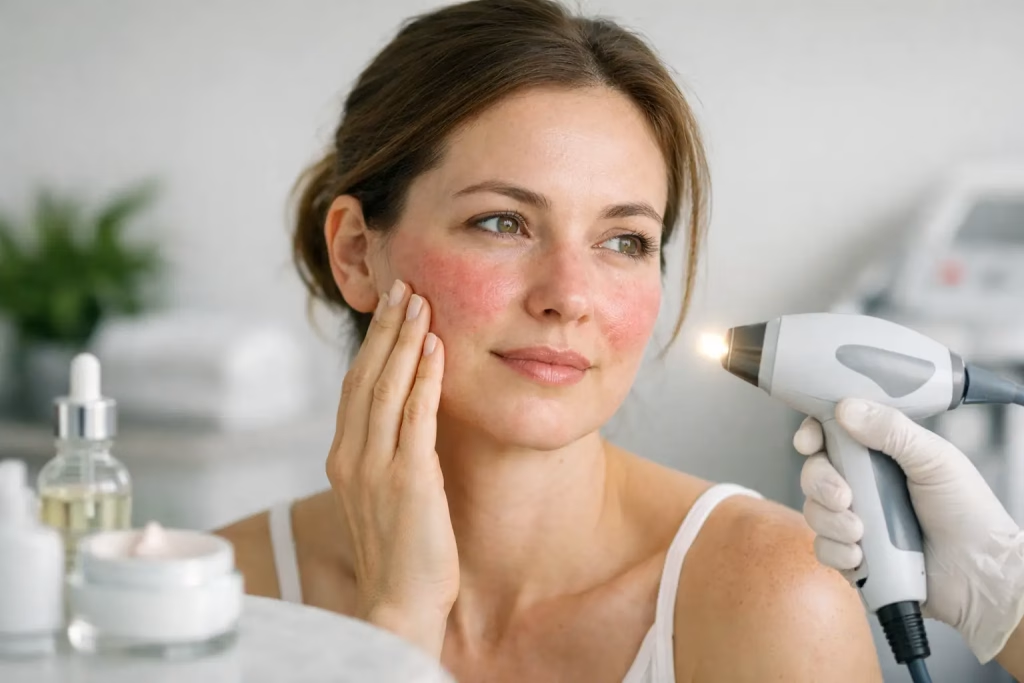
Redness that lingers long after a workout, a glass of wine, or a warm day outdoors can be more than simple sensitivity. When flushing becomes persistent, visible vessels start to show, or skin begins to sting and react to products that once felt fine, many people start looking for rosacea treatment options that offer more than temporary cover.
Rosacea can be frustrating because it is both visible and unpredictable. For many adults, it affects confidence as much as comfort. The good news is that treatment has become far more refined. With the right diagnosis, thoughtful trigger management, and a personalized treatment plan, skin can look calmer, feel less reactive, and behave more consistently.
Understanding rosacea before choosing treatment
Rosacea is a chronic inflammatory skin condition that commonly appears on the cheeks, nose, chin, and forehead. It can show up as persistent redness, frequent flushing, visible capillaries, acne-like bumps, dryness, warmth, and sensitivity. In some cases, it also affects the eyes.
One reason rosacea can be difficult to manage is that it does not look the same on everyone. Some people mainly struggle with diffuse redness. Others deal with breakouts and inflammation that resemble acne. Some experience a combination of both, along with skin barrier disruption that makes almost every product feel irritating.
That is why a one-size-fits-all approach rarely works. The most effective treatment plan starts with identifying the dominant features of your rosacea, your triggers, and the overall condition of your skin.
Rosacea treatment options: what works for different concerns
The best rosacea treatment options usually combine medical management with skin-strengthening care. The exact mix depends on whether your main concern is flushing, visible blood vessels, papules and pustules, sensitivity, or all of the above.
Topical prescription treatments
For inflammatory rosacea, prescription creams or gels are often the first line of treatment. Depending on the presentation, a physician may recommend ingredients designed to reduce inflammation, decrease bumps and pustules, or temporarily constrict superficial blood vessels to lessen visible redness.
These medications can be very helpful, but they are not identical in function. Some improve flare-related bumps over time, while others offer more immediate redness control for selected patients. The trade-off is that highly reactive skin may need a gradual introduction, and not every topical is suitable for every subtype.
Oral medications
When rosacea is more inflamed or persistent, oral medication may be recommended. Certain low-dose oral antibiotics are used not simply for their antibacterial effect, but for their anti-inflammatory properties. This can be especially useful for papulopustular rosacea, where the skin develops acne-like lesions along with redness.
Oral treatment is often part of a broader plan rather than a permanent solution. It can settle active inflammation, after which maintenance may shift toward topical care, procedural treatments, and trigger control.
Laser and light-based treatments for redness
For visible redness and capillaries, laser and energy-based technologies are often among the most effective options. These treatments target superficial blood vessels, helping to reduce diffuse redness and the appearance of broken capillaries over a series of sessions.
This is where treatment precision matters. Not every device is ideal for every skin type, degree of redness, or level of sensitivity. A doctor-led assessment helps determine whether vascular-focused laser treatment is suitable, how aggressive the settings should be, and how to balance results with downtime.
Patients are often surprised by how much improvement in overall skin appearance can come from addressing persistent redness directly. The complexion tends to look more even, less inflamed, and easier to maintain. Still, laser is not a cure. Rosacea is chronic, so maintenance sessions may be needed over time depending on triggers and recurrence.
Barrier-repair facials and calming skin therapies
Rosacea-prone skin is frequently dehydrated and barrier-impaired. That means even when inflammation is the headline issue, the underlying problem may also include a weakened skin barrier. When that barrier is compromised, the skin is more vulnerable to heat, friction, harsh actives, and environmental stress.
Gentle, professional treatments that focus on hydration, soothing inflammation, and supporting skin recovery can be a valuable part of care. In a medically guided aesthetic setting, this may include calming facials or technology-assisted treatments chosen specifically for sensitive skin rather than aggressive resurfacing.
The key is restraint. Skin with rosacea usually responds better to measured, restorative care than to harsh exfoliation or trend-driven treatments that promise instant glow but leave the barrier overstimulated.
Why trigger management matters as much as treatment
Even the most advanced treatment plan can be undermined if triggers remain unchecked. Common rosacea triggers include sun exposure, heat, alcohol, spicy food, strenuous exercise, emotional stress, and irritating skincare products. For some, even hot showers or heavily fragranced cleansers can set off a flare.
This does not mean life has to become restrictive. It means patterns matter. Keeping track of what consistently worsens your skin can help your provider tailor a treatment plan that is realistic, not rigid.
Sun protection deserves special attention. Daily sunscreen is one of the most important long-term strategies for managing rosacea, yet many people struggle to find a formula that does not sting. Mineral-based sunscreens are often better tolerated, though individual response varies. Texture, finish, and compatibility with sensitive skin all matter, especially for patients who need something they will actually use every day.
Skincare choices that support rosacea treatment options
Home care should feel calming, not corrective. Many patients make rosacea worse by layering too many actives in an effort to fix redness quickly. Strong acids, retinoids, scrubs, or heavily fragranced products can be useful in other contexts, but rosacea-prone skin often needs a slower, more curated approach.
A well-designed routine usually centers on a gentle cleanser, a barrier-supportive moisturizer, and daily sunscreen. Beyond that, additions should be selective. Ingredients that help one person may irritate another, which is why professional guidance is so valuable.
This is particularly true for patients who have both rosacea and other concerns such as enlarged pores, uneven texture, or early signs of aging. Treating those concerns is possible, but timing and sequencing matter. Skin must first become stable enough to tolerate more active interventions.
When combination treatment is the better choice
Many people with rosacea do best with combination care rather than a single treatment. For example, medication may calm inflammatory flares, while laser sessions target persistent redness and visible vessels. At the same time, barrier-repair skincare and gentle in-clinic treatments help strengthen tolerance and reduce reactivity.
This layered approach is often the most elegant one because it addresses both the symptoms you see and the underlying patterns that keep rosacea active. It also allows treatment intensity to be adjusted based on season, stress levels, travel, or changes in skin condition.
In a premium, medically guided setting such as KOAC, that personalized planning is part of the value. Rather than choosing a treatment from a menu and hoping it fits, patients benefit from a more refined approach that considers skin behavior, lifestyle, and long-term maintenance.
What to expect from results
One of the most helpful mindset shifts with rosacea is understanding that improvement is realistic, but perfection is not always the goal. The aim is calmer skin, fewer flare-ups, less visible redness, improved comfort, and stronger daily control.
Some patients notice a meaningful difference within weeks of starting the right topical or oral treatment. Laser-based improvement typically unfolds over multiple sessions. Barrier recovery can also take time, especially if the skin has been overtreated.
Because rosacea is chronic, maintenance matters. That may mean periodic laser sessions, seasonal skincare adjustments, or revisiting medication during flare-prone periods. The best plans are sustainable, not aggressive.
When to seek professional evaluation
If redness is persistent, worsening, or accompanied by visible vessels, sensitivity, bumps, or eye irritation, it is worth seeking a proper diagnosis. Rosacea is often confused with acne, allergic reactions, eczema, or simple skin sensitivity, and the wrong treatment can prolong irritation.
Professional evaluation also matters because some popular aesthetic treatments are not appropriate during active rosacea flares. Procedures that generate too much heat or inflammation may aggravate symptoms if not carefully selected and timed.
That is why clinically credible guidance makes such a difference. The goal is not just to treat redness in the moment, but to create a treatment journey that respects the skin, supports long-term stability, and delivers visible improvement with care.
Rosacea asks for patience, but it does not have to define your skin. With the right plan, redness can become quieter, flare-ups less frequent, and daily maintenance far less exhausting.
