
Uncategorized
Pico Laser vs Chemical Peel: Which Suits You?
A persistent patch of pigmentation, acne marks that catch the light, or a complexion that has begun to look less even can make a familiar skincare routine feel insufficient. When comparing pico laser vs chemical peel, the better choice is rarely about which treatment is more powerful. It is about matching the right method, intensity, and treatment schedule to your skin concern, lifestyle, and skin tolerance.
Both treatments can refine the look of dullness, uneven tone, textural irregularities, and post-acne marks. Yet they work through very different mechanisms. A thoughtful consultation helps ensure your treatment plan supports visible improvement without asking more of your skin than it is ready for.
Pico Laser vs Chemical Peel: The Core Difference
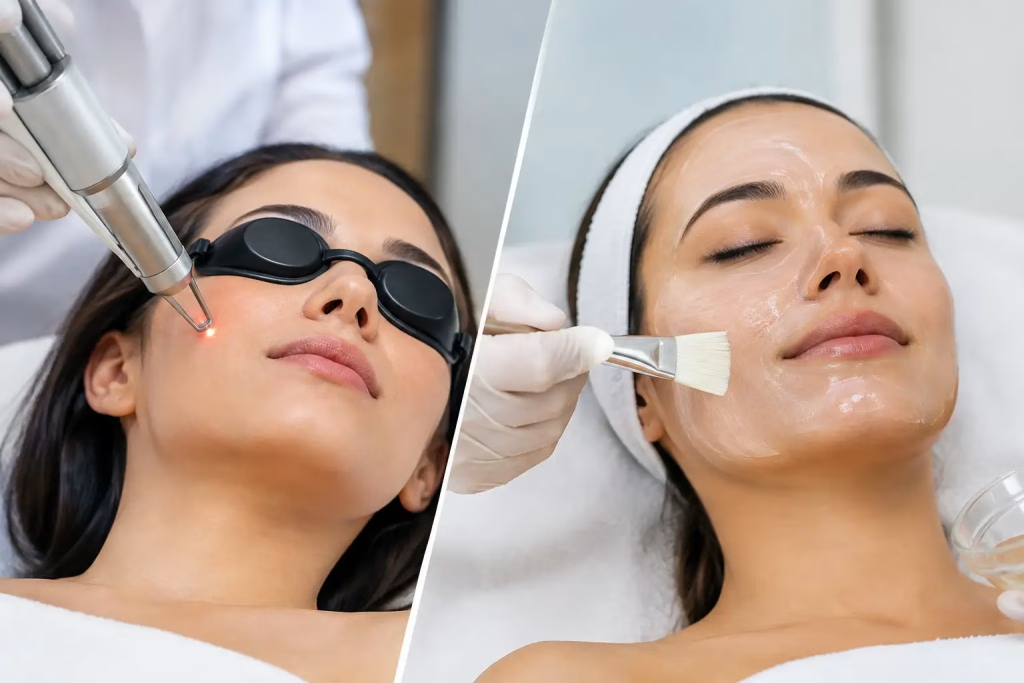
Pico laser treatment uses ultra-short pulses of laser energy measured in picoseconds. Rather than relying primarily on heat, these pulses create a photoacoustic effect that targets pigment particles and encourages the skin’s natural renewal response. Depending on the laser setting and handpiece used, treatment may address concerns such as sun spots, freckles, post-inflammatory hyperpigmentation, acne marks, enlarged pores, and early textural changes.
A chemical peel applies a carefully selected exfoliating solution to the skin. The solution loosens and removes a controlled amount of damaged surface skin, prompting newer, fresher-looking skin to emerge. Peels range from light, low-downtime options to more intensive formulations that can create noticeable peeling and require a longer recovery period.
In simple terms, pico laser works by delivering targeted light energy within the skin, while a chemical peel works by controlled chemical exfoliation from the surface downward. Both may be valuable, but they do not produce identical results or involve the same recovery experience.
When Pico Laser May Be the Better Choice
Pico laser is often considered when pigmentation is a central concern. This includes freckles, sun-induced discoloration, certain dark spots, and lingering marks after acne or inflammation. Because the treatment can target pigment with precision, it may be incorporated into a plan for patients who want a more focused approach than surface exfoliation alone can provide.
It can also be an appealing option for busy professionals. Many pico laser treatments involve temporary redness or mild warmth that settles relatively quickly, although the degree of downtime depends on the treatment settings, the concern being addressed, and individual skin sensitivity. Some pigment spots may temporarily darken before they fade, which is a normal part of the response for certain patients.
Pico laser may also support collagen remodeling when used with appropriate settings. This can help improve the appearance of fine textural concerns, enlarged pores, and mild acne scarring over a course of treatments. For deeper scars or more pronounced texture, however, pico laser may be only one component of a broader plan that could include microneedling radiofrequency, subcision, injectables, or other doctor-recommended procedures.
What results can you expect from pico laser?
Pigment typically responds gradually rather than all at once. A single session may brighten the complexion, but stubborn or long-standing pigmentation often requires multiple appointments and consistent sun protection. The aim is not simply to lighten visible spots, but to create a more even, refined-looking complexion while protecting the skin barrier throughout the process.
Not every form of pigmentation should be treated the same way. Melasma, for example, can be sensitive to heat, inflammation, and UV exposure. It requires a conservative, carefully monitored strategy, as overly aggressive treatment may worsen the condition. This is where doctor-led assessment matters most.
When a Chemical Peel May Be the Better Choice
A chemical peel may be especially well suited to skin that feels congested, dull, rough, or prone to superficial breakouts. By accelerating exfoliation, the right peel can leave the complexion looking smoother and more luminous while supporting clearer-looking pores.
Light chemical peels are commonly selected for maintenance, mild discoloration, uneven texture, and a fresh post-treatment glow. They can be a refined addition to a regular skin maintenance routine, particularly for those who prefer gradual improvement with limited disruption to their schedule.
Medium-depth peels can create a more dramatic renewal effect but usually come with more visible peeling, redness, and aftercare requirements. They are not a casual pre-event treatment. Proper timing is essential, especially before a wedding, holiday, presentation, or important social occasion.
What results can you expect from a chemical peel?
The outcome depends heavily on the type and strength of peel. Some patients experience light flaking for a few days, while others may peel more noticeably. The temptation to pick, scrub, or speed up the process should be avoided. Skin needs time to shed naturally and restore itself.
Chemical peels can improve the appearance of surface-level unevenness, but they may not be the most direct choice for distinct, deeper pigment deposits or established acne scars. They can also be unsuitable when the skin barrier is compromised, active irritation is present, or the patient has not paused certain topical products as advised.
How to Choose Based on Your Main Concern
If your priority is defined pigmentation, freckles, sun spots, or post-acne discoloration, pico laser may offer greater precision. If you are seeking smoother surface texture, a brighter look, or support for congested skin, a chemical peel may be the more natural starting point.
For mild acne marks, the answer can be less clear-cut. Flat brown or red marks may respond well to laser-based or peel-based treatment, depending on the nature of the discoloration. Indented acne scars are structurally different and usually require collagen-stimulating treatments rather than exfoliation alone.
Skin tone and skin history also shape the recommendation. Patients with deeper skin tones or a tendency toward post-inflammatory hyperpigmentation need treatment parameters selected with particular care. The safest approach is not automatically the gentlest treatment or the strongest one. It is the treatment that respects how your skin responds to inflammation, heat, exfoliation, and healing.
Downtime, Comfort, and Aftercare
Pico laser commonly feels like brief, quick snaps against the skin, with comfort measures tailored to the treatment setting. Chemical peels may cause temporary tingling, warmth, or a stinging sensation during application. Neither experience should be treated as a test of endurance. Your provider should explain what you may feel and adjust the approach when appropriate.
After either treatment, sun protection is essential. Freshly treated skin is more vulnerable to UV-related discoloration, and daily broad-spectrum sunscreen is part of preserving your results. Gentle cleansing, hydration, and a pause on potentially irritating active ingredients may also be advised.
Avoid booking a new treatment immediately before a major event. Even low-downtime procedures can produce temporary redness, dryness, or unexpected sensitivity. Allowing a comfortable buffer gives your skin the space to settle beautifully.
Can Pico Laser and Chemical Peels Be Combined?
Yes, but they should not be layered casually. A personalized program may alternate pico laser and chemical peels across several weeks or months to address pigmentation, texture, and overall skin quality from different angles. The sequence, timing, and intensity should be based on your skin’s response, not a fixed package formula.
At Kelly Oriental Aesthetic Clinic, treatment planning begins with understanding what your skin is showing today, what has triggered the concern, and what level of downtime fits your life. This creates room for a more considered journey, whether that means starting conservatively with a peel, focusing on pigment with pico laser, or combining modalities over time.
The most elegant results are often built patiently. Choose the treatment that gives your skin a credible path forward, then give it the consistency, protection, and professional guidance it deserves.
