

Uncategorized
Aesthetic Treatment for Rosacea & Facial Veins
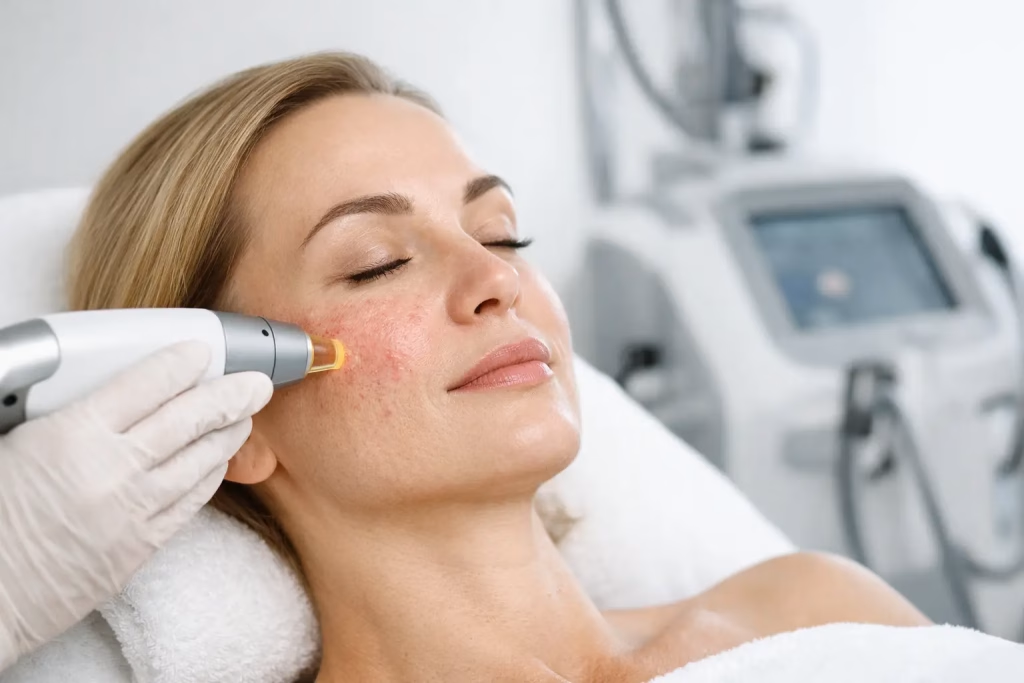
Redness that never quite fades can be more than a cosmetic annoyance. For many people, persistent flushing, broken capillaries, and visible thread veins affect how comfortable they feel without makeup, in bright lighting, or during close conversations. The right Aesthetic Treatment for Rosacea & Facial Veins can do more than soften the look of redness – it can help restore a calmer, more even-looking complexion with a plan tailored to your skin.
Rosacea and facial veins are often grouped together, but they are not exactly the same concern. Rosacea is a chronic inflammatory skin condition that may show up as frequent flushing, background redness, sensitivity, bumps, or visible capillaries. Facial veins, on the other hand, usually refer to dilated superficial blood vessels that sit close to the skin and create red, purple, or bluish lines around the cheeks, nose, and chin. In many patients, the two overlap.
What makes treatment more nuanced is that not every red face is rosacea, and not every visible vessel responds the same way. Skin tone, trigger history, vessel depth, sensitivity level, and whether acne-like breakouts are also present all influence the ideal approach. This is why a proper doctor-led assessment matters before selecting a device or starting a treatment series.
Why rosacea and facial veins need a tailored approach
Rosacea tends to be reactive. Heat, alcohol, stress, spicy food, exercise, sun exposure, and harsh skincare can all worsen it. That means treatment is never just about targeting redness in the clinic. It also involves reducing inflammation, strengthening the skin barrier, and avoiding anything that pushes already-sensitive skin into another flare.
Visible facial veins can be simpler in some cases, especially when the issue is limited to a few superficial vessels. But when diffuse redness and flushing are part of the picture, the treatment plan often needs to be more layered. Using aggressive settings or the wrong technology may overstimulate sensitive skin rather than calm it.
A refined treatment plan typically considers three goals at once: reducing visible vessels, lowering background redness, and improving skin resilience over time. This is where medical aesthetics becomes less about a single procedure and more about precision.
Which aesthetic treatment for rosacea and facial veins works best?
There is no universal best treatment for every patient. The most suitable option depends on whether your main concern is persistent redness, scattered capillaries, frequent flushing, textural sensitivity, or a combination of all four.
Laser and energy-based treatments are often central because they can selectively target blood vessels beneath the skin. Certain vascular-focused technologies are designed to reduce diffuse redness and visible veins by delivering energy into the vessel, causing it to gradually fade. For patients with mild to moderate facial veins, this can create a clearer and more even complexion over a series of sessions.
For rosacea-prone skin, the best outcomes usually come from balancing correction with skin tolerance. That may mean spacing treatments properly, choosing conservative parameters, and combining device-based treatments with soothing skin therapies that support barrier repair. Patients who want fast improvement sometimes assume stronger is better, but with rosacea, measured progress is often the more elegant strategy.
Some individuals also benefit from treatments that address inflammation and skin quality alongside redness. Depending on the presentation, this may include gentle rejuvenation technologies, hydration-focused facials, or non-invasive therapies that calm the skin and improve recovery between sessions. In a doctor-led setting, these choices can be curated into a treatment journey rather than handled as isolated appointments.
What to expect from laser treatment for facial redness
Laser treatment can be highly effective for visible facial veins and chronic redness, but expectations should be realistic. You may see improvement after one session, especially with more defined vessels, yet most patients need a series for meaningful clearing. Rosacea, in particular, is a long-term skin condition. Treatment can control and reduce visible signs, but it does not permanently cure the underlying tendency to flush.
During treatment, patients often describe the sensation as brief warmth or a snapping feeling. Downtime varies depending on the device used, the intensity of settings, and your skin’s reactivity. Some experience temporary redness, mild swelling, or a warm sensation for a day or two. More prominent vessels can darken briefly before fading.
The payoff is often cumulative. As the visible capillaries lessen and background redness softens, the skin tends to look more polished, less inflamed, and easier to manage with minimal makeup. For professionals and socially active individuals, that shift can feel significant because the complexion appears calmer in real life, not just in filtered photos.
Not all redness should be treated the same way
This is one of the most important distinctions patients miss. Redness from rosacea behaves differently from redness caused by over-exfoliation, eczema, post-acne inflammation, steroid misuse, or sun damage. Treating the wrong diagnosis with the wrong energy device can delay recovery and worsen sensitivity.
That is why a consultation should assess more than surface appearance. A credible evaluation looks at your flare triggers, skincare routine, heat tolerance, history of sensitivity, any acne-like lesions, and whether the redness is fixed or comes and goes. If visible vessels are concentrated around the nose, one style of treatment may be enough. If the entire face flushes easily and burns after active skincare, the plan may need to begin with barrier stabilization.
In a clinic such as Kelly Oriental Aesthetic Clinic, where doctor consultation and personalized treatment planning are part of the experience, this level of customization is especially valuable. It allows treatment to be paced according to the skin’s behavior rather than a one-size-fits-all package.
The role of supportive skin treatments
For rosacea-prone skin, device treatments often perform best when paired with calming, restorative care. Sensitive skin does not only need redness reduction. It also needs support.
Hydration-focused facials, gentle skin-repair therapies, and non-irritating post-treatment care can help reduce transepidermal water loss and improve comfort. When the barrier is healthier, the skin is often less reactive to everyday triggers and more resilient between laser sessions. This does not replace vascular treatment, but it can improve the overall result and make the journey more comfortable.
At-home care matters just as much. Patients are usually advised to avoid excessive heat, harsh acids, rough scrubs, and fragranced products if these trigger flushing. Daily sunscreen is essential because UV exposure can aggravate both rosacea and superficial veins. A luxury result is rarely created by a single machine alone. It comes from consistency, restraint, and the right maintenance plan.
Who is a good candidate?
Good candidates are generally those with persistent facial redness, flushing, broken capillaries, or visible thread veins who want a non-surgical option with visible but natural-looking improvement. Patients with mild to moderate rosacea often respond well when treatment is selected carefully and performed in a medically supervised setting.
That said, there are exceptions. Very inflamed skin, active infection, certain medications, recent tanning, or an impaired skin barrier may mean treatment should be delayed or modified. Skin tone also influences the choice of device and settings. Experienced assessment is key because safety and precision are inseparable in vascular work.
If your main concern is frequent flushing without many visible veins, treatment can still help, but the strategy may differ from someone with distinct capillaries around the nose or cheeks. This is why bespoke treatment planning remains the gold standard.
How many sessions will you need?
Most patients need more than one session. A few isolated vessels may improve quickly, while diffuse redness associated with rosacea often requires a series and occasional maintenance. The interval between treatments depends on the technology used and how reactive your skin is.
Maintenance is not a sign that treatment failed. Rosacea is influenced by genetics, environment, lifestyle, and vascular reactivity. Even after successful improvement, new vessels can develop over time, and redness can return if triggers are not managed. Maintenance sessions simply reflect the chronic nature of the condition.
The good news is that once the baseline redness has been reduced, upkeep is often lighter and more manageable than starting from scratch. Many patients find that regular, well-timed treatments help them maintain a fresher, calmer appearance with less effort day to day.
Choosing a clinic for rosacea and facial vein treatment
For this concern, technology matters, but judgment matters more. You want a clinic that does not treat every red face as the same problem. Look for medical oversight, experience with sensitive skin, access to multiple treatment modalities, and a willingness to adjust plans based on your skin’s response.
The environment also plays a role. Patients with rosacea often feel anxious about worsening redness, so reassurance, proper aftercare, and thoughtful pacing make a real difference to the experience. In a premium clinic setting, advanced care should feel both clinically precise and deeply considerate.
The goal is not to erase every sign of natural color from the face. It is to reduce the persistent redness, visible vessels, and unpredictable flare patterns that make skin feel hard to control. With the right combination of doctor-led assessment, tailored laser treatment, and supportive skin care, a calmer complexion becomes a realistic and elegant outcome.
