

Uncategorized
What Causes Acne Scars to Form?
May
A breakout fades, but the reminder stays. For many people, that is the most frustrating part of acne – not the blemish itself, but the uneven texture or lingering marks left behind once the inflammation settles. If you have ever wondered what causes acne scars, the short answer is this: scars develop when inflammation damages the skin deeply enough to disrupt the normal healing process.
That answer is simple. The reality is not. Acne scars form through a mix of biology, timing, skin behavior, and treatment choices. Some people develop scars after only a few severe breakouts, while others experience years of acne with minimal textural change. Understanding why that happens is the first step toward treating acne more thoughtfully and protecting the skin’s long-term quality.
What causes acne scars in the skin?
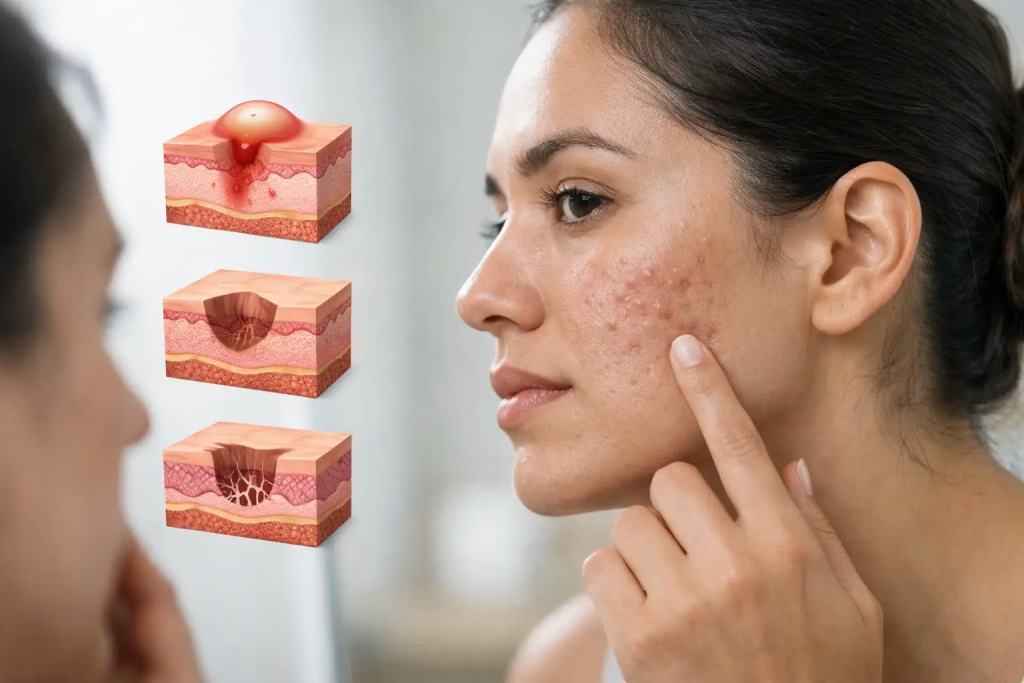
Acne scars usually begin with inflamed lesions, especially papules, pustules, nodules, and cysts. These breakouts do more than sit on the surface. They create pressure, swelling, and irritation within the pore and the surrounding tissue. When the pore wall ruptures, that inflammation can spread into the deeper layers of skin.
Once that deeper injury occurs, the body starts repairing itself by producing collagen. Collagen is essential for healing, but the repair process is not always neat. If too little collagen is produced, the skin may heal with indentations, which are known as atrophic scars. If too much collagen is laid down, the result can be a raised scar, such as a hypertrophic or keloid scar.
This is why acne scars are not simply leftover blemishes. They are signs that the skin structure itself has changed.
Why inflammation matters so much
Not every pimple scars. In general, the greater the inflammation, the greater the risk. A clogged pore or small whitehead near the surface may heal cleanly. A cystic lesion that remains swollen for days or weeks is much more likely to injure the surrounding tissue.
Inflammation matters because it affects both the depth and intensity of damage. When the immune system responds aggressively, enzymes and inflammatory mediators can break down collagen in the area. That weakens the skin’s support structure and makes uneven healing more likely.
There is also a timing issue. The longer an inflamed breakout remains active, the more opportunity there is for tissue destruction. This is one reason early intervention matters. Treating acne promptly is not only about clearer skin now. It is often about preserving smoother skin later.
The types of acne most likely to scar
Deep, painful acne tends to carry the highest risk. Nodules and cysts form below the skin’s surface and often involve more extensive inflammation than blackheads or small pustules. Because these lesions affect deeper tissue, they are more likely to leave behind visible textural changes.
That said, repeated moderate acne can also lead to scarring over time. If the same areas of skin become inflamed again and again, the cumulative damage can become noticeable. This is especially common along the cheeks, jawline, temples, and back, where acne may persist or recur.
Some scars are narrow and deep, often called ice pick scars. Others are wider with sloping edges, known as rolling scars, or more defined depressions, called boxcar scars. The scar pattern often reflects how the skin was injured and how it repaired itself.
What causes acne scars to worsen?
One of the clearest answers to what causes acne scars to become more severe is mechanical trauma. Picking, squeezing, and scratching can turn an already inflamed lesion into a much deeper wound. This can force debris and bacteria further into the skin, increase rupture of the follicle wall, and prolong inflammation.
Even when extraction seems minor, repeated pressure can interfere with controlled healing. Many people think they are helping a blemish resolve faster, but in reality they may be increasing the chance of a mark or scar.
Delayed treatment can also make scarring worse. When active acne is left uncontrolled, new lesions continue to form while older ones are still healing. The skin does not get much recovery time, and that repeated cycle can compromise collagen integrity.
Sun exposure is another aggravating factor. It does not directly create acne scars, but it can make post-acne marks appear darker and more persistent, especially in medium to deeper skin tones. That can make the skin look more damaged overall, even when the issue is pigmentation rather than structural scarring.
Acne marks versus true acne scars
This distinction matters because many people use the word scar to describe any mark left after acne. Not all post-acne marks are true scars.
Post-inflammatory hyperpigmentation appears as brown, gray, or tan marks after a breakout heals. Post-inflammatory erythema appears as pink or red marks, often more visible in lighter skin tones. These changes are caused by pigment disruption or residual blood vessel dilation, not by permanent textural injury.
True acne scars involve a change in the skin’s surface. The skin may look indented, pitted, tethered, or raised. Pigment-related marks can fade with time and targeted care. Textural scars usually need a more strategic treatment plan.
This is where professional assessment becomes valuable. What looks like one issue in the mirror may actually be a combination of pigmentation, textural scarring, enlarged pores, and ongoing inflammation. Treating only one layer rarely gives the refined result most patients want.
Why some people scar more easily than others
There is no single rule. Genetics play a role, as do skin type, the severity of acne, and how the body regulates inflammation and collagen repair. Some individuals are simply more prone to exaggerated scarring, especially raised scars on the chest, shoulders, jawline, or back.
Hormonal acne can also contribute indirectly. When breakouts recur in the same distribution month after month, the repeated inflammation increases the chance of long-term skin changes. Adult acne, especially along the lower face, can be particularly frustrating for this reason.
Skin tone also influences how post-acne concerns present. Deeper skin tones may be more prone to pigment changes after inflammation, while some individuals may also have a higher tendency toward keloid formation. This does not mean treatment should be avoided. It means the treatment plan should be more precise.
Age can affect healing as well. Younger skin often repairs more efficiently, but it can still scar significantly if acne is severe. More mature skin may heal more slowly, and collagen remodeling may take longer. In both cases, a tailored approach is more useful than a one-size-fits-all routine.
The healing process behind different scar types
When the skin loses collagen during healing, depressions form. Ice pick scars look narrow and deep because the injury tracks downward into the skin. Boxcar scars are broader with sharper edges. Rolling scars create a wave-like surface because bands of fibrous tissue pull the skin downward.
Raised scars develop differently. Instead of losing tissue, the skin produces excess collagen during repair. Hypertrophic scars stay within the original boundary of the blemish, while keloids can extend beyond it. These are less common on the face than atrophic scars, but they can occur, especially on the chest, shoulders, and jawline.
This variation explains why acne scar treatment is rarely a single procedure. Different scar shapes respond to different technologies and techniques. A subtle rolling scar and a deep ice pick scar may sit side by side, yet require very different solutions.
Can acne scars be prevented?
Often, yes – at least to a meaningful degree. Prevention starts with controlling active acne early, before repeated inflammation damages deeper tissue. It also means resisting the urge to pick and protecting the skin barrier so irritation from harsh products does not add another layer of inflammation.
Daily sunscreen matters because it helps reduce the visibility of post-acne discoloration and supports healthier recovery. Professional treatment can matter even more when acne is persistent, cystic, or leaving marks behind. The goal is not merely to dry out pimples. It is to calm inflammation, reduce recurrence, and guide the skin toward cleaner healing.
For patients already seeing texture changes, timely treatment may help prevent mild scars from becoming more established. In a doctor-led setting such as Kelly Oriental Aesthetic Clinic, that may involve a customized combination of acne control, collagen-stimulating treatments, and careful skin support based on scar type, skin tone, and downtime preferences.
When to seek professional guidance
If your acne is painful, recurring, or starting to leave indentations, it is worth getting evaluated sooner rather than later. Once a scar has fully formed, improvement is possible, but prevention is always more efficient than correction.
A thoughtful consultation should look beyond the obvious blemish. It should assess how active the inflammation is, whether the marks are pigment or true scars, what your skin is prone to, and which treatment sequence will produce the most elegant result over time. That level of planning is especially important for patients who want visible improvement without unnecessary irritation or guesswork.
Acne scars are not a sign that you failed your skin. They are the result of inflammation meeting imperfect healing. The encouraging part is that once you understand what causes them, you can make calmer, smarter decisions – and give your skin a better chance to heal beautifully.
