
Uncategorized
Best Treatments for Jawline Definition
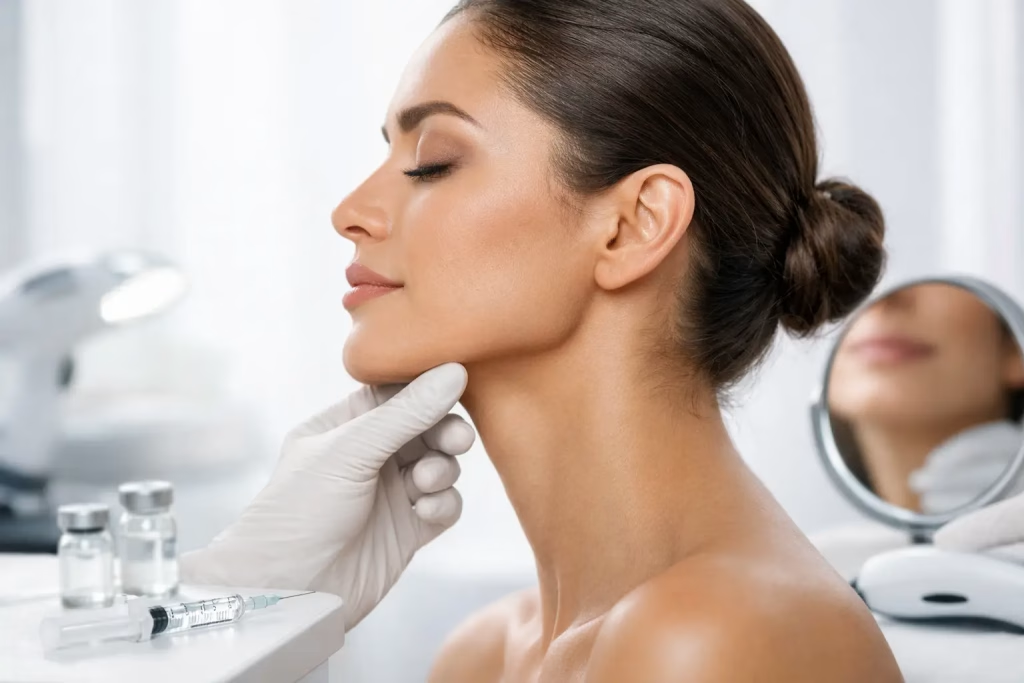
A well-defined jawline can make the whole face look more rested, structured, and refined. But when the lower face starts to look softer – whether from genetics, skin laxity, volume changes, or a fuller chin area – the solution is rarely one-size-fits-all. The best treatments for jawline definition depend on what is causing the blur in the first place.
That distinction matters more than most people expect. Some patients need lifting, not slimming. Others need support along the jawline rather than fat reduction under the chin. And for many, the most elegant result comes from combining treatments instead of relying on a single procedure to do everything.
What affects jawline definition in the first place?
Jawline definition is shaped by bone structure, skin quality, fat distribution, muscle activity, and age-related volume loss. In younger patients, a less defined jawline is often linked to genetics or a naturally fuller lower face. In more mature patients, the jawline may soften because collagen declines, the skin begins to loosen, and the tissues gradually descend.
The area under the chin also plays a major role. Even a small amount of submental fullness can make the jawline appear less sharp from the front and side. At the same time, a weak chin, jowling, or loss of support near the cheeks can all affect facial contour in ways that people often describe simply as “I’ve lost my jawline.”
This is why a thoughtful assessment matters. Treating the wrong issue can lead to disappointment, even if the treatment itself is well performed.
Best treatments for jawline definition by concern
The most suitable approach depends on whether the priority is skin tightening, contour enhancement, face slimming, or reducing fullness below the chin.
For mild to moderate skin laxity
When the jawline looks softer because the skin and deeper tissues have started to loosen, energy-based lifting treatments are often a strong option. Ultherapy uses focused ultrasound to target deeper structural layers, while Thermage uses radiofrequency to improve skin firmness and support collagen remodeling. Both are popular for patients who want a non-surgical approach with minimal disruption to daily life.
The trade-off is patience. These treatments are not designed to create an overnight transformation. Results usually develop gradually as collagen renews, and they tend to look more natural precisely because the change is progressive. For the right candidate, this can be a major advantage.
Still, not everyone is ideal for skin tightening alone. If there is significant heaviness, volume imbalance, or a weak chin, the result may be subtle unless lifting is paired with another contouring treatment.
For sharper structure and contour
Injectable contouring can be one of the most precise ways to improve jawline definition. Strategic filler placement along the mandibular angle, pre-jowl area, or chin can create cleaner lines and better balance, especially when the issue is structural rather than weight-related.
This works particularly well for patients whose lower face lacks definition even though the skin quality is still relatively good. A small amount of expertly placed filler can improve projection and create a more sculpted profile without making the face look overdone.
Technique matters enormously here. The jawline should look elegant, not heavy. In a premium doctor-led setting, assessment goes beyond simply adding volume. The goal is to support facial harmony, taking into account chin projection, cheek structure, and the overall proportions of the face.
For lower face bulk and a wider appearance
Sometimes the concern is not laxity or loss of structure, but masseter prominence. Patients who clench, grind their teeth, or naturally have stronger jaw muscles may feel that the lower face looks broader or squarer than they would like. In these cases, muscle-relaxing injectables can soften the masseter area and create a slimmer lower-face shape over time.
This is a very different treatment from jawline filler, even though both affect the contour of the jaw. Masseter reduction is best for width caused by muscle bulk. It will not lift sagging skin or remove a double chin.
That distinction is one reason personalized planning is so important. The same complaint – “I want a more defined jawline” – can point to very different anatomical causes.
For a double chin or submental fullness
If fullness under the chin is obscuring the jawline, fat reduction may be the priority. In these cases, contouring the jaw itself without addressing the area beneath it often leaves the result incomplete.
Depending on the patient, treatment may involve injectable fat-dissolving solutions or device-based contouring intended to improve the submental profile. This category tends to suit patients with pinchable fullness rather than loose, hanging skin. If laxity is also present, combining fat reduction with a tightening treatment often creates a more polished outcome.
Patience is useful here as well. Fat reduction typically takes place over a series of sessions, and the final result builds gradually. For many patients, that slower progression feels discreet and easier to fit into a professional lifestyle.
When combination treatment gives the best result
The best treatments for jawline definition are often layered rather than isolated. A patient with early jowling and a weaker chin may benefit from both skin tightening and structural filler. Someone with a fuller lower face may combine masseter slimming with chin support. Another patient may need submental fat reduction first, followed by tightening once the area beneath the jaw is leaner.
This combination approach tends to produce results that look balanced instead of obvious. It also allows the treatment plan to reflect how faces actually age. Rarely does only one thing change.
At a clinic such as Kelly Oriental Aesthetic Clinic, this kind of planning is part of the value of a doctor-led consultation. The face is assessed as a whole, so the recommendation is based on anatomy, tissue quality, and the result you want to see in real life – not just in a close-up photo.
What to expect from non-surgical jawline treatments
Most non-surgical jawline treatments are attractive because they offer visible refinement without the downtime and commitment of surgery. That said, realistic expectations are essential.
Non-surgical options can define, lift, slim, and improve contour, but they have limits. They are best for mild to moderate concerns and for patients who want natural-looking improvement. If there is advanced skin laxity or more significant tissue descent, a surgical solution may provide a stronger result.
Longevity also varies. Energy-based treatments stimulate collagen gradually and may be repeated for maintenance. Injectables typically need upkeep over time, depending on the product used and the patient’s metabolism. Treatments for muscle bulk or submental fullness also require an individualized schedule.
For many patients, this is not a drawback. It creates flexibility. The face can be refined gradually, with adjustments based on how the tissues respond and how aesthetic preferences evolve.
How to choose the right treatment plan
The most effective starting point is not choosing a device or injectable. It is identifying the real cause of the concern. Ask whether the jawline looks less defined because of loose skin, extra fullness, muscular width, weak projection, or a mix of factors.
Then consider your preference for pace and maintenance. Some patients want gradual collagen-led improvement with very little visible change immediately after treatment. Others are comfortable with injectables because they appreciate precise shaping and more immediate contour enhancement. Neither is inherently better. It depends on your anatomy, priorities, and comfort level.
A good consultation should feel curated, not transactional. You should understand what each treatment can realistically achieve, what it cannot do, and whether a staged plan would serve you better than trying to correct everything at once.
A refined jawline is not only about sharp angles. It is about balance, support, and the quiet confidence that comes from looking more sculpted without looking altered. The right treatment should bring the lower face back into focus in a way that still feels entirely like you.
