

Uncategorized
Best Treatments for Under Eye Lines
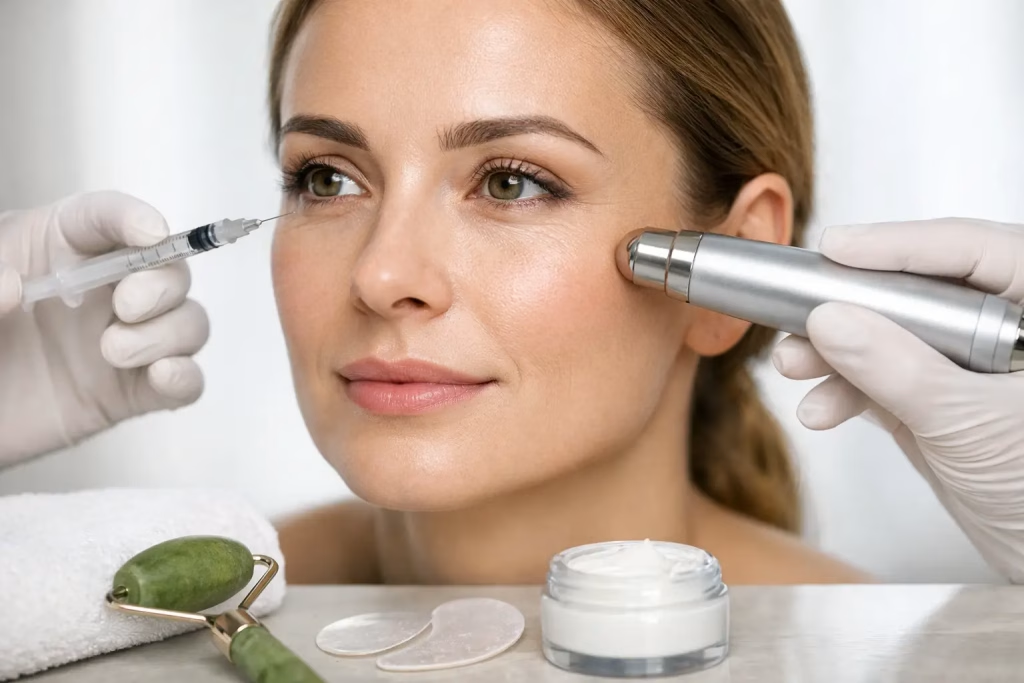
If under eye makeup has started settling where it used to glide, you are not imagining it. The best treatments for under eye lines depend on why those lines are showing up in the first place – dehydration, collagen loss, repetitive movement, thinning skin, or a mix of all four. The under eye area is delicate, highly expressive, and often one of the first places to reveal fatigue and age, which is why a thoughtful treatment plan matters more here than a one-size-fits-all fix.
Why under eye lines are harder to treat than other wrinkles
Under eye lines can look similar from a distance, but they do not all behave the same way. Some are fine, crepey lines caused by dryness and thinning skin. Others become more visible when you smile, squint, or speak. Some are tied to volume loss in the tear trough, where shadowing makes texture look deeper than it really is.
That distinction matters because the wrong treatment can leave the area looking unchanged, or in some cases, heavy and overdone. The best results usually come from matching the treatment to the true cause rather than chasing the line itself.
Sun exposure, lack of sleep, stress, and natural collagen decline all play a role. Genetics matter too. Some patients develop under eye lines early because they naturally have thinner skin or stronger muscle movement around the eyes. This is why a proper assessment is often more valuable than starting with the trendiest option.
Best treatments for under eye lines by concern
If the issue is early fine lines and crepiness, skin quality should be the first focus. When the skin under the eyes is dehydrated or losing elasticity, treatments that improve hydration and stimulate collagen often produce the most elegant change.
Skin boosters for thin, crepey under eye skin
Skin boosters are often one of the most refined options for patients who want the under eye area to look smoother, fresher, and less dry without changing facial expression. These microinjections are designed to improve hydration within the skin and support better texture over time.
For under eye lines, this can be especially helpful when the skin looks fragile, papery, or makeup tends to crease by midday. Results are usually not dramatic overnight, but they can be quietly impressive over a series of sessions. The trade-off is patience. Skin boosters are ideal for improving quality, but they do not replace volume if hollowing is the main concern.
Energy-based treatments for collagen support
When collagen loss is contributing to laxity and fine wrinkling, energy-based treatments can be a strong option. Ultrasound and radiofrequency technologies are often used to support firmer skin by stimulating collagen remodeling over time.
This category suits patients who want natural-looking rejuvenation and prefer a gradual improvement rather than a sudden change. It can be particularly appealing for professionals who want to look rested, not obviously treated. That said, the under eye area is delicate, so treatment settings, device selection, and provider experience matter enormously. More energy is not always better.
Micro-focused resurfacing for texture
For patients whose under eye lines are closely tied to skin texture, carefully selected resurfacing treatments may help refine the surface and encourage renewal. This approach can soften fine lines and improve the look of weathered or uneven skin.
The nuance here is downtime and tolerance. Some resurfacing options bring excellent improvement but can involve redness, temporary dryness, or a short recovery period. In a premium clinical setting, this is often planned as part of a curated skin journey rather than a quick lunch-hour fix.
Injectables for dynamic lines
If your under eye lines become most obvious when you smile or squint, muscle movement may be contributing. In certain cases, carefully placed neuromodulators can soften the pull of the orbicularis muscle around the eye and reduce the appearance of dynamic wrinkling.
This is an area where finesse matters. Too much can affect natural expression or make the smile look less fluid. Too little may do very little. The goal is not to freeze the eye area, but to soften excessive creasing while preserving warmth and movement.
Dermal filler for shadowing and structural loss
Sometimes what patients describe as under eye lines is actually a combination of fine wrinkles and hollowing. When the tear trough loses support, shadows deepen and the skin can appear more folded than it is. In these cases, dermal filler may be considered to restore structure and reduce the tired look.
Not everyone is a good candidate. Filler under the eyes requires conservative technique and careful patient selection because the area can hold water or reveal product if placed poorly. For the right person, it can be transformative. For the wrong person, it can feel puffy or unnatural. This is why a doctor-led evaluation is essential.
What usually works best: combination treatment
The best treatments for under eye lines are often not a single treatment at all. Most patients benefit from a combination plan that addresses skin quality, collagen support, and facial structure in the right sequence.
For example, someone in their early thirties with mild crepiness may do beautifully with skin boosters and medical-grade skincare. Someone in their forties with lines, laxity, and hollowing may need a more layered approach, such as collagen-stimulating energy treatment followed by targeted injectable work. Someone with very dry, stressed skin may first need barrier repair and hydration before any device-based treatment delivers its full benefit.
This is where bespoke planning becomes more than a luxury phrase. Under eye rejuvenation is one of the clearest examples of why individualized care leads to better outcomes.
What to look for in a clinic
Because the eye area is unforgiving, treatment quality depends as much on judgment as on technology. A good clinic should assess whether your concern is texture, movement, volume loss, pigmentation, or skin laxity. Those categories often overlap, but one is usually dominant.
You should also expect a realistic conversation about what improvement looks like. Under eye lines can absolutely be softened, and the area can look brighter, smoother, and more rested. But chasing perfection in a high-expression area rarely ends well. The most sophisticated results respect the anatomy of the face and the way you naturally move.
At a doctor-led aesthetic clinic such as Kelly Oriental Aesthetic Clinic, that process is typically centered on tailored treatment planning rather than pushing a single hero procedure. For patients who value both visible results and a polished experience, that level of discretion and customization is part of the treatment itself.
Supporting under eye treatments at home
In-clinic treatments do the heavy lifting, but daily habits still influence how long results last. Consistent sun protection is non-negotiable. UV exposure breaks down collagen and can make fine lines return faster. A well-formulated eye treatment with humectants, peptides, or retinoid alternatives may also help maintain smoother texture between appointments.
Sleep, stress, and hydration affect the under eye area more than most people realize. They may not cause every line, but they can make the area look more drawn and fragile. Small improvements in routine often make professional treatments look better and last longer.
When to start treating under eye lines
Earlier is often easier. Fine lines respond more readily than deeper folds because the skin still has more resilience. That does not mean you need aggressive treatment at the first sign of creasing. It means that subtle intervention, started at the right time, can preserve a fresher look with less effort.
There is also no single age when treatment becomes appropriate. Some patients seek help in their late twenties because of inherited hollowness or thin skin. Others do not need anything beyond skincare until much later. The right time is when the concern starts affecting how you feel when you look in the mirror, and when a professional can identify a treatment path that makes sense for your anatomy and goals.
The under eye area asks for restraint, precision, and a clear eye for detail. When those come together, the result is not a different face. It is simply a more rested, refined version of your own.
