
Uncategorized
How Hydrafacial Clears Congested Pores
Jun
Congested pores rarely announce themselves as a single problem. They show up as rough texture across the nose, tiny bumps along the forehead, a dull cast that makeup cannot quite smooth over, and skin that feels both oily and dehydrated at once. That is why so many patients ask how Hydrafacial clears congested pores – because they want more than a temporary clean feeling. They want skin that looks fresher, calmer, and more refined without the downtime of aggressive extractions.
Hydrafacial has earned that reputation because it does not treat congestion as a surface issue alone. It works through a sequence of exfoliation, vacuum-assisted extraction, and serum infusion designed to clear buildup while supporting the skin barrier. For busy professionals and anyone managing city skin stress, that balance matters.
Why pores become congested in the first place
Pores do not technically open and close, but they can appear larger and more noticeable when they are filled with excess oil, dead skin cells, sunscreen residue, makeup, and environmental debris. In humid climates, congestion can build quickly, especially if skin is already producing more sebum or reacting to comedogenic products.
There is also a difference between occasional buildup and chronic congestion. Some people notice blackheads mostly around the T-zone. Others develop persistent whiteheads, uneven texture, or inflamed breakouts. Hormones, skincare habits, stress, and dehydration can all influence how easily pores become blocked.
This is where a well-designed professional treatment makes sense. Over-cleansing and harsh scrubs often make skin feel stripped, but they do not always remove compacted debris effectively. In some cases, they can trigger more irritation and oil imbalance.
How Hydrafacial clears congested pores
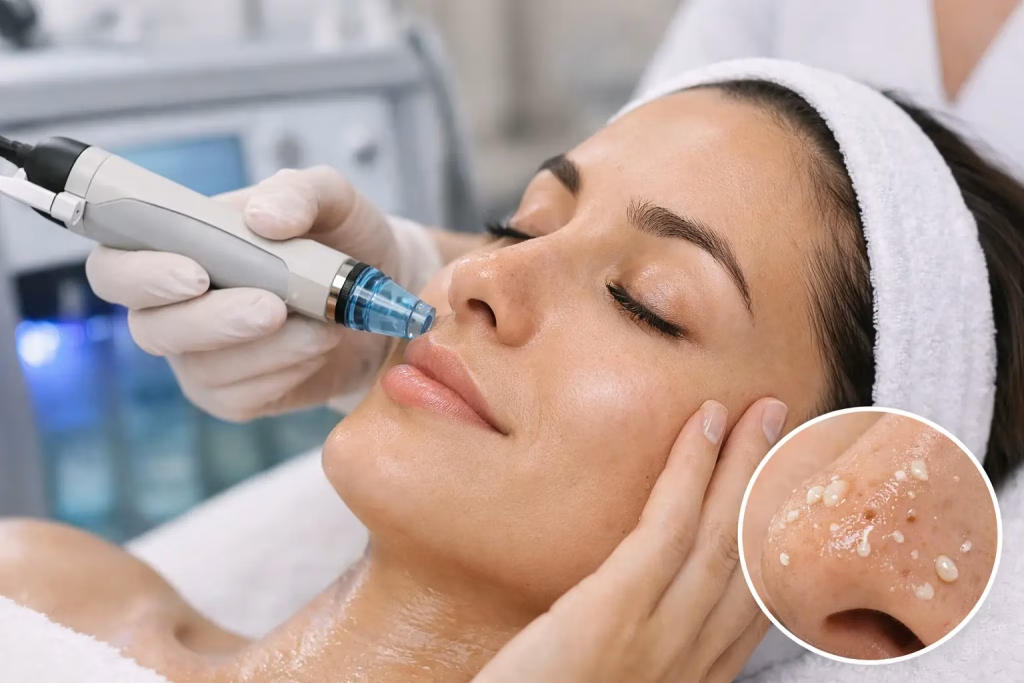
Hydrafacial is effective because it combines several skin-clearing actions in one treatment rather than relying on a single step. The technology uses a spiral tip delivery system that helps loosen debris, lift impurities, and infuse the skin with treatment solutions at the same time.
Step 1: Gentle exfoliation loosens the buildup
The first stage focuses on removing the layer of dead skin that traps oil and debris inside the pore opening. This is a key reason Hydrafacial suits many people who want visible refinement without the roughness of manual scrubbing.
When dead cells sit on the surface for too long, pores can look more pronounced and the skin starts to feel uneven. By clearing that superficial buildup first, Hydrafacial creates a cleaner path for the next extraction step. Skin often looks brighter almost immediately, not because it has been polished aggressively, but because the dulling layer has been lifted away.
Step 2: Chemical exfoliation helps dissolve congestion
Hydrafacial typically incorporates a mild blend of acids, often including glycolic and salicylic acid, to soften the material inside congested pores. This matters because not all clogs can be pulled out cleanly through pressure alone.
Salicylic acid is especially useful for oily and congestion-prone skin because it is oil-soluble, meaning it can move into the pore lining and help break down sebum and debris. Glycolic acid works more on surface exfoliation and texture. Together, they help loosen what is compacted without the trauma that can come with forceful extraction.
For patients who are nervous about peels or have had mixed experiences with stronger exfoliants, this controlled approach often feels more approachable. The skin is treated with precision, not pushed into unnecessary inflammation.
Step 3: Vortex suction removes impurities
This is the part many patients notice most. After the buildup has been loosened, the device uses vacuum-like suction to extract oil, debris, and impurities from the pores. Compared with traditional manual extractions, this method is generally more consistent and often more comfortable.
That does not mean it replaces every type of extraction. Very deep comedones or stubborn milia may still need a more targeted approach depending on the skin. But for widespread congestion across the nose, chin, and forehead, Hydrafacial can be remarkably effective at creating a cleaner, smoother look in a single session.
The immediate benefit is not only that pores appear clearer. Skin often feels lighter and less coated. Makeup sits better. Texture looks more even under natural light, which is usually the real test.
Why hydration matters after clearing pores
One of the reasons Hydrafacial stands apart from more stripping treatments is what happens after extraction. Once the skin is cleared, it is infused with hydrating and skin-supporting serums.
This step is not an indulgent extra. It is part of why the treatment can improve congestion without leaving the skin angry or unbalanced. When the barrier is dehydrated, the skin may compensate with more oil production, which can feed the cycle of clogged pores. Reintroducing hydration helps support recovery and leaves the complexion looking plumper and calmer rather than tight and shiny.
For many adults, congested pores are not caused by oil alone. They are the result of combination skin, environmental stress, barrier disruption, and inconsistent exfoliation. Hydrafacial addresses that complexity better than a one-note treatment.
What results can you realistically expect?
The most immediate changes are usually smoother texture, cleaner-looking pores, and a fresher overall tone. Blackheads may appear reduced, and the skin often reflects light more evenly. If congestion has been making the complexion look tired or coarse, the difference can be quite visible after one visit.
That said, results depend on the starting point. If pores are mildly clogged, one treatment may produce a very polished finish. If congestion is longstanding, with oil imbalance, acne activity, or enlarged pores, a series may be more appropriate. Pore size is also influenced by genetics, collagen support, and sebum production, so no facial can erase pores entirely.
This is where expectation-setting matters. Hydrafacial can clear what is inside the pore and improve how the skin looks, but it is not a cure for every cause of congestion. In many cases, the best results come from pairing regular treatments with a tailored skincare plan and, when needed, doctor-guided solutions for acne, inflammation, or textural concerns.
Who tends to benefit most?
Hydrafacial is especially appealing for those with dullness, blackheads, mild breakouts, oily T-zones, and rough texture. It is also popular before events because the skin often looks clearer and more luminous without significant downtime.
Sensitive skin can sometimes do well with Hydrafacial too, but not every protocol suits every face. Active rashes, certain forms of rosacea, irritated acne, or a compromised barrier may require a modified approach or a different treatment altogether. That is why professional assessment matters more than following what worked for someone else.
At a doctor-led aesthetic clinic, the advantage is not just the device itself. It is the judgment behind the treatment selection, the strength of exfoliation chosen, and whether congestion is better addressed with Hydrafacial alone or integrated into a broader skin plan.
How often should you get Hydrafacial for congested pores?
It depends on how quickly your skin re-congests. For some patients, monthly sessions are ideal for maintenance. For others with more active oil production or recurring blackheads, a closer interval at the beginning may help reset the skin before moving into upkeep.
Lifestyle also plays a role. Frequent makeup wear, workouts, sunscreen layering, and time spent in humid urban environments can all increase buildup. If your skin tends to feel rough again within a few weeks, that is a sign maintenance matters as much as the first treatment.
Clinics such as Kelly Oriental Aesthetic Clinic often position Hydrafacial as part of a curated skin journey rather than a one-off fix, and that framing is useful. Congestion responds best to consistency, not urgency.
How to make your results last longer
After a Hydrafacial, skincare should support the freshly cleared pores rather than overload them. That usually means thoughtful cleansing, regular but not excessive exfoliation, and products that hydrate without feeling heavy or occlusive.
It also helps to be realistic about what works against you. Sleeping in makeup, using rich products unsuited to your skin type, and switching actives too often can all recreate congestion quickly. Even stress and poor sleep can show up in oil balance and skin turnover.
The refined look that follows a good Hydrafacial is partly about the treatment itself and partly about what you do next. When the skin is maintained well, pores stay clearer for longer and the complexion holds onto that smooth, polished quality.
Congested pores can make skin feel perpetually unfinished, no matter how much you spend on serums or makeup. A treatment like Hydrafacial works because it clears, softens, and replenishes in the same sitting – which is exactly what many modern complexions need: precision, not punishment.
