

Uncategorized
Can Laser Remove Pigmentation Effectively?
Jun
Pigmentation rarely appears all at once. It tends to build quietly – a little melasma after sun exposure, a few sunspots that linger longer than they used to, post-acne marks that stay well beyond the breakout itself. If you are asking, can laser remove pigmentation, the honest answer is yes in many cases, but not every type of pigmentation behaves the same way.
That distinction matters. A beautifully even result usually comes from choosing the right laser for the right pigment, at the right intensity, with the right aftercare. Treating pigmentation well is less about chasing a quick fix and more about understanding what the skin is trying to tell us.
Can laser remove pigmentation in all cases?
Laser treatment can significantly reduce many forms of pigmentation, and in some cases it can clear them dramatically. But it is not a universal answer for every brown patch or uneven tone. Pigmentation is a broad category that includes sunspots, freckles, post-inflammatory hyperpigmentation, melasma, and deeper dermal pigment. Each one responds differently.
Sun-induced pigmentation often responds very well to laser-based treatment because the pigment is relatively well defined and easier to target. Post-inflammatory pigmentation, such as marks left behind after acne or irritation, can also improve with the right approach, especially when inflammation is under control. Melasma is more complex. It may lighten with laser treatment, but it is also prone to recurrence and can worsen if treated too aggressively.
This is why a proper medical assessment comes first. What looks like one type of pigmentation to a patient can be something else entirely under clinical evaluation. Skin tone, sensitivity, heat tolerance, and lifestyle habits also influence the safest plan.
How laser pigmentation treatment works
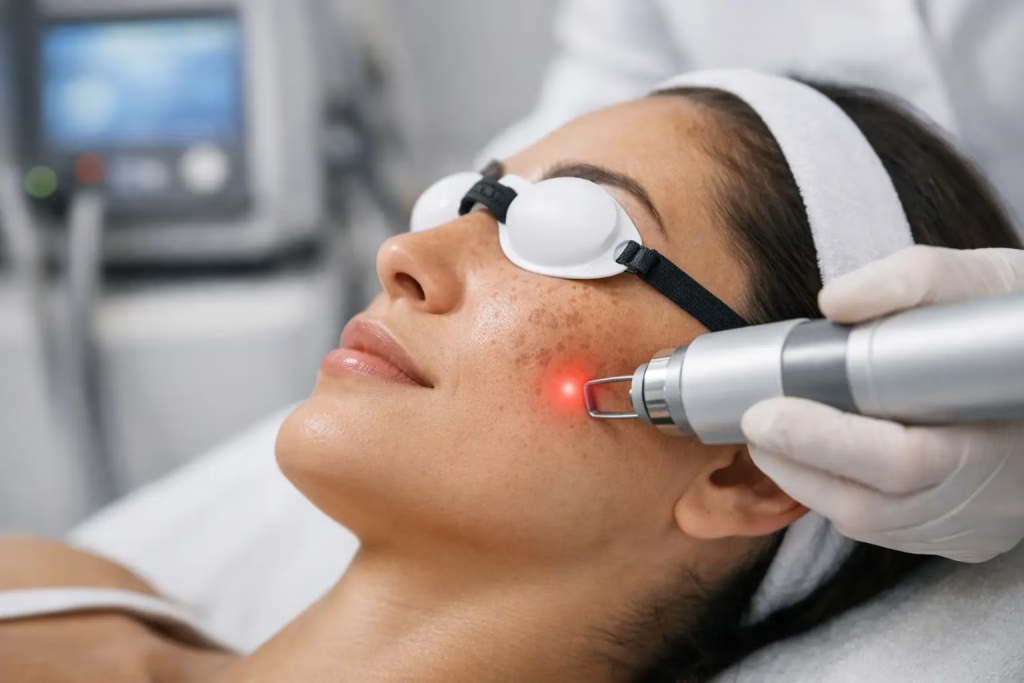
Laser technology works by delivering energy into the skin that is absorbed by pigment. That pigment then breaks apart into smaller particles, which the body gradually clears away. The treatment can also stimulate skin renewal, which helps improve overall tone and clarity over time.
Different devices work in different ways. Some target pigment in short, precise bursts, while others use photoacoustic energy to shatter pigment with less heat. That difference can be especially relevant for patients with melasma-prone or reactive skin, where excessive heat may trigger rebound pigmentation.
At a doctor-led clinic, treatment is not simply about choosing a powerful machine. It is about calibrating the settings to match the depth of pigment, the patient’s skin type, and the outcome being pursued. A refined approach often produces better long-term results than an aggressive one.
Why Pico Laser is often preferred
Pico Laser is widely used for pigmentation because it delivers ultra-short pulses that target pigment efficiently while minimizing unnecessary thermal injury to surrounding skin. For many patients, this means a treatment experience with less downtime and a lower risk of irritation compared with older, more heat-based methods.
This makes it a strong option for common concerns such as sunspots, freckles, acne marks, and uneven tone. It can also be incorporated into a broader skin rejuvenation plan when the goal is not only to fade spots, but to improve brightness and texture more elegantly overall.
Which types of pigmentation respond best?
Not all pigmentation clears at the same pace. Superficial pigmentation usually responds faster than deeper pigment. Sunspots and freckles are often among the most satisfying to treat because they are more localized and easier for laser energy to identify.
Post-inflammatory hyperpigmentation can also respond well, but only when the underlying trigger has settled. If acne, friction, or inflammation is still active, new marks can continue to form even while old ones fade.
Melasma deserves special caution. It is influenced not only by sun exposure, but often by hormones, heat, and genetic tendency. Laser can be part of treatment, but usually not as a standalone solution. The best results often come from combining carefully selected in-clinic treatments with pigment-regulating skincare and disciplined sun protection.
When laser may not be the first choice
There are situations where laser is not the ideal first step. If the skin barrier is compromised, if there is active inflammation, or if the diagnosis is uncertain, it may be wiser to stabilize the skin before using energy-based treatment. In some cases, topical management, oral support, or gentler skin therapies may prepare the skin more effectively and reduce the chance of complications.
This is especially important for deeper skin tones or patients with a history of post-treatment sensitivity. Laser can still be appropriate, but planning has to be more deliberate.
What results should you realistically expect?
Most patients should think in terms of improvement rather than instant perfection. Some spots darken briefly before flaking off or fading. Others lighten gradually over several weeks. Depending on the type and depth of pigmentation, visible improvement may happen after one session, but a series is often recommended for a more polished result.
The skin can look clearer, brighter, and more even, but maintenance matters. Pigmentation has memory. Sun exposure, hormones, heat, and inflammation can all encourage it to return. The goal is not only to remove visible pigment, but to reduce the conditions that allow it to come back.
For this reason, a thoughtful plan may include laser sessions spaced over time, paired with medical-grade skincare and regular review. In a premium clinical setting, that tailored pacing is often what separates short-term fading from a more sustained transformation.
What does recovery look like?
Recovery depends on the laser used and the intensity of treatment. Many modern pigmentation treatments involve minimal downtime. Patients may experience mild redness, warmth, or temporary darkening of treated spots for several days. Some lesions may develop a slightly dry, coffee-ground appearance before they shed naturally.
The key is to protect the skin while it heals. That means consistent sunscreen use, avoiding unnecessary heat exposure, and following post-care instructions closely. Skin that is freshly treated is more vulnerable to irritation and UV damage, and that can undermine results.
Most patients can return to daily activities quickly, but social downtime varies. If a major event is approaching, timing should be discussed in advance so treatment can be scheduled gracefully.
Safety, skin tone, and why technique matters
Laser treatment for pigmentation should always be approached with respect for skin biology. Done well, it can be transformative. Done carelessly, it can trigger irritation, rebound pigmentation, or uneven results.
This is where clinical judgment matters as much as technology. Darker skin tones often require more conservative settings and a more measured treatment rhythm. Melasma-prone patients may need lower-heat protocols. Patients with sensitive skin may benefit from combining laser with barrier support and anti-inflammatory care.
At a clinic such as Kelly Oriental Aesthetic Clinic, where treatment planning is intentionally personalized, that nuance becomes part of the experience. The conversation is not simply, can laser remove pigmentation. It becomes, what kind of pigmentation is present, what is the safest way to treat it, and how do we preserve the result with elegance and precision?
How to know if you are a good candidate
A good candidate is someone with a clear diagnosis, realistic expectations, and a willingness to commit to maintenance. Patients who use sunscreen consistently and follow medical advice tend to do well because they are protecting the investment they make in their skin.
It also helps to be honest about timing. If your skin has frequent flare-ups, if you are pregnant, if you have active tanning habits, or if you are hoping for complete removal of a complex condition like melasma in a single visit, your treatment plan may need adjustment.
The most successful pigmentation journeys are usually curated, not rushed. They balance visible improvement with skin stability, because luminous skin is not just about removing color irregularities. It is about treating the skin in a way that keeps it calm, resilient, and refined.
If pigmentation has started to make your skin look tired or uneven, laser can be a highly effective option, but the best results come when treatment is selected with care rather than urgency. The right plan does more than fade a spot – it restores confidence in the way your skin looks in natural light.
