

Uncategorized
A Guide to Cellulite Treatments That Work
Aug
Cellulite rarely responds to a single miracle cream, a punishing workout routine, or a quick fix before a holiday. It is a structural concern beneath the skin, which is why a thoughtful guide to cellulite treatments begins with a more reassuring truth: improvement is possible, but the right approach depends on the type of dimpling, the quality of your skin, and the results you want to see.
For many people, cellulite is not about weight or fitness. It can affect lean, active individuals as readily as anyone else, often appearing on the thighs, buttocks, hips, or abdomen. A refined treatment plan should focus on smoother-looking contours while respecting your anatomy, lifestyle, and comfort.
Why Cellulite Forms
Cellulite develops when fibrous connective bands tether the skin downward while underlying fat pushes upward. This creates the familiar textured or dimpled appearance. Genetics, hormones, skin thickness, age, and the distribution of body fat can all influence how visible it becomes.
Women experience cellulite more often because their connective tissue has a different arrangement than men’s. As collagen and elastin naturally decline over time, the skin may become thinner and less able to conceal unevenness underneath. Fluid retention can also make texture look more pronounced on certain days, even though it is not the root cause.
This is why cellulite should not be confused with excess body fat. Body-contouring treatments may reduce localized fullness, but they do not automatically release the fibrous bands responsible for dimpling. Similarly, losing weight may improve the appearance for some people, while leaving cellulite unchanged or making looser skin more noticeable for others.
Guide to Cellulite Treatments: Start With Your Goal
Before selecting a treatment, consider what you are hoping to change. Are you mainly concerned by a few deep, fixed dimples? Is the issue a more diffuse crepey texture across a larger area? Or does skin laxity make cellulite appear more visible? These distinctions matter because each concern benefits from a different strategy.
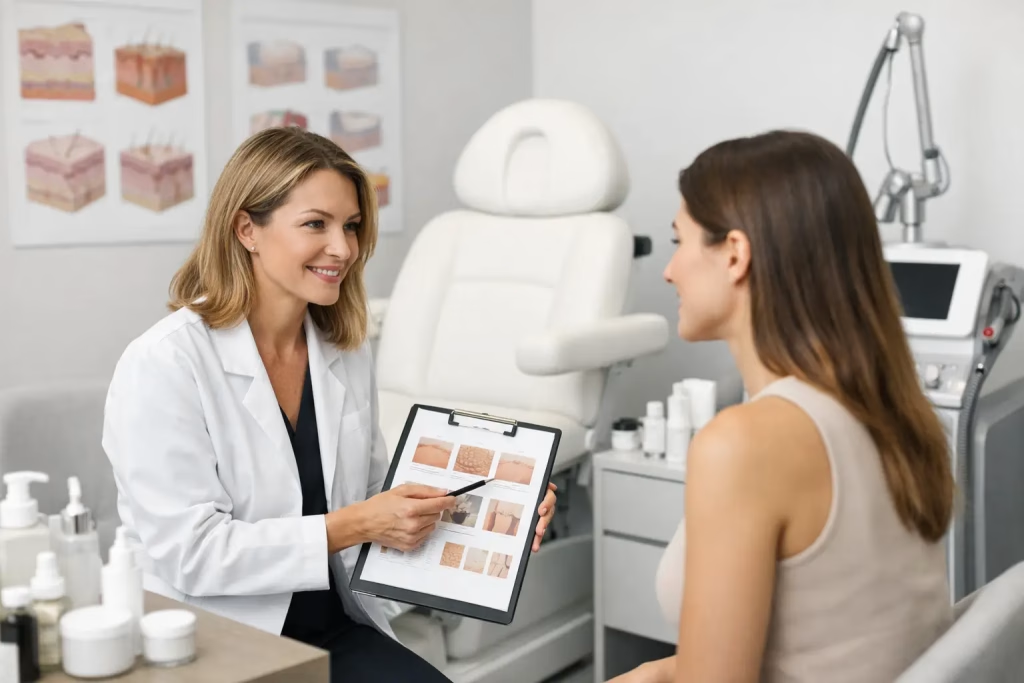
A professional assessment should examine the area while standing and at rest, as cellulite can look quite different depending on posture and lighting. It should also consider skin quality, degree of laxity, the presence of localized fat, medical history, and your tolerance for downtime.
The most satisfying plans are often layered rather than excessive. A person with mild texture and firm skin may benefit from a noninvasive collagen-stimulating approach. Someone with distinct tethered depressions may require a treatment designed to address those bands directly. If laxity is the dominant issue, strengthening the skin may be the more elegant first step.
At-Home Care Has a Supporting Role
A consistent strength-training routine can help develop muscle beneath the skin and improve the overall appearance of the thighs and glutes. Hydration, balanced nutrition, and stable weight can support skin health and minimize temporary fluctuations caused by fluid retention. These habits are valuable, but they do not remove the fibrous structure that causes cellulite.
Topical products containing retinol may gradually support collagen in appropriate candidates, while caffeine-based formulas can create a temporary tightening effect. Massage tools, dry brushing, and lymphatic-style treatments may reduce puffiness for a short period and leave the skin looking more polished before an event. They should be viewed as maintenance rituals, not permanent cellulite correction.
Be cautious of dramatic claims. If a product promises to erase cellulite permanently in days, it is not setting a realistic expectation. Meaningful changes in skin texture take time, and durable improvement usually requires an in-clinic approach tailored to the concern.
In-Clinic Options for Visible Improvement
Modern aesthetic medicine offers several ways to improve cellulite, but no single modality suits every body. The most appropriate treatment is guided by the depth of dimpling, the treatment area, desired degree of change, and willingness to accept recovery time.
Radiofrequency and Collagen-Stimulating Treatments
Radiofrequency-based body treatments use controlled heat to encourage collagen remodeling and improve skin firmness. They can be particularly suitable when cellulite is accompanied by mild skin laxity or a softer, more diffuse texture. Depending on the technology and protocol, treatments may also incorporate massage, mechanical stimulation, or energy delivery to support circulation and tissue remodeling.
Results are typically gradual. A series may be recommended, with changes developing over several weeks to months as collagen renews. The appeal is minimal downtime and a comfortable, non-surgical experience. The trade-off is that results may be subtle for deep, sharply defined dimples, where tethering is the primary issue.
Acoustic Wave Therapy
Acoustic wave treatments use sound-wave energy to stimulate circulation and support connective-tissue remodeling. This option is often incorporated into a course of body treatments for mild to moderate cellulite, especially where a smoother surface appearance is the priority.
Like radiofrequency, acoustic wave therapy usually calls for a series rather than a one-time session. It can be an appealing option for those who prefer a treatment with little disruption to their routine. Results vary, and maintenance may be needed to preserve the improvement over time.
Subcision for Tethered Dimples
For individual depressions that remain visible regardless of weight changes or exercise, subcision may be considered. This minimally invasive technique releases the fibrous bands pulling the skin downward, allowing the surface to rise and appear smoother.
Subcision can offer more targeted correction for select types of cellulite, but it is not a casual lunchtime treatment. Bruising, swelling, tenderness, and recovery time should be expected. Technique, candidate selection, and aftercare are central to both safety and outcome, making a doctor-led consultation especially important.
Laser and Other Energy-Based Approaches
Certain laser-based procedures are designed to address cellulite by targeting fibrous bands, fat, and skin quality within the same treatment concept. These can be suitable for patients seeking a more comprehensive approach, though they may involve local anesthesia, a longer recovery period, and a higher investment than noninvasive methods.
Availability and treatment protocols vary by location and device. Rather than choosing based on a trend or a treatment name alone, ask what concern the technology is intended to address and how its expected result compares with its downtime.
How Long Do Results Last?
Cellulite treatments can provide visible improvement, but they do not stop natural aging, hormonal changes, or shifts in body composition. Treatments that release tethered bands may offer longer-lasting correction in the treated dimples, while collagen-stimulating treatments often benefit from periodic maintenance.
Your long-term result is shaped by the method used, the quality of your skin, and how your body responds. Photographs taken in consistent lighting before treatment can be helpful, as day-to-day changes are often more difficult to judge in the mirror. A reputable provider will discuss the likely degree of improvement honestly rather than promise perfectly smooth skin.
Safety and Questions Worth Asking
Cellulite treatment should feel considered, not rushed. During your consultation, ask whether your dimpling is primarily caused by tethering, skin laxity, localized fat, or a combination. Ask how many sessions may be needed, when results should become visible, what recovery looks like, and whether maintenance is likely.
You should also share any history of bleeding disorders, active skin infections, pregnancy, implanted devices, medication use, or prior procedures in the area. These details may affect which treatments are appropriate. A personalized plan is not simply a luxury – it is a safeguard against choosing a procedure that does not match your concern.
At Kelly Oriental Aesthetic Clinic, the most considered body journeys begin with understanding what the skin and underlying tissue truly need. The aim is never to chase an unrealistic surface, but to help you feel more confident in clothing, swimwear, and the quiet moments when you simply want to feel at ease in your own body.
Beautiful results are often the product of patience, precise treatment selection, and care that evolves with you. Give yourself permission to choose a plan that feels measured, medically guided, and designed around your version of confidence.
