
Uncategorized
Aesthetic Treatment for Acne Scars Explained
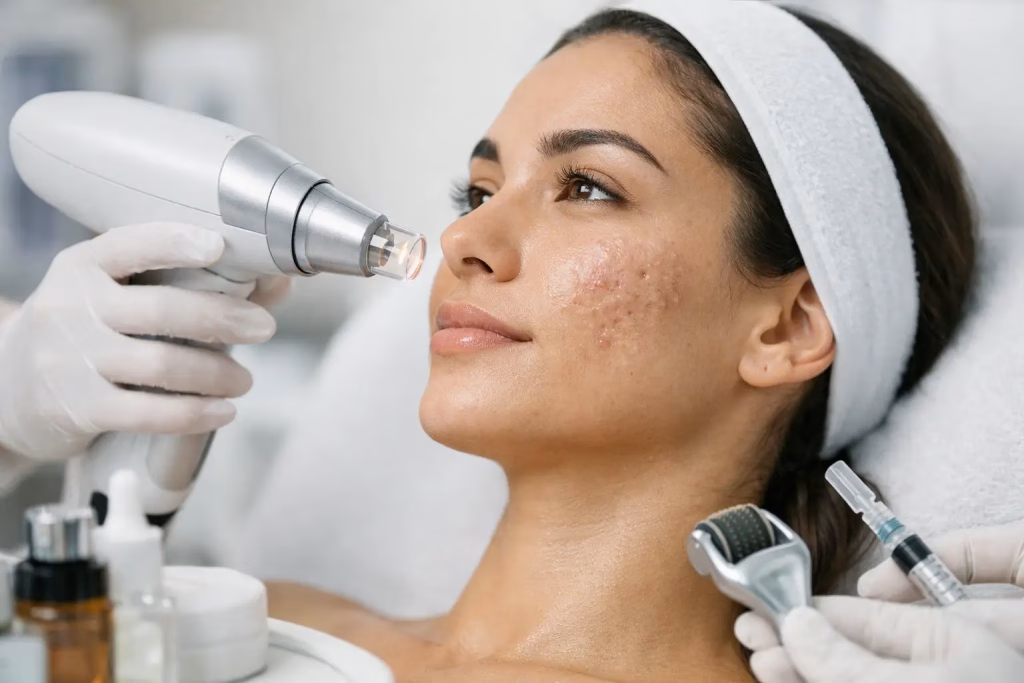
Acne may fade, but the texture it leaves behind can feel far more stubborn. For many adults, especially those balancing professional and social lives, acne scars become the issue that makeup cannot fully blur and skincare alone cannot meaningfully change. That is where Aesthetic Treatment for Acne Scars becomes relevant – not as a one-size-fits-all fix, but as a carefully selected treatment plan based on scar type, skin condition, and recovery preferences.
The first thing to understand is that acne scars are not all the same. Some appear as small, narrow indentations. Others create broader depressions, rolling unevenness, or persistent post-acne marks that make skin look rough and tired under certain lighting. Treating them well requires more than choosing the most popular device. It requires diagnosis, sequencing, and a realistic view of what skin remodeling can achieve over time.
Why acne scars need a customized approach
A common mistake is to talk about acne scars as though they are one problem with one answer. In practice, scar treatment depends on several variables at once: whether the scars are ice pick, boxcar, or rolling; whether there is active acne or inflammation; whether pigmentation is also present; and how resilient or sensitive the skin barrier is.
Skin tone matters too. In Asian skin, treatment planning often needs extra care to balance efficacy with the risk of post-inflammatory hyperpigmentation. An overly aggressive approach can create new concerns while trying to correct old ones. That is why doctor-led assessment matters. The best outcomes usually come from measured, staged improvement rather than chasing dramatic change in a single session.
There is also the question of expectations. Deep, tethered scars rarely disappear completely. What well-planned treatment can do is soften edges, improve skin texture, stimulate collagen renewal, and create a visibly smoother surface so scars attract less attention. For many patients, that shift is significant enough to restore confidence in bare skin.
The main types of aesthetic treatment for acne scars
When people ask about the best aesthetic treatment for acne scars, the honest answer is that the right choice depends on the scar pattern.
Laser treatments are often central to acne scar management because they stimulate skin renewal and collagen remodeling. Pico Laser, for example, is known for addressing pigmentation and improving overall skin clarity, while also supporting texture refinement in selected cases. For patients whose acne scars are accompanied by uneven tone or post-acne marks, this can be especially useful because it targets more than one visible concern at a time.
For textural scars, collagen-inducing treatments may play a larger role. Fractional technologies and energy-based procedures can encourage the skin to repair itself from within, gradually smoothing shallow to moderate depressions. Results are progressive rather than immediate, which is why treatment plans are usually spaced over several sessions.
Microneedling-based approaches may also be considered when the goal is controlled skin remodeling with less downtime than some laser protocols. In certain patients, radiofrequency-assisted needling adds another level of dermal stimulation, which can be helpful for scar texture and pore refinement. This is particularly valuable when acne scarring sits alongside early skin laxity or uneven overall skin quality.
Subcision is another option for rolling scars that are tethered below the surface. These scars are pulled downward by fibrous bands, so no amount of superficial resurfacing fully corrects them on its own. Releasing those bands allows the skin to lift and can create a much smoother appearance when paired with other treatments afterward.
Some patients also benefit from injectables or skin boosters as part of a broader scar strategy. While these do not replace core scar treatments, they can improve hydration, skin quality, and overall finish, helping the complexion look healthier and more refined.
What your doctor is actually assessing
A consultation should do more than match you to a machine. A thoughtful assessment looks at scar depth, pattern, inflammation, pore size, oil production, pigmentation, skin sensitivity, and daily lifestyle. Someone who can tolerate a few days of visible recovery may be suitable for a different plan than someone who needs minimal downtime for work meetings or social events.
Your doctor should also ask whether you are still breaking out. Treating acne scars while acne remains active can be frustrating because new lesions may continue to create new marks. In many cases, control comes first, then resurfacing and collagen stimulation follow.
Another key factor is the age of the scar. Newer scars may respond differently from older, established ones. Fresh red or brown post-acne marks are not the same as true indented scars, even though patients often use the term loosely. This distinction matters because discoloration and textural change usually require different treatment tools.
How combination treatment often delivers better results
Single-treatment thinking is rarely ideal for acne scars. A patient may have boxcar scars on the cheeks, rolling scars near the jawline, enlarged pores across the T-zone, and lingering pigmentation from old breakouts. Expecting one modality to solve all of that is not realistic.
A more refined approach combines treatments in stages. For example, subcision may first address tethered rolling scars. Energy-based resurfacing or collagen-stimulating procedures can then target texture more broadly. Pico Laser may be introduced where pigmentation and overall tone need improvement. Skin-repair treatments can support healing and help maintain comfort during the process.
This kind of sequencing is where premium, personalized care makes a difference. It is not simply about having many devices available. It is about knowing when to use each one, when to pause, and how to build results safely over time. In a clinic setting such as Kelly Oriental Aesthetic Clinic, this tailored planning is part of what gives treatment its precision and polish.
Downtime, discomfort, and realistic timelines
One of the most frequent questions patients ask is how quickly they will see improvement. Some changes, such as brighter tone and a smoother feel, may be noticeable relatively early. Structural changes in acne scars, however, take longer because collagen remodeling is gradual.
Most patients should expect a series of sessions rather than a single appointment. Depending on the treatment chosen, sessions may be spaced weeks apart to allow healing and dermal renewal. Improvements tend to accumulate subtly, then become more obvious when comparing baseline photos to later stages.
Downtime varies. Some treatments cause temporary redness, swelling, dryness, or light flaking. More intensive resurfacing may require a longer social recovery period. Discomfort is usually manageable, especially when treatment is carried out with appropriate skin preparation and aftercare, but sensitivity levels differ from person to person.
The right plan is not always the strongest one. For many busy professionals, a series of lower-downtime treatments is a better fit than one aggressive session that disrupts work and routine. Good treatment design respects both skin biology and lifestyle.
Who is a good candidate for acne scar treatment
Most healthy adults with stable skin can explore treatment, but suitability depends on timing and skin condition. If acne is active, inflamed, or cystic, it may need to be settled first. If the skin barrier is compromised from overuse of acids, retinoids, or harsh home devices, it may need recovery before clinical treatment begins.
Good candidates are also prepared for a process rather than a quick fix. Acne scar revision is one of the most rewarding areas in aesthetic medicine, but it asks for patience. The best patients are those willing to commit to a plan, follow aftercare properly, protect their skin from sun exposure, and return for review rather than treating each session as a standalone event.
How to choose the right clinic
For acne scars, credentials and judgment matter as much as technology. A clinic should be able to explain why a treatment is being recommended, what type of scar it addresses, what kind of improvement is realistic, and what risks need to be managed for your skin type.
You should also feel that the experience is thoughtful, not rushed. Acne scars can be emotionally loaded, especially if they have affected confidence for years. A good clinic treats this concern with seriousness and care, combining medical clarity with a calm, reassuring environment.
The most sophisticated aesthetic treatment for acne scars is not necessarily the newest device or the most expensive package. It is the plan that matches your skin accurately, improves texture safely, and fits into your life well enough that you can complete it. When treatment is selected with that level of precision, smoother-looking skin becomes a credible, measurable goal rather than a vague promise.
