
Uncategorized
Best Doctor Led Facial Treatments for Your Skin
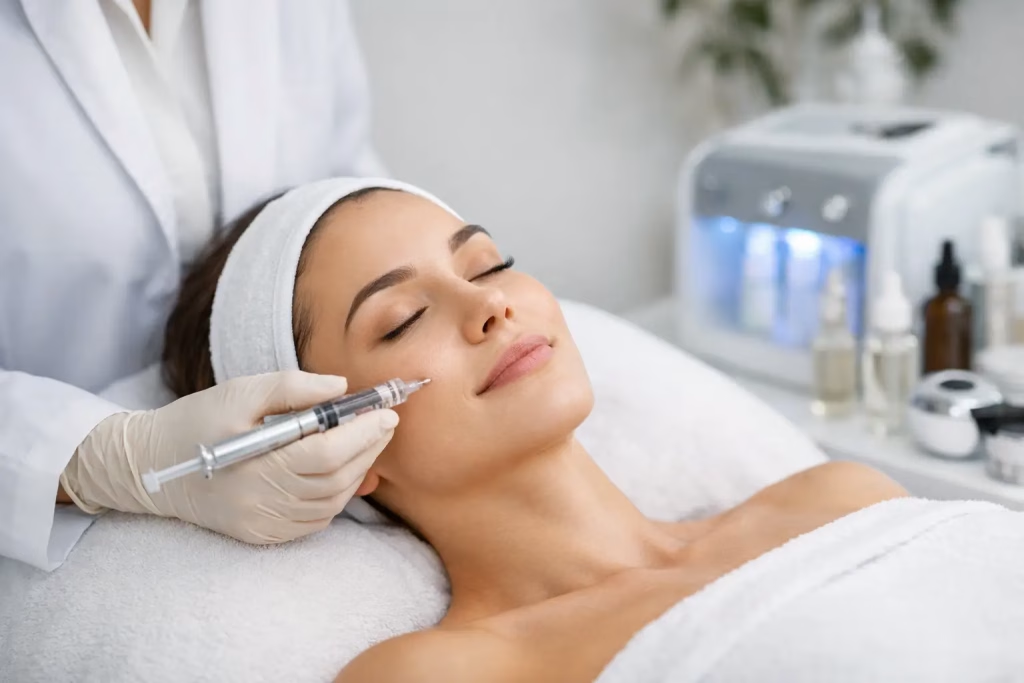
A facial can leave skin looking refreshed for a weekend. A well-designed medical aesthetic plan can address the concerns that keep returning in the mirror: stubborn pigmentation, acne scarring, enlarged pores, loss of definition, dehydration, and changes in skin firmness. The best doctor led facial treatments begin with a precise understanding of what your skin needs, rather than a one-size-fits-all menu.
For discerning patients, the difference is not simply access to more advanced technology. It is the confidence of knowing that treatment choices, settings, sequence, and recovery considerations have been assessed by a medical professional. The goal is never to look treated. It is to look rested, refined, and naturally well cared for.
What Makes a Facial Treatment Doctor Led?
A doctor-led experience starts before the first device touches the skin. During consultation, a doctor evaluates skin quality, facial anatomy, medical history, lifestyle, and the underlying cause of your concern. Brown spots may be related to sun exposure, inflammation, or melasma. Acne marks may be pigment, textural scars, or both. A fuller lower face may be influenced by muscle activity, facial fat, or skin laxity.
These distinctions matter because the same concern can require very different approaches. Treating melasma too aggressively, for example, can trigger further inflammation. Using a lifting treatment when volume loss is the primary issue may produce a result that feels underwhelming. Medical guidance helps ensure that every treatment has a clear role within a thoughtfully paced plan.
This is especially valuable when combining procedures. A therapist-supported Hydrafacial or LDM session may be ideal for maintaining hydration and skin comfort between doctor-directed laser, radiofrequency, ultrasound, or injectable treatments. The result is a more considered journey: clinical precision where it is needed, paired with restorative care that supports the skin throughout.
The Best Doctor Led Facial Treatments by Concern
There is no universally best treatment. The right choice depends on your skin condition, desired degree of change, tolerance for downtime, and timeline. For a wedding, an important presentation, or an upcoming holiday, the plan may prioritize visible radiance with minimal recovery. For long-standing scars or laxity, gradual treatment over several months is often the more rewarding route.
For uneven tone, sun spots, and pigmentation
Pico Laser treatments can be a refined option for concerns such as superficial pigmentation, uneven tone, and the dull appearance that can develop after years of sun exposure. Picosecond technology delivers energy in very short pulses, helping to break down pigment while minimizing unnecessary heat exposure to surrounding tissue.
Yet pigmentation deserves a careful approach. Not all dark patches behave alike, and deeper or hormonally influenced pigmentation may need a conservative combination of laser sessions, tailored skincare, and vigilant sun protection. A doctor can determine whether laser is appropriate now, which settings suit your skin, and when a gentler maintenance strategy may be wiser.
For enlarged pores, acne scars, and uneven texture
Textural concerns respond best when the treatment matches the depth and type of scarring. Sylfirm X, an advanced radiofrequency microneedling treatment, can support collagen remodeling while targeting the appearance of pores, acne scars, fine lines, and uneven texture. It may be particularly appealing for patients who want meaningful skin renewal without the more extensive downtime associated with fully ablative resurfacing.
Expect improvement to be progressive rather than immediate. Collagen remodeling takes time, and a series is commonly recommended for deeper concerns. Active acne should also be addressed before pursuing intensive scar treatments, as treating scars while breakouts continue can be frustrating and inefficient.
For sagging skin and softer facial contours
When the face begins to look less defined, treatment selection becomes more nuanced. Thermage uses radiofrequency technology to support collagen remodeling and improve the look of skin firmness. Ultherapy uses focused ultrasound to target deeper layers associated with lifting and tightening. Both can be appropriate for patients seeking a non-surgical approach to mild to moderate laxity.
The best option is not necessarily the newest or most intensive one. Thermage may suit a patient focused on overall skin quality and firmness, while Ultherapy may be considered when deeper lifting is a priority. Some patients benefit from combining modalities over time. Others may need volume restoration or muscle-relaxing injectables to complement an energy-based treatment. A skilled doctor assesses the whole face so that the result remains balanced, not overly pulled or sharply altered.
For fine lines, dehydration, and a tired complexion
Not every concern requires a high-energy device. Skin boosters can improve hydration and skin quality from within, supporting a smoother, more luminous appearance. Carefully placed injectables can soften expression lines or restore subtle structural support when appropriate. Hydrafacial treatments can offer immediate cleansing, exfoliation, hydration, and glow, making them a thoughtful choice before a social occasion or as part of regular skin maintenance.
LDM, or localized dynamic micromassage, may also support skin recovery and comfort, particularly for those managing sensitivity, dryness, or post-procedure care. These treatments are often most effective as part of an ongoing program rather than a single appointment. The quieter, consistent work of hydration, barrier support, and professional skincare can elevate the results of more targeted procedures.
Why Combination Plans Often Deliver More Natural Results
A single concern rarely exists in isolation. A patient bothered by facial tiredness may have a mix of dehydration, mild laxity, pigmentation, and expression lines. Focusing on only one element can leave the overall result incomplete.
A doctor-led plan can sequence treatments so that each one builds on the next. You might begin by settling inflammation and strengthening skin hydration, then address pigment with Pico Laser, improve texture with Sylfirm X, and later consider Thermage or Ultherapy for firmness. Injectables, when suitable, can be used with restraint to preserve facial movement and individuality.
This approach also makes recovery more manageable. Rather than clustering aggressive procedures too closely together, appointments can be planned around work commitments, travel, and your skin’s response. At a premium clinic such as Kelly Oriental Aesthetic Clinic, this level of planning is paired with a calm, private environment where clinical care feels considered from consultation through follow-up.
Choosing a Treatment Plan With Confidence
The most worthwhile consultation should feel clear, not pressured. You should understand what the proposed treatment can realistically improve, how many sessions may be needed, the anticipated downtime, and what maintenance looks like afterward. Be candid about prior treatments, medications, history of pigmentation, skin sensitivity, and any significant event on your calendar.
A thoughtful provider will also be comfortable saying that a treatment is not the right fit. For example, significant skin laxity may exceed what non-surgical options can reasonably achieve. Deep acne scars may improve substantially but are unlikely to disappear completely. Transparency is a hallmark of elevated aesthetic care, because realistic expectations protect both your investment and your confidence.
The best outcomes tend to come from consistency. Daily sun protection, an appropriate home routine, scheduled maintenance, and patience with collagen-building treatments all matter. Advanced technology can create a meaningful change, but it works best when it is part of a long-term commitment to skin health.
The most elegant facial aesthetic result is one that invites a simple compliment: you look well. Begin with a doctor who sees more than a single concern and can curate a plan that respects your features, lifestyle, and vision of yourself.
