
Uncategorized
Jawline Contour Treatment Options Explained
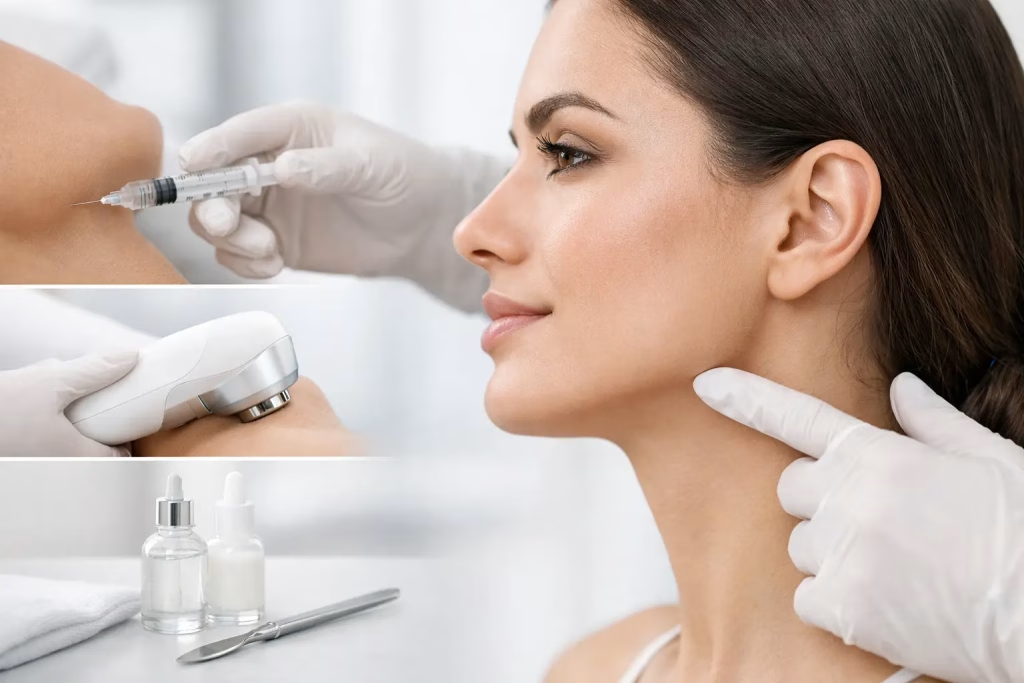
A well-defined jawline can make the face appear more rested, balanced, and composed, even when the change is subtle. Yet a softer lower face is not always caused by the same concern. It may reflect muscle bulk, a recessed chin, localized fullness beneath the chin, reduced skin firmness, or a combination of these factors. A jawline contour treatment should therefore begin with a considered assessment, rather than a one-size-fits-all procedure.
At Kelly Oriental Aesthetic Clinic, facial contouring is approached as a bespoke aesthetic journey. The aim is not to create an overly sharp or artificial profile, but to refine proportion while respecting your features, skin quality, and desired level of change.
What Creates a Defined Jawline?
The jawline is shaped by more than the mandibular bone. Chin projection, cheek support, fat distribution, the size of the masseter muscles, and skin elasticity all influence the transition from face to neck. This is why two people with the same concern, such as a less distinct side profile, may benefit from entirely different approaches.
For example, a person with a square lower face caused by strong chewing muscles may not need added volume along the jaw. Someone with early laxity may see more value in collagen-stimulating skin tightening. Another person may have good skin firmness but a small chin that makes the jawline look less structured from every angle.
A doctor-led consultation considers facial proportions at rest and in motion, as well as your medical history and expectations. It also distinguishes between a treatment that can refine a contour and one that is unlikely to address the underlying cause. This thoughtful planning protects the most valuable outcome: a result that still looks like you.
Jawline Contour Treatment Options
Non-surgical contouring can combine several treatment categories. The right choice depends on whether the priority is reducing width, improving definition, addressing fullness, or supporting skin firmness.
Injectable muscle relaxing treatments for a slimmer lower face
When prominent masseter muscles contribute to a broad or square jaw, carefully placed muscle-relaxing injections can reduce their activity over time. As the muscle gradually becomes less bulky, the lower face may appear softer and more tapered.
This approach is particularly suited to people who clench or grind their teeth, although aesthetic suitability should always be assessed separately from dental concerns. Results develop progressively rather than overnight, and maintenance is generally needed to preserve the effect. It will not remove submental fat or tighten loose skin, so it is not the answer for every type of lower-face fullness.
Dermal fillers for structure and proportion
Dermal fillers can enhance the chin, jaw angle, or pre-jowl area to create clearer facial architecture. For some patients, modest chin projection is enough to improve the appearance of the entire jawline from the front and side. For others, strategic support along the jaw can restore definition that has softened with age.
Technique matters as much as product selection. Overfilling can make the lower face look heavy, while an overly angular design may not suit softer features. A refined plan considers the relationship between the chin, lips, nose, cheeks, and neck rather than treating the jaw in isolation. Results are visible soon after treatment, though minor swelling can temporarily affect the final appearance.
Skin tightening for early laxity
As collagen and elastin decline, the skin around the jaw and upper neck can lose its crispness. Energy-based treatments such as Thermage and Ultherapy are often considered when the concern is mild to moderate skin laxity rather than volume loss alone. These treatments are designed to support collagen remodeling within the skin and deeper tissue layers, with improvement appearing gradually over the following weeks to months.
The trade-off is patience. Skin-tightening treatments are not designed to produce the immediate structural change of filler, and their effect varies according to baseline skin quality, age, and degree of laxity. They can, however, be a valuable option for patients who prefer a non-injectable approach or want to maintain a naturally refined contour over time.
Double-chin treatments for localized fullness
Fullness beneath the chin can blur an otherwise balanced jawline. Depending on the amount and location of fat, non-surgical options may be used to reduce submental fullness and improve the separation between chin and neck. A consultation is essential because fullness may arise from fat, loose skin, a smaller chin, or anatomy that requires a different strategy.
Treatment plans should include realistic expectations. Reducing localized fat may improve definition, but it does not necessarily address significant skin laxity. In some cases, combining fat-focused treatment with skin tightening provides a more harmonious result than relying on a single modality.
Why Combination Plans Often Look More Natural
The most elegant facial contouring is often understated. A patient may need a little chin support, reduced masseter prominence, and collagen stimulation around the lower face rather than a dramatic amount of filler in one area. Layering treatments in this way can address multiple contributors to a softer jawline while keeping the result balanced.
Combination planning is also useful when different concerns respond at different speeds. Injectable treatments may offer earlier visible refinement, while collagen-focused treatments continue to develop gradually. Your clinician can help sequence procedures appropriately, particularly if you have an event, travel, or recovery window to consider.
Not everyone needs a combination approach. If the primary issue is muscle bulk, a focused injectable treatment may be sufficient. If the concern is mild skin laxity, an energy-based treatment alone may be the more appropriate starting point. The best plan is the least intervention needed to achieve a credible, proportionate improvement.
What to Expect at a Consultation
A quality consultation should feel measured, not rushed. Your doctor will examine your facial shape, skin firmness, chin projection, and the area beneath the jawline. Photographs may be used to assess proportions from different angles and to document progress over time.
Be open about prior aesthetic treatments, medications, allergies, dental concerns, and any history of facial surgery. It is equally useful to describe what you do not want. Some patients want a more sculpted profile; others simply want to look less tired on video calls or in photographs. Clear preferences help guide the treatment design.
You should also discuss downtime honestly. Injectable treatments can involve temporary swelling, tenderness, or bruising. Energy-based treatments may cause short-lived redness or sensitivity. Procedures that target localized fat can have a more noticeable recovery period. A responsible provider will explain expected effects, uncommon but meaningful risks, and when you should contact the clinic after treatment.
Maintaining a Refined Result
Maintenance depends on the modality used, your metabolism, facial movement, and the natural aging process. Injectable results are temporary, while collagen remodeling and fat-reduction treatments follow different timelines. A personalized review schedule helps ensure any future treatment remains conservative and aligned with your changing features.
Daily habits also matter. Sun protection, stable weight, thoughtful skincare, and good sleep support overall skin quality, though they cannot replace structural treatment when that is what the anatomy requires. The goal is to preserve a rested, polished appearance rather than continually chase a sharper contour.
A jawline should complement the rest of your face, not compete with it. With careful assessment and a treatment plan built around your individual anatomy, subtle refinement can bring a greater sense of balance to every angle.
