
Uncategorized
A Guide to Body Contouring Treatments
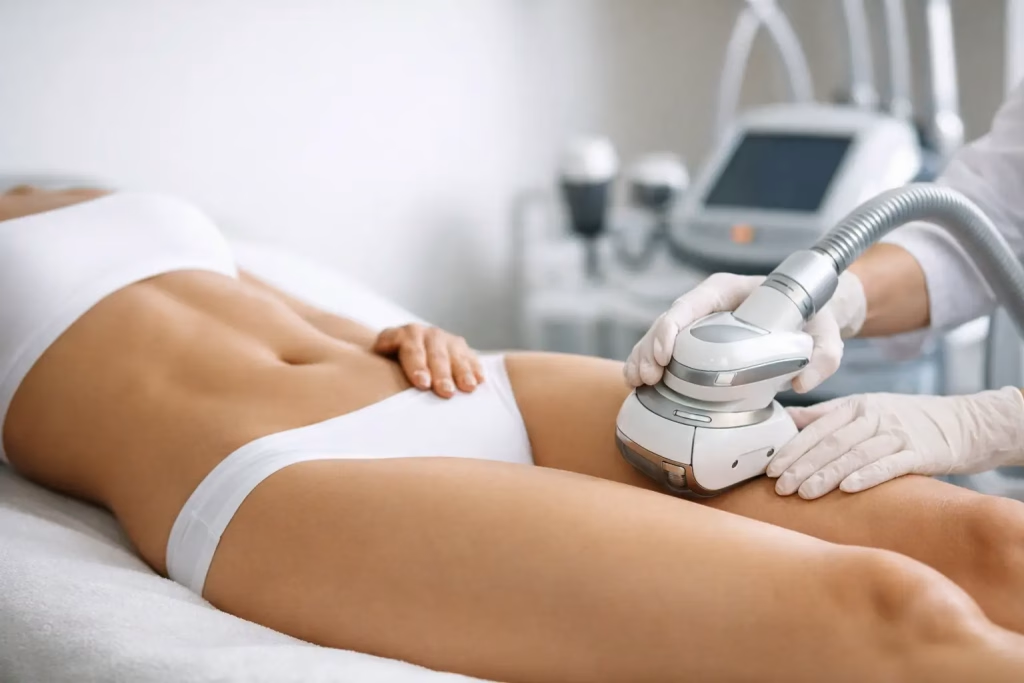
A stubborn lower belly after consistent workouts. A soft fullness at the flanks that does not seem to shift. Mild skin laxity after weight changes that leaves the body looking less defined than it feels. A thoughtful guide to body contouring treatments begins here – with the reality that many body concerns are not simply about weight, and they are rarely solved by a single approach.
Body contouring is best understood as shape refinement. It is designed to address localized fat, loose skin, cellulite, or a loss of firmness in areas such as the abdomen, arms, thighs, buttocks, and under the chin. For many patients, the goal is not dramatic transformation. It is a more balanced silhouette, clothing that sits better, and contours that look smoother and more proportionate.
What body contouring treatments actually do
The phrase is often used broadly, which can make it sound more straightforward than it is. In practice, body contouring treatments fall into a few different categories. Some target fat cells. Others focus on tightening the skin, improving circulation, or supporting collagen remodeling. Some are most effective when layered together as part of a personalized treatment plan.
That distinction matters because concerns that look similar in the mirror may have different causes. A patient who describes a “bulge” may be dealing with pinchable subcutaneous fat. Another may have mild laxity with very little excess fat. Someone else may have fluid retention, skin texture issues, or weakened tissue tone after pregnancy or weight loss. The most elegant results usually come from treating the real cause rather than chasing a generic slimming outcome.
A guide to body contouring treatments by concern
If your main issue is localized fat, treatments that use controlled energy to disrupt fat cells may be the most relevant. These are often chosen for the abdomen, love handles, thighs, upper arms, or under-chin area. The goal is gradual reduction, not instant weight loss. Results tend to emerge over weeks as the body metabolizes the treated fat.
If the concern is loose or crepey skin, radiofrequency or ultrasound-based treatments may be more appropriate. These technologies heat deeper layers of tissue to stimulate collagen and improve firmness over time. They are often favored by patients who are already close to their ideal weight but want a tighter, more sculpted finish.
If cellulite or uneven texture is the issue, the strategy may look different again. Cellulite is not simply excess fat. It involves fibrous bands, skin quality, and fat distribution, which is why even lean individuals can have it. A treatment plan may combine tissue stimulation, circulation support, and skin tightening rather than relying on fat reduction alone.
Fat reduction treatments
Non-surgical fat reduction is suited to patients with specific pockets of fat that persist despite a healthy routine. These treatments are not a substitute for weight management, and the best candidates are typically near a stable weight. The advantage is precision. Instead of reducing volume everywhere, they focus on areas that feel out of proportion.
That said, patience is part of the process. Most non-surgical fat reduction treatments work gradually, and some areas need more than one session. Comfort levels can vary depending on the technology used, and visible change is often subtle at first. For patients who prefer discreet improvement rather than an obvious overnight shift, that gradual progression can actually be a benefit.
Skin tightening treatments
Skin tightening is often the missing piece in body shaping. Removing volume from an area without supporting the skin can leave the result looking incomplete, particularly in patients with mild laxity. Devices that stimulate collagen can help the skin appear firmer, smoother, and more refined.
This approach is especially useful after childbirth, after weight fluctuation, or with age-related changes in tissue elasticity. The improvement is usually progressive rather than immediate. Most patients notice that the area looks more toned and held together over time, even if the scale does not change.
Combination treatments
The most sophisticated body contouring plans rarely rely on one modality alone. A patient may need fat reduction through one technology, followed by skin tightening and body rejuvenation to improve texture and firmness. This layered approach is often what creates a polished result.
At a premium clinic level, combination treatment planning should feel curated rather than excessive. Not every patient needs multiple devices. But when concerns overlap, combining treatments can be more efficient and more natural-looking than repeating a single treatment that addresses only one part of the issue.
How to choose the right treatment plan
A credible guide to body contouring treatments should be honest about the fact that suitability depends on anatomy, expectations, and lifestyle. The best treatment on paper is not always the best treatment for you.
Start with the area itself. Is the concern soft, pinchable fat, or does the skin look loose when you move? Is the issue visible only in fitted clothing, or is it present even at rest? Has it changed after pregnancy, weight loss, or aging? Those details influence whether the right plan should focus on reduction, tightening, or both.
Then consider your tolerance for downtime and how quickly you want to see change. Many non-surgical treatments are attractive because they fit into a busy schedule with little interruption. But low downtime often comes with a slower timeline. If you are expecting immediate, dramatic reshaping, non-surgical contouring may feel gentler than anticipated. For many professionals and socially active patients, however, gradual improvement is exactly the appeal.
Budget also matters, and it should be discussed openly. Some technologies involve a higher cost per session but fewer treatments. Others are more accessible per visit but work best as a series. The right plan is not necessarily the most intensive one. It is the one that offers meaningful improvement for your concern, with a schedule and investment you can realistically maintain.
What results usually look like
The most successful body contouring results tend to look believable. Waistlines appear cleaner. The lower abdomen looks flatter in profile. Arms and thighs read as firmer and more streamlined. Clothes fit with less resistance around one area that previously felt stubborn.
This is where expectations need refinement. Body contouring is not intended to create a different body altogether. It is designed to enhance proportion and definition. If a patient is seeking major weight reduction, significant skin removal, or surgical-level reshaping, a non-surgical route may not be enough.
Still, for the right candidate, the improvement can be quietly transformative. The body looks more rested, more toned, and more aligned with the effort already being put into wellness. In a setting such as KOAC, that conversation is ideally handled with both clinical clarity and aesthetic judgment, because great contouring is as much about restraint as it is about technology.
What happens during consultation
A proper consultation should go beyond identifying a treatment menu. It should assess body composition, skin quality, medical history, and the likely response of the area being treated. Photographs, measurements, and a discussion of goals can all help create a realistic plan.
This is also the moment to ask better questions. Not just “What works?” but “What is this treatment actually targeting?” and “What result is realistic for my body?” A trustworthy provider will explain where a treatment can perform well, where its limitations are, and whether combining approaches would make more sense.
Patients should also expect guidance on timing. Some treatments are ideal before an event only if started early enough. Others are better approached as part of a longer-term body maintenance plan. The more tailored the assessment, the more refined the outcome tends to be.
Aftercare and maintaining your result
Although non-surgical contouring does not usually require major recovery, aftercare still matters. Hydration, movement, consistent weight management, and realistic timing all support the final result. A treatment can reshape an area, but it cannot fully counter ongoing lifestyle patterns that work against it.
For skin-tightening treatments, collagen remodeling continues beyond the appointment itself. For fat-reduction treatments, the body needs time to clear the treated cells. That is why disciplined follow-up and patience often matter just as much as the first session.
Maintenance may also be part of the long view. Bodies continue to age, hormones shift, and skin quality changes over time. Some patients benefit from periodic maintenance treatments to preserve firmness and definition, particularly in areas prone to laxity.
Body contouring is most rewarding when approached with precision rather than urgency. The right plan does not chase every concern at once. It respects your natural frame, treats what is truly there, and refines your silhouette in a way that still feels unmistakably your own.
