

Uncategorized
Tattoo Removal: What Results Really Depend On
Sep
A tattoo can carry a different meaning years after it was chosen. It may no longer reflect your style, sit comfortably within your professional life, or simply feel like part of a chapter that has closed. Modern tattoo removal offers a refined way forward, but the best results do not come from a one-size-fits-all approach. They come from choosing the right technology, respecting the skin’s recovery process, and building a plan around the tattoo itself.
At a doctor-led aesthetic clinic, removal should feel considered rather than rushed. The goal is not only to fade ink effectively, but also to protect the clarity, tone, and long-term health of the surrounding skin.
How Pico Laser Tattoo Removal Works
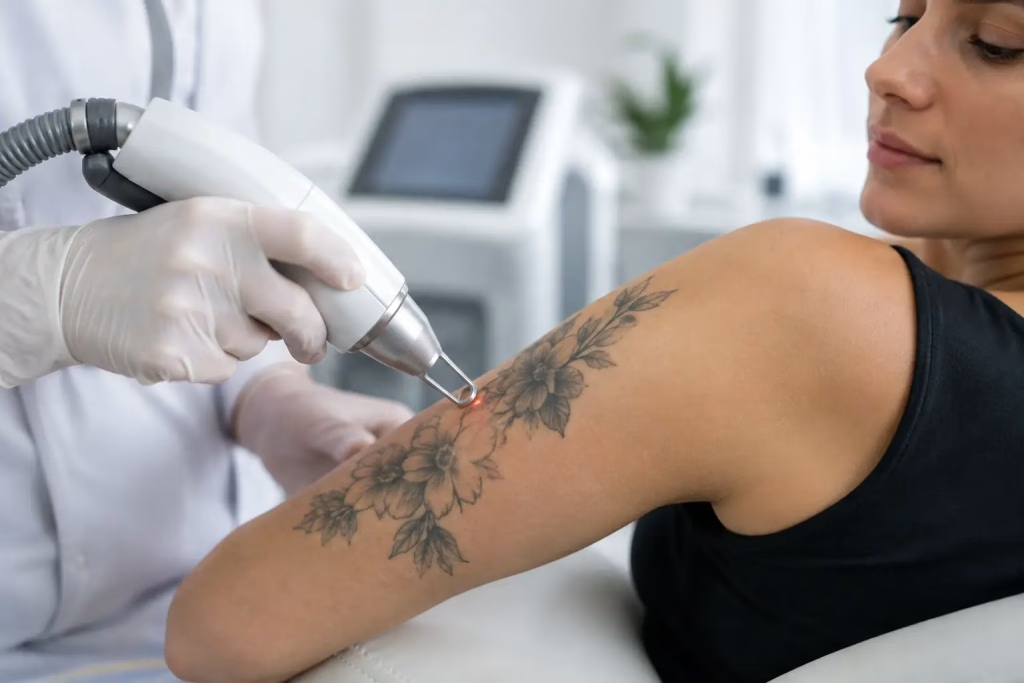
Tattoo ink sits beneath the surface of the skin in particles that are too large for the body to clear on its own. Pico Laser technology delivers extremely short pulses of energy that target these pigment particles. The energy breaks the ink into smaller fragments, allowing the body’s natural immune processes to gradually carry them away over time.
The word “pico” refers to the exceptionally brief duration of each laser pulse. Compared with older laser approaches, picosecond technology can create a powerful photoacoustic effect with less reliance on heat. This distinction matters because controlled treatment is particularly valuable when working on visible areas, darker skin tones, or tattoos with dense and stubborn pigment.
The treated ink does not disappear immediately after an appointment. Some tattoos appear lighter over the following weeks as the body processes fragmented pigment. This gradual response is one reason treatment sessions are spaced apart. Your skin needs time to recover, and your body needs time to do its part.
What Determines Tattoo Removal Results?
No ethical provider should promise that every tattoo will vanish completely. Many tattoos fade significantly, while others may retain a faint trace of color or a subtle “ghost” image. The outcome depends on several details that should be assessed before treatment begins.
Black ink is generally the most responsive because it absorbs a broad range of laser wavelengths efficiently. Dark blue and dark green may also respond well with the appropriate settings. Bright colors can be more variable. Red, orange, yellow, pale blue, and white inks may require particular wavelengths, more sessions, or careful expectation-setting. Certain cosmetic tattoo pigments can also darken temporarily before they begin to lighten, which is why an experienced assessment is essential.
Professional tattoos often contain ink at a greater depth and density than amateur tattoos. They may therefore take longer to clear, even when the artwork is older. Conversely, an amateur tattoo may be more superficial but uneven, resulting in an unpredictable fading pattern.
The tattoo’s location matters too. Areas with stronger circulation, such as the upper torso, tend to clear more readily than hands, fingers, ankles, or feet. Your immune response, skin type, age of the tattoo, and any previous laser treatment can also influence the pace of progress.
Why a Personalized Treatment Plan Matters
A tailored consultation begins with more than selecting a laser setting. A clinician should examine the tattoo’s colors, density, depth, location, and condition of the surrounding skin. They should also discuss your medical history, tendency toward pigmentation changes or scarring, medications, skin-care routine, and desired outcome.
For some clients, the objective is full removal. For others, it is sufficient to fade an existing design enough for a cleaner cover-up tattoo. These are different goals, and the treatment strategy may differ accordingly. A tattoo intended for cover-up does not always need to be cleared entirely, but it should be lightened with intention so the new artwork has more freedom in color and design.
At Kelly Oriental Aesthetic Clinic, the emphasis is on a bespoke treatment journey that pairs advanced technology with doctor-led guidance. That means recognizing when a treatment should proceed, when the skin needs more recovery time, and when a conservative adjustment is the better choice for the skin.
How Many Sessions Will You Need?
Most tattoos require a series of sessions, commonly spaced about six to eight weeks apart. Some need fewer treatments, while complex or multicolored tattoos can require more. A realistic treatment plan accounts for the fact that visible change continues between appointments.
It can be tempting to schedule treatments as closely as possible, especially when a tattoo feels urgent to remove. However, more frequent laser sessions do not necessarily mean faster clearance. Treating too soon can increase irritation and may not give the immune system enough time to clear the fragmented ink. Patience is part of a well-managed removal process.
During your consultation, ask for a range rather than a fixed promise. An initial estimate can be useful, but the skin’s response after the first few sessions often provides the clearest indication of how the tattoo is progressing. Clinical judgment should remain responsive to those changes.
What Does Treatment Feel Like?
Most people describe Pico Laser treatment as a quick snapping sensation against the skin, similar to the flick of a small elastic band. Comfort measures may be used depending on the treatment area and your individual sensitivity. The actual laser passes are usually brief, although a larger tattoo naturally takes longer to treat than a small design.
Immediately afterward, the area may look white or frosted for a short period. Redness, warmth, mild swelling, and tenderness are also common temporary responses. Some clients experience tiny pinpoint bleeding or blistering, particularly with dense ink. These reactions should be managed with careful aftercare rather than picked, scrubbed, or covered with irritating products.
Your provider should explain what is expected after treatment and what warrants a call to the clinic. This reassurance is especially valuable when removing tattoos on areas that are regularly exposed to friction, sunlight, or clothing.
Protecting Your Skin Between Sessions
The quality of your aftercare can influence both comfort and recovery. Keep the treated area clean, avoid unnecessary touching, and follow the instructions provided by your clinician regarding dressings and topical products. Avoid swimming pools, hot tubs, saunas, and strenuous heat exposure until the skin has settled.
Sun protection is equally important. UV exposure can make pigment changes more likely and may limit when your next session can be performed. Once the skin has fully healed, broad-spectrum sunscreen and protective clothing help safeguard the treated area, particularly in Singapore’s intense year-round sun.
You should also avoid exfoliants, retinoids, fragranced body products, and other potentially irritating ingredients directly over the treatment site until advised otherwise. If blistering occurs, do not pop the blisters. Let the skin heal naturally and contact your provider if you have concerns.
Who Should Postpone Treatment?
Tattoo removal is not always appropriate to begin immediately. Active skin infections, open wounds, a fresh tan, recent sunburn, or an active inflammatory skin flare in the treatment area may require postponement. Pregnancy, breastfeeding, certain medications, a history of keloid scarring, or medical conditions that affect healing should also be discussed during consultation.
This is not unnecessary caution. It is part of placing skin safety ahead of a treatment schedule. A premium aesthetic experience should include the confidence that your concerns are being evaluated carefully, not treated as an afterthought.
Choosing a Clinic for Tattoo Removal
Laser technology matters, but the person planning and delivering the treatment matters just as much. Look for a clinic that takes time to assess your tattoo, explains expected trade-offs, and gives you clear aftercare guidance. You should feel comfortable asking about the device being used, the clinician’s experience with your skin type and ink colors, and how the clinic manages unexpected reactions.
The right setting also changes the experience. Tattoo removal can be personal, particularly when the tattoo is tied to a past relationship, career shift, or private memory. Discretion, clinical precision, and thoughtful support make room for a treatment journey that feels calm and entirely your own.
A consultation is the best place to turn uncertainty into a clear plan. Bring your questions, be candid about your desired outcome, and allow the condition of your skin to guide the pace. The most satisfying results are often built session by session, with patience, expert care, and a plan designed for the skin you are in.
