

Uncategorized
Pigmentation Aesthetic Treatment Options
May
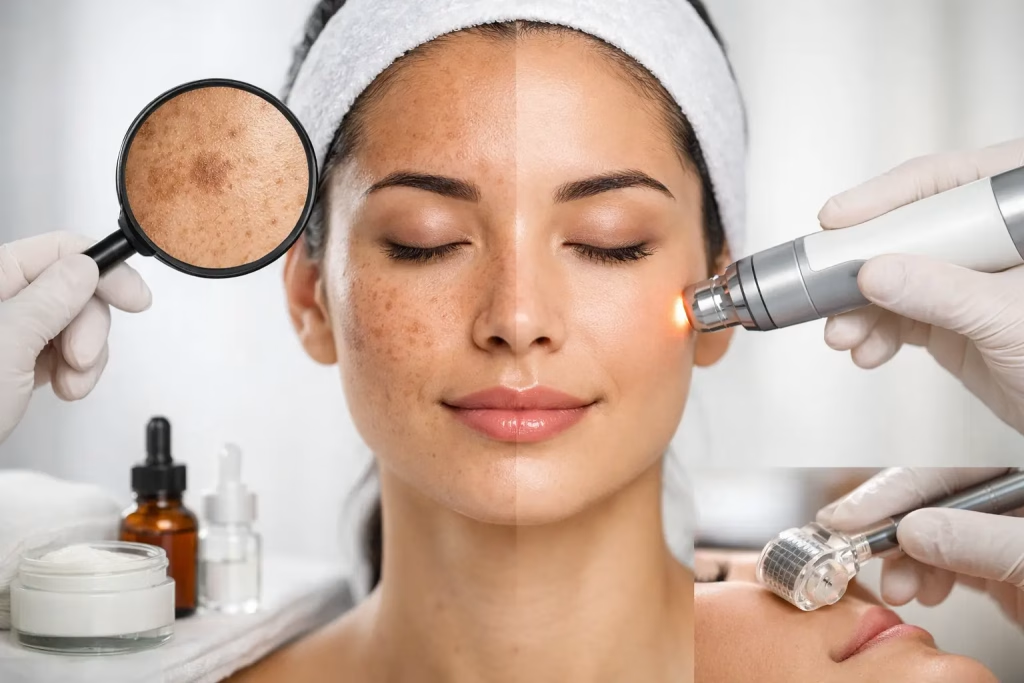
Uneven skin tone has a way of making the complexion look tired, even when everything else about your skin is healthy. That is why Pigmentation Aesthetic Treatment remains one of the most requested categories in medical aesthetics. Whether the concern is sun spots, melasma, post-acne marks, or diffuse dullness, the right treatment plan can restore clarity in a way that skincare alone often cannot.
Pigmentation is not one condition. It is a visible symptom with very different triggers, depths, and behaviors. A dark mark left behind after a breakout does not respond the same way as melasma triggered by hormones, heat, or UV exposure. This is where expert assessment matters. Treating pigmentation well is less about choosing the most aggressive option and more about choosing the most precise one.
What pigmentation really means
Pigmentation appears when melanin production becomes uneven. In practice, this can show up as freckles, sun damage, age spots, post-inflammatory hyperpigmentation, melasma, or patchy discoloration after irritation. Some concerns sit close to the surface of the skin, while others extend deeper into the dermis.
That distinction changes everything. Superficial pigmentation may respond well to brightening peels, medical facials, and carefully selected laser sessions. Deeper or more complex pigmentation often needs a slower, layered approach that combines device-based treatment with skin barrier support and disciplined maintenance. If the wrong energy setting or unsuitable procedure is used, the skin can become more inflamed and the pigmentation can rebound.
This is especially relevant in Asian skin, where melanocytes can be more reactive. For many patients in Singapore, heat, humidity, UV exposure, and lifestyle stress can all make pigmentation more persistent. The best plans account for the skin’s sensitivity as much as its visible marks.
Pigmentation Aesthetic Treatment is never one-size-fits-all
When patients search for a pigmentation solution, they often ask for the best laser. The better question is which treatment fits the type of pigmentation, the skin tone, and the patient’s tolerance for downtime. A polished treatment journey starts with diagnosis first, then technology.
For isolated spots and accumulated sun damage, Pico Laser is often a strong option because it delivers very short pulses of energy that target pigment while limiting excess heat diffusion. This can make it especially useful for unwanted pigment while also supporting overall skin refinement. Patients often appreciate that it addresses tone and radiance together, rather than focusing only on one dark lesion.
For skin that is not only pigmented but also inflamed or redness-prone, a more nuanced plan may be needed. In some cases, treating the underlying vascular or inflammatory component helps reduce the cycle that keeps pigmentation active. This is why combination planning matters. The most elegant results often come from treating the skin as a whole system, not as a collection of spots.
The most common treatment categories
Laser remains one of the most effective tools for pigmentation, but it is only one part of the picture. A premium clinic will usually consider several pathways based on the severity and pattern of discoloration.
Pico Laser is widely chosen for freckles, sun spots, post-acne pigmentation, and overall tone correction. It works by fragmenting pigment into smaller particles that the body can gradually clear. Results typically build over a series of treatments rather than appearing all at once, which is often safer and more natural-looking.
Chemical peels can also be helpful, particularly for superficial pigmentation and dull, congested skin. A well-selected peel encourages controlled exfoliation and can brighten uneven tone without the intensity of an energy-based treatment. The trade-off is that peels usually require a course of sessions and must be tailored carefully to avoid irritation.
Medical facials and skin-conditioning treatments are often underestimated. They are not a replacement for laser when pigment is established, but they can improve treatment readiness, support the barrier, and maintain results between sessions. In patients with sensitive skin, this supportive layer can make the difference between a smooth progression and a reactive one.
Some cases benefit from a multi-modality plan. That may include laser for visible pigment, skin boosters for hydration, and topical medical-grade skincare to suppress further melanin overproduction. This kind of bespoke planning is often what separates partial improvement from refined, lasting change.
Which pigmentation concerns respond best
Not all pigmentation behaves the same way, and setting expectations properly is part of good aesthetic medicine.
Sun spots and freckles generally respond well because they are often more defined and easier to target. Post-inflammatory hyperpigmentation from acne can also improve beautifully, although active breakouts need to be managed at the same time or new marks will continue to form.
Melasma is more complex. It can improve significantly, but it rarely responds well to overly aggressive treatment. Because melasma is influenced by hormones, UV exposure, heat, and inflammation, the goal is usually long-term control rather than a quick one-time fix. Patients who understand this tend to do better because they are prepared for maintenance and strict photoprotection.
Diffuse pigmentation and general sallowness often need a broader rejuvenation plan. In these cases, the aim is not simply to erase a spot but to create a clearer, brighter, more even complexion overall.
What to expect during treatment
A proper consultation should include an assessment of your skin history, previous treatments, sensitivity level, medication use, and lifestyle factors such as sun exposure. This is also the time to discuss whether the pigmentation has changed recently, whether it worsens with heat, and whether there is a history of recurrence.
During laser-based treatment, most patients describe the sensation as tolerable, with mild snapping or warmth. Comfort measures can be used where appropriate. Afterward, the skin may look pink or slightly flushed, and some pigmented areas may temporarily darken before they fade. That darkening is often part of the clearing process, not a sign that the treatment failed.
Downtime depends on the modality and intensity used. Some patients return to normal activities quickly, while others may have a few days of visible dryness, darkened spots, or mild sensitivity. What matters most is following aftercare carefully. Picking, over-exfoliating, or returning too quickly to active ingredients can compromise results.
Why aftercare matters as much as the procedure
Pigmentation has a memory. Even after successful treatment, it can return if the triggers are still active. That is why aftercare is not an optional add-on in a high-quality treatment plan.
Daily sun protection is essential, especially in Singapore’s climate. Without it, even excellent in-clinic results can be short-lived. Patients also benefit from gentle skincare, pigment-regulating ingredients recommended by their provider, and a pause on anything that causes unnecessary inflammation.
This is one reason doctor-led planning feels reassuring. It allows treatments to be paced according to how your skin is actually responding, not according to a generic package schedule. At Kelly Oriental Aesthetic Clinic, this style of personalized care is central to the experience, particularly for patients who want visible improvement delivered with precision and discretion.
How many sessions will you need?
This depends on the diagnosis. A few superficial spots may improve in a relatively short series, while melasma or long-standing pigmentation often needs ongoing management. Most patients benefit from thinking in phases: correction first, stabilization next, then maintenance.
That may sound less glamorous than the promise of instant transformation, but it is usually the more sophisticated route. Skin treated with restraint tends to look healthier, calmer, and more naturally luminous. In aesthetics, the most impressive results are often the ones that do not look overtreated.
Choosing the right clinic for pigmentation care
Pigmentation treatment is where technical skill and aesthetic judgment need to work together. A clinic should be able to explain not just what they recommend, but why. If every patient is offered the same device for every type of pigmentation, that is usually a sign that convenience has replaced customization.
Look for a practice that considers your skin type, your schedule, your history of sensitivity, and your long-term goals. Luxury in aesthetic medicine is not only about the setting. It is also about thoughtfulness, safety, and the confidence that your treatment plan has been built around your skin rather than around a standard menu.
When Pigmentation Aesthetic Treatment is approached with that level of care, the outcome is not simply lighter spots. It is skin that appears clearer, more even, and more quietly radiant – the kind of result that looks like you, only restored.
