
Uncategorized
Is Hydrafacial Worth It for Your Skin?
You can usually tell within a week whether a facial was a pleasant indulgence or a treatment your skin actually appreciated. If you are asking is hydrafacial worth it, the real question is not whether it feels luxurious – it does. The better question is whether the results justify the time, cost, and maintenance for your specific skin concerns.
For many people, the answer is yes, but not for the reasons marketing often suggests. Hydrafacial is rarely the single treatment that transforms acne scars, deep pigmentation, or skin laxity. What it does exceptionally well is cleanse congested skin, exfoliate without harsh abrasion, infuse hydration, and create a fresher, smoother, more polished complexion with minimal downtime. That makes it valuable, but its value depends on what you want from it.
What makes Hydrafacial different?
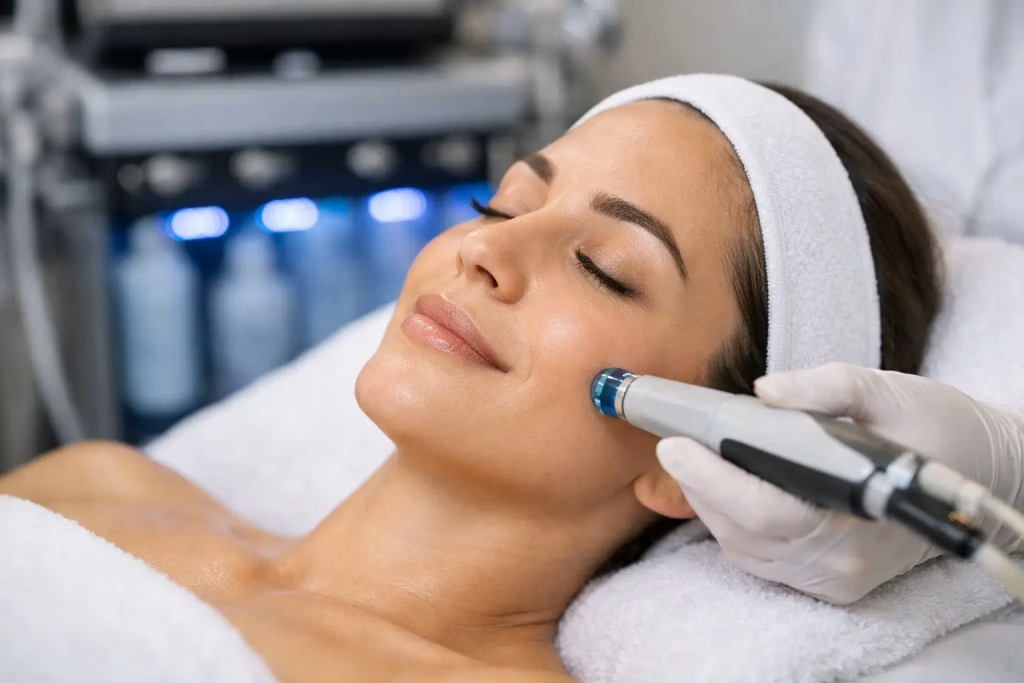
Hydrafacial sits in a useful middle ground between a traditional spa facial and a more intensive in-clinic procedure. It combines cleansing, exfoliation, painless extraction, hydration, and serum infusion through a device-based delivery system rather than relying only on manual techniques.
That difference matters because consistency tends to be better. Instead of aggressive squeezing, scratchy scrubs, or formulas chosen by guesswork, the treatment follows a structured process designed to clear surface debris, soften congestion, and replenish the skin at the same time. For clients who want skin that looks rested, cleaner, and more refined without significant recovery, this is often where Hydrafacial earns its reputation.
It is also one of the more approachable treatments for busy professionals. You can usually return to work, dinner, or an event the same day with skin that looks brighter rather than irritated. In a city lifestyle where calendars are full and downtime is difficult to justify, that convenience is part of the value.
Is Hydrafacial worth it for common skin concerns?
The short answer is that Hydrafacial is worth it when your concerns involve dullness, dehydration, mild congestion, uneven texture, and maintenance. It becomes less worthwhile when your expectations center on structural change.
If your skin looks tired, feels rough, or tends to clog around the nose and chin, Hydrafacial can be genuinely satisfying. Many clients notice softer skin, a cleaner feel, smoother makeup application, and a healthy sheen that lasts beyond the first day. For dehydrated skin, the hydrating step can make the complexion appear more supple and less creased.
If enlarged pores are your concern, Hydrafacial can help them look less obvious by clearing oil and debris and improving surface smoothness. That said, it does not permanently shrink pores. Pore size is influenced by oil production, genetics, and collagen support, so the treatment offers improvement in appearance rather than a permanent fix.
For acne-prone skin, the answer is more nuanced. Hydrafacial may support acne management by reducing congestion and keeping the skin cleaner, but it is not a substitute for a medical treatment plan if you have active inflammatory acne, hormonal breakouts, or post-acne scarring. In those cases, a more strategic approach may include prescription care, laser treatments, skin boosters, microneedling, or energy-based devices depending on the diagnosis.
For pigmentation, melasma, deeper wrinkles, sagging, and acne scars, Hydrafacial can play a supporting role, but it is usually not the hero treatment. It may enhance glow and improve surface quality, yet these concerns generally need more targeted intervention to create meaningful change.
What results should you realistically expect?
This is where many people decide whether Hydrafacial feels worth the investment. If you expect cleaner pores, smoother texture, immediate brightness, and a hydrated finish, Hydrafacial often delivers. If you expect it to erase years of sun exposure or remodel collagen in a major way, you will likely feel underwhelmed.
Most people notice results quickly. Skin often looks clearer, feels softer, and takes on a refreshed appearance within a day or two. The effect can be especially appealing before events, travel, photos, or work occasions where you want to look polished without obvious signs of having had treatment.
The catch is longevity. A single session can produce visible improvement, but the result is not permanent. Skin continues producing oil, dead skin cells continue accumulating, and environmental stress does not pause simply because you had a facial. For that reason, Hydrafacial tends to work best as part of ongoing skin maintenance rather than a one-time miracle.
When Hydrafacial feels worth the money
Hydrafacial tends to be a smart investment for clients who value three things: visible freshness, comfort, and consistency. It is particularly worthwhile if you want a treatment that fits easily into a demanding schedule and leaves your skin looking refined rather than recovering.
It can also be a good choice if your skin is too sensitive for harsher exfoliation methods. Because the treatment is generally gentler than aggressive peels or abrasive facials, many clients appreciate that it offers improvement without the feeling of being overworked.
Another reason it feels worthwhile is that it pairs well with a broader skin plan. In a doctor-led aesthetic setting, Hydrafacial may be used to maintain skin clarity and hydration between more corrective treatments. That is often the most intelligent way to think about it – not as a replacement for everything else, but as a polished maintenance treatment within a bespoke aesthetic journey.
At a clinic like Kelly Oriental Aesthetic Clinic, that distinction matters. Premium aesthetics should not be about pushing one treatment as the answer to every concern. It should be about matching the treatment to the skin, the lifestyle, and the outcome you actually want.
When Hydrafacial may not be worth it
Hydrafacial may not feel worth it if your main goal is dramatic correction. If you are trying to lift sagging skin, soften deep acne scars, address persistent rosacea, or significantly reduce pigmentation, your money may be better directed toward treatments designed for those concerns.
It may also feel less worthwhile if you only do it once and expect the glow to last for months. Hydrafacial is maintenance-friendly, but maintenance implies repetition. If ongoing appointments do not fit your schedule or budget, you may prefer a treatment plan with a different rhythm.
Price sensitivity is another factor. Because Hydrafacial sits in the premium facial category, value depends on provider quality, customization, and treatment standards. A poorly tailored session in a high-volume setting can feel expensive for what amounts to temporary glow. A carefully performed session in a medically guided clinic, where the treatment is adjusted to your skin and integrated into a wider plan, is more likely to feel justified.
How often do you need it?
For most clients, once a month is a reasonable maintenance cadence, especially if the goals are clarity, hydration, and a consistently polished complexion. Some people schedule it before important occasions and rely on home care in between. Others use it more strategically between laser sessions, skin boosters, or other advanced treatments.
How often you need it depends on your skin behavior. Oilier, congestion-prone skin may benefit from more regular sessions, while balanced skin may do well with less frequent visits. This is one reason a professional assessment matters. The treatment should fit the skin, not the other way around.
So, is Hydrafacial worth it?
Yes – if you want immediate radiance, cleaner-feeling skin, refined texture, and a treatment experience that is both effective and comfortable. No – if you are hoping for dramatic lifting, scar revision, or a permanent answer to complex skin conditions.
The strongest case for Hydrafacial is not hype. It is practicality. It gives many people a visible boost with very little disruption, and that makes it a dependable option for skin maintenance. In the right hands, it can be a beautifully calibrated treatment that supports healthier-looking skin and complements a more personalized aesthetic plan.
If you are still weighing the value, think less about whether Hydrafacial is universally worth it and more about whether it is worth it for your skin, your calendar, and your goals. The best aesthetic decisions are rarely the trendiest ones. They are the ones that make sense every time you look in the mirror a few days later.
