
Uncategorized
Best Acne Scar Treatments That Really Work
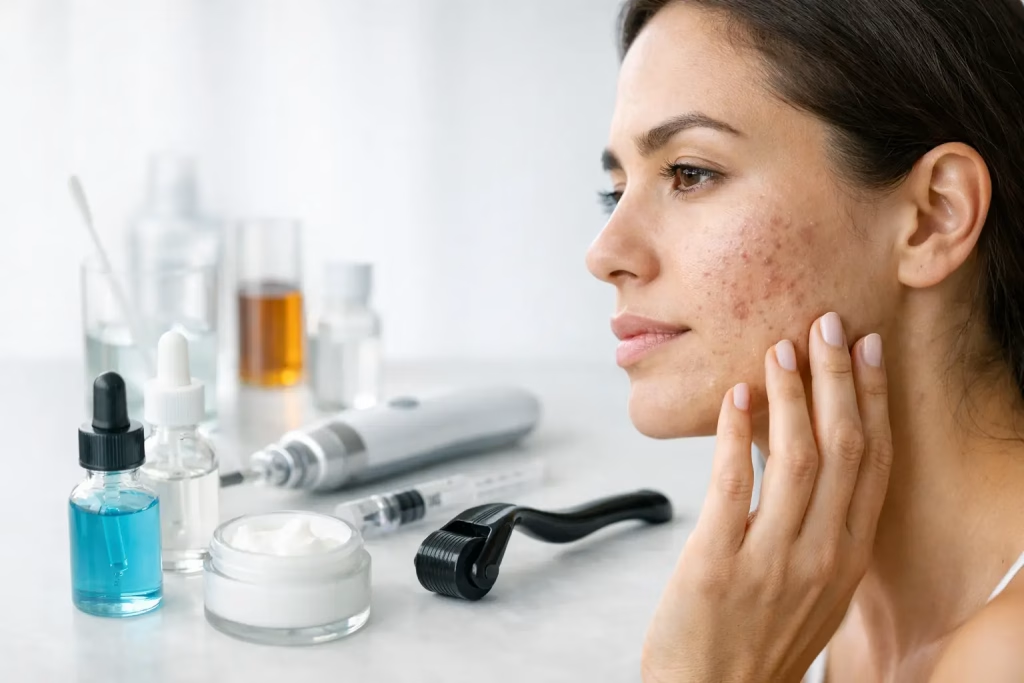
Some acne scars are easy to ignore until daylight, makeup, or a close-up photo makes them impossible to miss. If you have been searching for the best acne scar treatments, the real answer is rarely a single treatment. It is a precise plan based on your scar type, skin tone, sensitivity, and how much downtime you are willing to accept.
That is where many people get frustrated. Acne scars are often discussed as if they are one concern, when in reality they include rolling scars, boxcar scars, ice pick scars, post-acne redness, and lingering pigmentation. Each responds differently. A polished, medically guided approach matters because the treatment that softens one kind of scar may do very little for another.
What makes the best acne scar treatments effective
The best results usually come from matching the treatment to the structure of the scar. Depressed scars need collagen remodeling or targeted release beneath the skin. Red or brown marks need help with blood vessels or pigment. Textural irregularities often respond best when multiple modalities are layered over time.
This is also why online recommendations can feel contradictory. One person swears by microneedling, another by laser, another by chemical peels. They may all be telling the truth for their own skin. The right question is not simply, what works for acne scars? It is, what works for your acne scars.
A thoughtful consultation should assess scar depth, active acne, pore size, oil production, skin tone, and past reactions to treatment. For patients with medium to deeper skin tones, this step is especially important because aggressive resurfacing can increase the risk of post-inflammatory hyperpigmentation if not selected carefully.
Best acne scar treatments by scar type
Pico laser for texture and post-acne marks
Pico laser has become a refined option for patients who want visible improvement with a more measured recovery profile than traditional ablative resurfacing. It delivers ultra-short pulses of energy that stimulate collagen remodeling and can also help reduce stubborn post-acne pigmentation.
For shallow boxcar scars, enlarged pores, and uneven texture, pico laser can be a strong part of an acne scar program. It is often favored by busy professionals because downtime is usually manageable, though redness and temporary sensitivity are still possible. Results tend to build gradually, so it suits patients who value progressive improvement over a dramatic single-session approach.
Microneedling and RF microneedling for collagen remodeling
Microneedling remains one of the most versatile choices for atrophic acne scars. By creating controlled micro-injuries, it encourages the skin to produce new collagen and elastin. Over a series of sessions, the surface can appear smoother and firmer.
When radiofrequency is added, the treatment reaches deeper layers and can improve both scars and skin tightening. This can be especially appealing for adults who are not only treating old acne scars but also noticing early laxity or enlarged pores. The trade-off is that multiple sessions are typically needed, and deeper scars may still need combination treatment.
Subcision for rolling scars
Rolling scars are tethered beneath the skin, which is why they create shadowing and unevenness. Subcision works by releasing those fibrous bands with a fine instrument under the skin. When performed well, it can make an immediate structural difference in scars that lasers alone may not fully correct.
This is one of the clearest examples of why technique matters. Subcision is not a spa facial or a quick add-on. It is a medical procedure that should be selected carefully and often paired with collagen-stimulating treatments afterward for a more complete result.
Fractional laser resurfacing for deeper textural scars
For more established acne scarring, fractional laser resurfacing can deliver stronger textural improvement than lighter treatments. It works by creating columns of controlled injury in the skin, prompting new collagen formation and resurfacing damaged tissue.
The benefit is depth and efficacy. The compromise is downtime, along with a need for careful aftercare and sun protection. Patients with deeper scars often appreciate this option when they are ready for a more intensive correction phase, but it is not ideal for everyone, particularly if your schedule does not allow for recovery or your skin is prone to prolonged pigmentation changes.
TCA CROSS for ice pick scars
Ice pick scars are narrow and deep, making them among the most difficult to treat with broad resurfacing alone. TCA CROSS uses a high concentration of trichloroacetic acid placed directly into the scar to trigger collagen remodeling inside that small channel.
This targeted method can be very effective for the right scar type, but precision is essential. It is usually part of a staged treatment plan rather than a standalone answer for the full face.
Chemical peels for superficial marks and refinement
Chemical peels are not the first-line choice for deep pitted scars, but they can still play a valuable role. For patients dealing with residual acne marks, dullness, rough texture, and mild unevenness, a well-selected peel can brighten and refine the skin while supporting the broader scar treatment plan.
The key is expectation setting. Peels can refresh the skin beautifully, but they are unlikely to erase established depressed scars on their own. They work best as one layer of a curated approach.
Why combination treatment often gives the best outcome
Many patients do not have just one kind of acne scar. It is common to see rolling scars on the cheeks, a few ice pick scars near the temples, visible pores, and post-acne pigmentation all at once. Treating only one issue can leave the skin looking improved but still unfinished.
This is why the best acne scar treatments are often combined in phases. A doctor may first control any active acne, then use subcision for tethered scars, add pico laser or microneedling for collagen remodeling, and incorporate skin boosters or supportive facials to improve recovery and skin quality. The result is usually more elegant and natural-looking than relying on a single treatment category.
At a doctor-led aesthetic clinic, this layered planning is where expertise shows. It is not about choosing the most aggressive technology in the room. It is about selecting the right sequence, spacing sessions appropriately, and protecting the skin barrier throughout the journey.
How to choose the right treatment for your skin tone and lifestyle
A treatment can be clinically effective and still be wrong for you. If your calendar is packed with work meetings or social commitments, downtime may be a deciding factor. If your skin tends to pigment easily, your provider may prefer a gentler but safer protocol. If you want gradual refinement rather than obvious recovery, that will shape the plan too.
For many patients in Singapore and other urban environments with regular sun exposure, aftercare is just as important as the treatment itself. Healing skin is more vulnerable to UV damage, inflammation, and pigmentation shifts. A premium experience should include not just the procedure, but thoughtful preparation, clear aftercare, and realistic guidance about timelines.
This is also why patience matters. Acne scars formed over months or years, and meaningful improvement rarely happens overnight. The most satisfying results often come from a series of well-chosen sessions rather than a single dramatic treatment.
What results should you realistically expect?
The goal with acne scar treatment is improvement, not perfection. Skin can become smoother, brighter, and more even, with scars appearing softer and less visible in natural light. For many patients, that change is enough to feel more confident without makeup or less self-conscious in conversation.
Deeper scars usually improve rather than disappear completely. That does not mean treatment has failed. It means expectations are being managed honestly. A credible clinic should be clear about what is achievable, how many sessions may be needed, and where combination treatment is likely to make the biggest difference.
At Kelly Oriental Aesthetic Clinic, this kind of personalized planning is central to the treatment journey. For patients seeking a more elevated standard of care, the value lies not only in advanced technologies, but in having them selected with precision.
When to seek professional help instead of trying at-home solutions
Once acne scars are truly formed, topical products have limited power. Retinoids, brightening agents, and exfoliating acids can improve tone and support skin renewal, but they cannot release tethered scars or significantly remodel deep textural depressions on their own.
Professional evaluation becomes worthwhile when scars affect your confidence, makeup no longer sits smoothly, or home care has plateaued. It is especially important if you still have active acne, because treating scars while breakouts continue can feel like trying to renovate during a storm.
The best acne scar treatments are not just the most advanced treatments. They are the ones chosen with restraint, skill, and a clear understanding of your skin. When the plan is tailored properly, progress tends to look subtle at first, then unmistakable over time – which is often the most luxurious kind of result.
