

Uncategorized
Can Fat Freezing Reduce Abdomen Fat Safely?
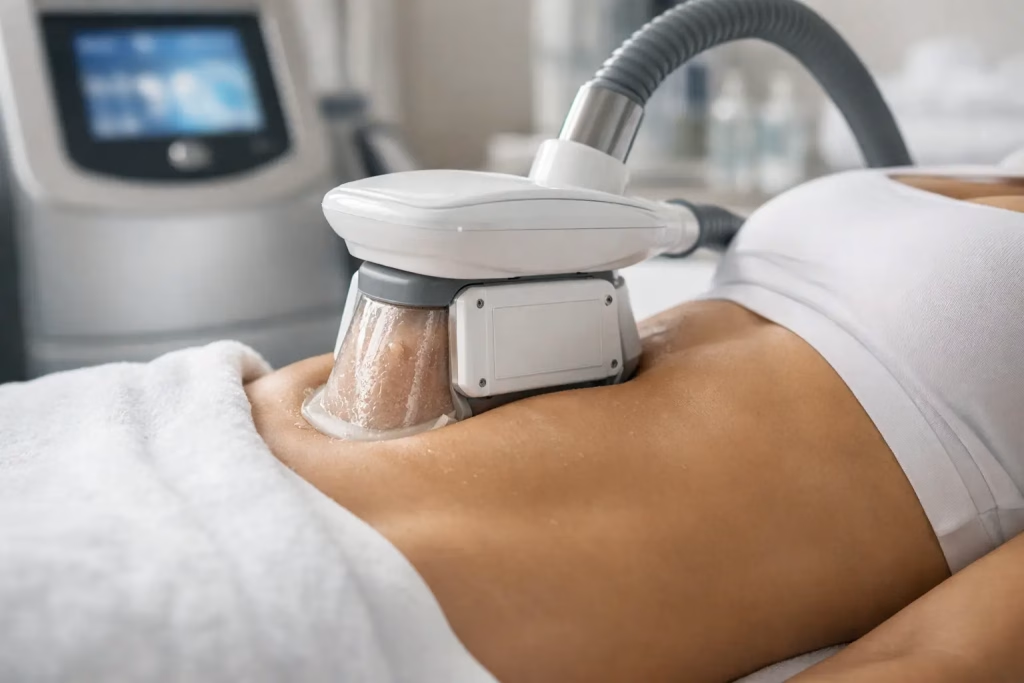
A fitted dress, tailored shirt, or favorite pair of trousers can reveal an area that diet and exercise do not always change evenly: the lower abdomen. So, can fat freezing reduce abdomen fat? For the right candidate, it can reduce localized pockets of pinchable abdominal fat and create a more refined contour without surgery. It is not, however, a weight-loss treatment or a substitute for a healthy routine.
Fat freezing, clinically known as cryolipolysis, is designed for people who are close to their preferred weight but still notice a soft, persistent layer around the stomach. The best outcomes begin with an honest assessment of what is causing the abdominal fullness, followed by a treatment plan that respects your anatomy, lifestyle, and aesthetic goals.
How fat freezing can reduce abdomen fat
Cryolipolysis uses carefully controlled cooling to target fat cells beneath the skin. Fat cells are more vulnerable to cold exposure than surrounding skin, nerves, and muscle. During treatment, an applicator draws the selected area into a cooling panel or rests over it, depending on the technology and treatment area.
The cooling process damages a portion of the targeted fat cells. Over the following weeks, the body gradually clears those cells through its natural metabolic processes. This is why abdominal contouring changes are gradual rather than immediate. Many patients begin to notice a shift after several weeks, with results continuing to develop over roughly two to three months.
Once eliminated, those particular fat cells do not regenerate. That said, remaining fat cells can still enlarge with weight gain. Maintaining a stable weight is therefore central to preserving a more sculpted result.
What fat freezing can and cannot address
Fat freezing works best on subcutaneous fat – the soft fat that sits just beneath the skin and can usually be gently pinched. It may be suitable for the upper abdomen, lower abdomen, flanks, or the area often described as a belly pouch, provided there is enough tissue for the applicator to treat safely and effectively.
It does not treat visceral fat, which lies deeper in the abdomen around internal organs. Visceral fat can make the stomach appear more rounded or firm, but it cannot be reached with an external cooling treatment. Lifestyle measures and medical guidance are more appropriate for reducing this type of fat.
It also does not tighten a significant amount of loose abdominal skin, repair separated abdominal muscles, or replace surgical procedures for patients seeking a dramatic change. After pregnancy, major weight loss, or certain abdominal surgeries, lax skin and muscle separation may be the more significant concern. In these situations, a clinician may recommend a different approach or a combination plan.
Who is a good candidate for abdominal fat freezing?
The ideal candidate is generally healthy, at or near a stable body weight, and concerned about a specific, visible fat pocket rather than overall weight reduction. They understand that the aim is improved proportion and contour, not a smaller number on the scale.
A consultation should examine the thickness and placement of the fat, skin elasticity, previous procedures, body composition, and personal expectations. A clinician should also ask about your medical history and medications. This is especially relevant if you have a condition affected by cold exposure, such as cryoglobulinemia, cold agglutinin disease, or paroxysmal cold hemoglobinuria.
Pregnant or breastfeeding individuals should postpone elective body contouring. Anyone with a hernia, open skin, infection, recent abdominal surgery, or an implanted medical device near the intended treatment area should receive individualized medical advice before proceeding.
What does an abdominal treatment feel like?
A session typically begins with measurements, photographs, and precise marking of the treatment area. The applicator is positioned to capture or cool the selected fat pocket. At first, there may be a strong cold sensation and firm pulling or pressure. This commonly settles as the area becomes numb.
After the applicator is removed, the treated skin may look red, feel firm, or appear temporarily raised. Massage is sometimes performed after treatment, and it can feel intense for a brief period. Most people return to regular daily activities shortly afterward, making fat freezing appealing to busy professionals who prefer little to no downtime.
Temporary effects can include redness, swelling, bruising, tenderness, numbness, tingling, cramping, or sensitivity. These usually resolve over time, though altered sensation can occasionally last longer than expected. A qualified provider should explain both common recovery experiences and less common risks before treatment.
Results: subtle refinement rather than instant transformation
A realistic expectation is one of the most valuable parts of the consultation. Fat freezing can create a noticeable reduction in the treated fat layer, but individual response varies. The number of applicators, the size of the area, fat thickness, and your body’s response all influence the final visible change.
One session may be enough for a modest concern, while a more defined lower abdomen or a broader treatment zone may require additional sessions. Treatments are typically spaced apart to allow the body time to process the affected fat cells and for the provider to assess the evolving contour.
Photographs taken under consistent lighting, posture, and clothing conditions are often more useful than relying on the scale. Body contouring is about how the abdomen sits in clothing and how its proportions relate to the waist, flanks, and hips. Small, considered changes in these areas can look beautifully balanced.
Is fat freezing safe for the abdomen?
When appropriately selected and performed using established technology by trained professionals, cryolipolysis is generally considered a noninvasive body-contouring option. Yet “noninvasive” does not mean risk-free. A careful medical screening and properly planned applicator placement are essential.
One rare but significant complication is paradoxical adipose hyperplasia, or PAH. Instead of decreasing, the treated tissue gradually becomes larger and firmer several months after treatment. It is uncommon, but it may require surgical correction. Your provider should discuss this possibility plainly, along with the likelihood of uneven contour, prolonged numbness, or dissatisfaction if the treatment plan is not suited to your body.
Be cautious of heavily discounted sessions that do not include a proper assessment, standardized photography, or a discussion of treatment limitations. Abdominal contouring is not simply about placing a device on the skin. It requires a trained eye for proportion, tissue quality, and safe treatment boundaries.
Pairing treatment with a thoughtful body-contouring plan
For some patients, fat freezing is most satisfying as part of a tailored plan rather than a standalone appointment. If mild laxity is present, a provider may discuss technologies that support skin firmness. If fullness extends into the flanks, treating adjacent areas may produce a more harmonious waistline than focusing only on the center of the abdomen.
Lifestyle remains part of the equation. Consistent movement, adequate protein and fiber, hydration, sleep, and weight stability help maintain results and support overall well-being. These habits are not a requirement to “earn” treatment. They are practical ways to protect the investment you make in your contour.
A premium aesthetic experience should also feel measured, not pressured. At Kelly Oriental Aesthetic Clinic, personalized planning begins with understanding the concern behind the request, whether that is a lower-abdominal bulge, stubborn flanks, skin laxity, or a combination of factors. The right recommendation may be fat freezing, another non-surgical option, or simply the reassurance that a treatment is not necessary.
The most rewarding abdominal contouring decisions are made with clarity: know what kind of fat you have, what degree of change is realistic, and what your body needs to look naturally balanced. A well-considered consultation can turn a vague wish for a flatter stomach into a plan that feels safe, elegant, and entirely your own.
