

Uncategorized
How Many Ultherapy Sessions Do You Need?
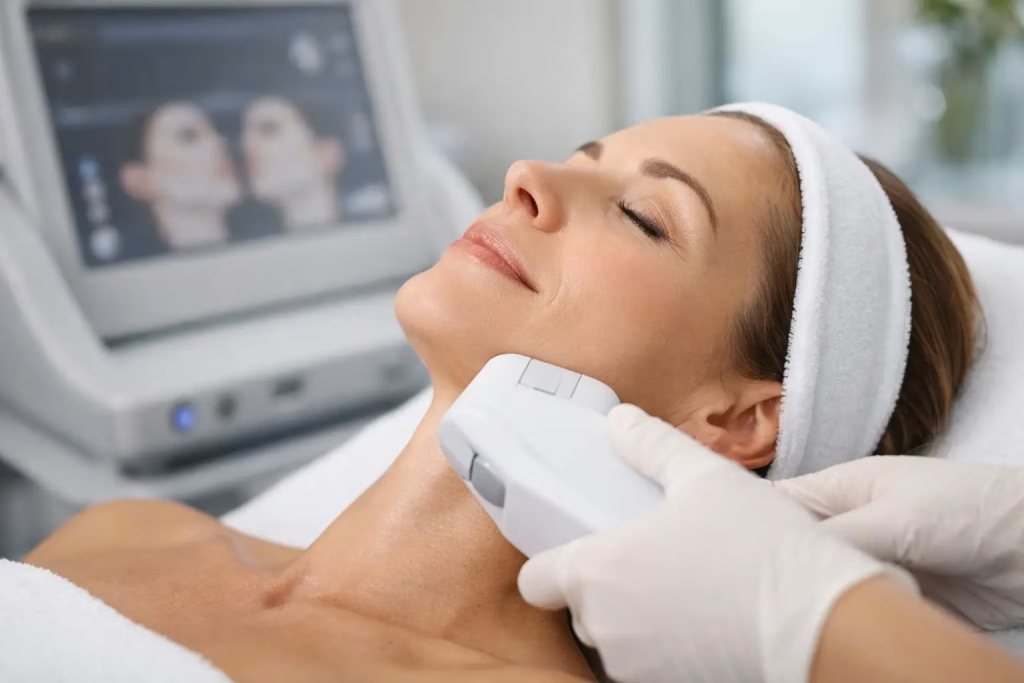
A sharper jawline, subtly lifted brows, and firmer skin do not usually require a long series of appointments. When people ask how many ultherapy sessions they need, the answer is often reassuringly simple: many candidates begin with one comprehensive treatment, then maintain their result over time. The right schedule, however, should reflect your skin’s current condition, the areas being treated, and the degree of lift you hope to achieve.
Ultherapy is designed for patients who value natural-looking refinement rather than a dramatic, overnight change. By delivering focused ultrasound energy at precise depths beneath the skin, it encourages the body’s own collagen-building response. Results develop gradually, which is part of what makes the treatment feel so discreet and elegant.
How Many Ultherapy Sessions Are Usually Needed?
For most patients with mild to moderate skin laxity, one Ultherapy session is a suitable starting point. A comprehensive treatment may address one area, such as the lower face and jawline, or several areas in a single visit, including the brow, under-chin area, neck, and décolletage.
Unlike treatments that rely on frequent appointments to create cumulative surface-level changes, Ultherapy works by stimulating deeper structural collagen renewal. The collagen response continues after your appointment, so repeating the same treatment too soon is not generally necessary. Visible improvement often begins to emerge over two to three months, with continued refinement for up to six months.
That said, one session is not a universal rule. Patients with more established laxity, a fuller under-chin area, or a goal of more noticeable contouring may benefit from a second treatment. This is commonly considered around six to 12 months after the first session, once collagen remodeling has had time to mature and the initial response can be properly assessed.
What Determines Your Ideal Ultherapy Treatment Plan?
A thoughtful Ultherapy plan is not based on age alone. Two people of the same age can have very different collagen reserves, facial structure, and skin behavior. A doctor-led consultation helps determine whether one session is likely to be sufficient or whether a phased approach would better support your desired outcome.
Your degree of skin laxity
Ultherapy tends to suit skin that has begun to lose firmness but still has enough elasticity to respond to collagen stimulation. If you notice early jowling, a softer jawline, mild neck creasing, or a brow that appears less lifted than before, one well-planned treatment may create a meaningful improvement.
More pronounced skin laxity may call for a second session or a combination approach. This does not mean Ultherapy is ineffective. It means the treatment should be matched honestly to what the skin can achieve without surgery. For some patients, a subtle lift is the right objective. For others, combining energy-based treatments, injectables, or skin-focused therapies can create a more balanced result.
The treatment areas and number of lines used
Ultherapy is customized by treatment area and the amount of energy delivered. Treating only beneath the chin is different from treating the full face and neck. A more comprehensive session uses a considered number of ultrasound lines across the targeted areas to support a more even collagen response.
This is why session count alone does not tell the full story. One carefully designed full-face and neck treatment can be more appropriate than several smaller, lightly performed sessions. The quality of assessment, treatment mapping, and energy placement matters as much as the number of visits.
Your collagen response
Every patient produces collagen at a different pace and volume. Genetics, sun exposure, smoking, nutrition, stress, hormonal changes, and overall skin health can all influence the visible response. Some patients see a clear improvement after a single session, while others experience a gentler enhancement and choose a future maintenance treatment for additional definition.
A realistic consultation should never promise the same degree of lift for every face. Instead, it should clarify what is achievable for your starting point and how your result is expected to evolve over the months ahead.
Your goals for refinement
If your goal is to look rested, firmer, and subtly more defined, one session may align beautifully with your expectations. If you are seeking a more sculpted lower face or a stronger correction for visible laxity, your provider may recommend a broader treatment plan.
The most refined outcomes are often built with restraint. An individualized plan considers your natural facial proportions and avoids treating “more” as automatically “better.”
When Will You See Results After Ultherapy?
Ultherapy is not intended to create an instant post-treatment transformation. Some patients notice a temporary feeling of tightness shortly after their appointment, but the more meaningful changes come later as new collagen develops.
Most people begin to see early improvement between eight and 12 weeks. The skin may appear firmer, the jawline a little cleaner, and the brow or neck area more supported. Results commonly continue to develop for three to six months. This gradual timeline allows the change to blend naturally into your appearance rather than announce itself all at once.
Photographs taken before treatment and again at follow-up can be especially useful. Daily mirror checks rarely capture slow collagen changes accurately, while standardized images can reveal improvements in contour, skin quality, and overall facial balance.
How Often Should You Repeat Ultherapy?
After an initial session, many patients choose maintenance treatment every 12 to 18 months. Others may wait closer to two years, particularly if they began treatment early and have minimal laxity. Skin aging continues, of course, so maintenance is less about “starting over” and more about supporting collagen as time, lifestyle, and natural volume changes affect the face and neck.
A repeat schedule should be based on your evolving skin rather than a fixed package timetable. If your result remains pleasing at 18 months, there may be no reason to retreat at 12 months. Conversely, a patient with more active laxity or a significant weight change may benefit from reassessment sooner.
Can Ultherapy Be Combined With Other Treatments?
Yes. Ultherapy addresses skin laxity and contour by supporting deeper collagen structures, but it does not replace treatments aimed at every concern. Fine lines, dehydration, uneven texture, pigmentation, facial volume loss, and muscle-related wrinkles each require a different approach.
For example, neuromodulators may soften expression lines, skin boosters may improve hydration and radiance, and select laser or radiofrequency treatments may support surface texture and overall skin quality. Strategic injectables can also restore proportion where volume loss contributes to a tired or hollow appearance.
The trade-off is that combining treatments requires careful sequencing. Aesthetic treatments should complement one another, not be stacked without purpose. Your provider should explain which concern each treatment addresses, when it should be performed, and what level of change you can reasonably expect.
What to Expect During and After Your Session
An Ultherapy appointment begins with assessing the skin and mapping the treatment zones. Ultrasound imaging helps the provider visualize the tissue layers being targeted, allowing energy to be placed with precision. Sensations vary, but patients often describe brief warmth, tingling, or deeper pulses as energy is delivered.
There is typically little to no downtime. Mild redness, swelling, tenderness, or temporary sensitivity can occur, especially around the jawline and under-chin area, but most patients return to regular activities promptly. Your provider will advise you on aftercare and any specific considerations based on your medical history and treatment plan.
For a premium experience, comfort matters as much as clinical technique. At Kelly Oriental Aesthetic Clinic, treatment planning is approached as a personal aesthetic journey, with doctor-led guidance designed to keep every recommendation proportionate, purposeful, and aligned with your features.
The Best Time to Book a Consultation
Consider a consultation when you first notice that your skin no longer “bounces back” as it once did, your lower face appears less defined in photographs, or makeup settles differently around the jawline and neck. Starting before laxity becomes advanced can make a single session particularly rewarding, although treatment can still be considered later with appropriately calibrated expectations.
The best number of sessions is the one that respects both your skin and your goals. A measured plan, enough time for collagen to respond, and a skilled clinical assessment can create the kind of result that feels less like a change and more like you at your most refreshed.
