
Uncategorized
When to Start Anti Aging Care for Lasting Results
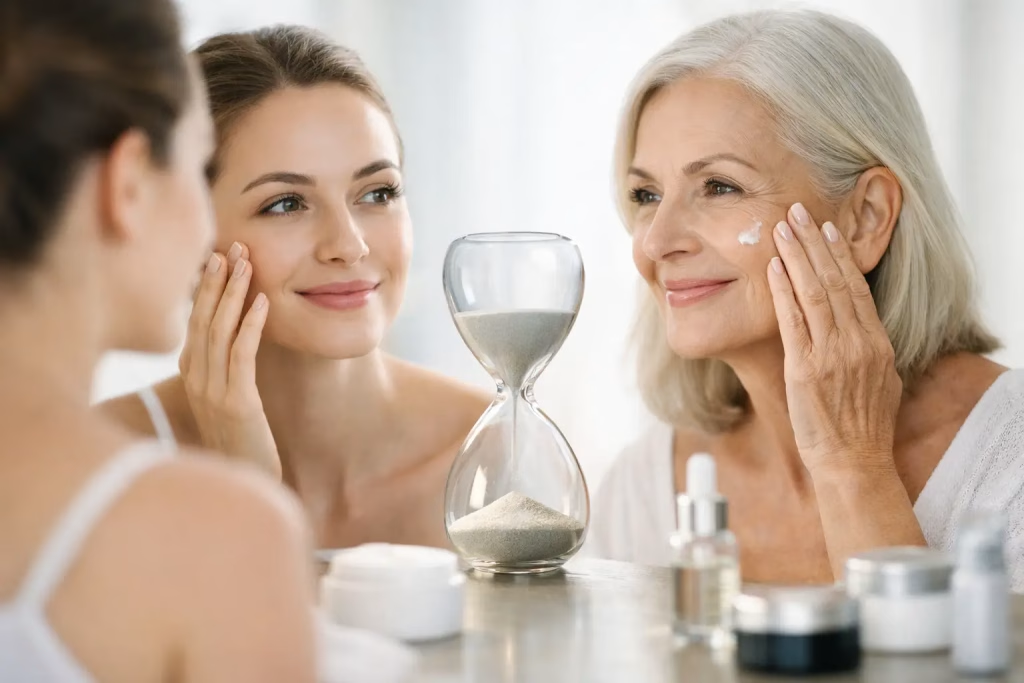
A first fine line can feel surprisingly personal. It may appear beside the eyes after a demanding season at work, or makeup may suddenly settle differently around the mouth. Yet the question of when to start anti aging care is not really about chasing a specific birthday. It is about understanding what your skin needs now, protecting what is already healthy, and choosing treatments with intention rather than urgency.
The most refined approach to aging well is rarely dramatic. It is consistent, personalized, and grounded in skin health. For some, that begins with daily sunscreen and hydration in their 20s. For others, it may mean addressing pigmentation, early volume changes, or a loss of firmness later on with doctor-guided aesthetic treatments.
When to Start Anti Aging Care: Look Beyond Your Age
There is no universal age when anti-aging care becomes necessary. Skin aging is influenced by genetics, sun exposure, stress, sleep, smoking, hormonal shifts, nutrition, and the way your skin naturally produces collagen. Two people of the same age may have entirely different concerns and require very different plans.
Instead of asking whether you are “too young” or “too late,” consider what you are noticing. Early dullness, persistent dehydration, uneven tone, enlarged pores, fine lines, and a gradual change in facial definition can all be useful signals. They do not mean something is wrong. They simply help shape a more precise approach.
Preventive care also does not mean undergoing intensive procedures before they are needed. It means preserving the quality of the skin and supporting collagen before changes become more established. A thoughtful plan respects both your features and your pace.
Your 20s: Build the Foundation
For most people, the 20s are less about correction and more about protection. Collagen production begins to decline gradually from the mid-20s, but the changes are often subtle. This is the ideal time to establish habits that protect the skin from avoidable damage.
Daily broad-spectrum sunscreen is the essential first step. Ultraviolet exposure contributes to uneven pigmentation, fine lines, loss of elasticity, and a rougher texture over time. A well-formulated skincare routine with gentle cleansing, hydration, antioxidants, and appropriate active ingredients can also support a clearer, more resilient complexion.
Professional treatments at this stage should be guided by a real concern rather than a trend. Hydrafacial treatments may suit skin that feels congested or dehydrated, while carefully selected laser treatments can help manage early pigmentation or acne marks. If active acne, rosacea, or sensitivity is present, restoring skin balance should come before pursuing aggressive anti-aging procedures.
Your 30s: Support Collagen and Skin Quality
In the 30s, many patients begin to notice the first visible shifts in skin behavior. Fine lines may linger after facial expressions relax, makeup may sit less smoothly, and the complexion can look tired despite a consistent home routine. Pregnancy, changing sleep patterns, and professional or family demands can make these changes feel more pronounced.
This is often a good time to explore collagen-supporting treatments. Radiofrequency microneedling options such as Sylfirm X can be considered for concerns involving pores, texture, acne scars, and early laxity. Treatments such as Pico Laser may be suitable for selected pigmentation and skin tone concerns, while skin boosters can improve hydration and a naturally luminous finish.
The right choice depends on what is driving the concern. Dry, dehydrated skin does not need the same approach as sun-related pigmentation, and early laxity requires a different strategy than expression lines. A doctor-led consultation provides the opportunity to distinguish between these issues before committing to a treatment course.
Prevention Is Not About Looking “Frozen”
Injectables are sometimes associated with a dramatic or overdone result, but skillful treatment should preserve expression and proportion. For suitable candidates, small, carefully placed doses of neuromodulators may soften repetitive expression lines before they deepen. The objective is not to erase personality from the face. It is to maintain a rested, elegant appearance that still feels entirely like you.
For some patients, early volume support may also be appropriate. This should always be conservative and tailored to facial structure. More treatment is not inherently better, particularly when facial balance and long-term planning matter.
Your 40s and 50s: Treat Structural Change With Precision
As collagen, elastin, and facial fat distribution change over time, concerns may extend beyond lines and pigmentation. The skin can begin to feel less firm, the jawline may look softer, and the midface can lose some of its youthful support. At this stage, a treatment plan often combines skin-quality treatments with technologies or injectables that address deeper structural changes.
Ultherapy and Thermage are well-known non-surgical options for patients seeking skin tightening and collagen stimulation. They work differently, and suitability depends on skin laxity, facial anatomy, comfort preferences, and the degree of improvement desired. Results develop gradually as collagen remodeling takes place, making them appealing for those who prefer a subtle, progressive refinement.
For persistent pigmentation, uneven texture, or visible pores, a series of laser, microneedling, or regenerative skin treatments may be recommended. A combination approach can be more effective than repeatedly relying on a single treatment, but it should be thoughtfully paced. Skin needs recovery time, and the best plans account for lifestyle, upcoming events, and tolerance for downtime.
Your 60s and Beyond: Prioritize Comfort, Quality, and Confidence
Anti-aging care remains valuable at every age, although the goals often become more individual. Some patients want to improve dryness and radiance. Others wish to soften etched lines, lift areas of laxity, or restore facial harmony after volume loss. There is no age at which aesthetic care stops being worthwhile.
Mature skin can be more delicate, and medical history becomes increasingly relevant. A careful consultation should take into account medications, prior treatments, skin sensitivity, healing tendencies, and realistic expectations. Often, the most beautiful results come from improving hydration, texture, and balance rather than pursuing a drastic change.
A Personalized Plan Matters More Than a Trend
Social media can make anti-aging treatments appear universal, as if everyone should begin the same injectable, laser, or tightening procedure at the same age. In reality, the right timing is highly personal. A treatment that is excellent for a friend may not address your skin concerns, facial anatomy, or goals.
A considered consultation should begin with a close assessment of the skin and face, followed by a conversation about what you see, what you would like to preserve, and how much downtime you can accommodate. It should also include honest discussion about trade-offs. Some treatments offer minimal downtime but need a series. Others can create more significant change but require patience as results develop. No reputable provider should promise that one procedure can resolve every concern.
At Kelly Oriental Aesthetic Clinic, this tailored perspective sits at the center of the experience. A doctor-led plan can bring together advanced technology, targeted treatments, and skin maintenance in a way that feels measured, comfortable, and aligned with your features.
The Best Time Is Before You Feel Pressured
If you are beginning to notice changes in your skin, that is a reasonable time to seek professional guidance. You do not need to wait until concerns feel severe, nor do you need to begin treatment simply because a certain age has arrived. The most effective anti-aging care is proactive without being excessive.
Start with the basics, protect your skin consistently, and let your concerns guide the next step. With expert assessment and a plan designed around your individual skin, aging can be approached not as something to fight, but as an opportunity to care for yourself with greater intention.
