
Uncategorized
Aesthetic Treatment for Sagging Skin & Face
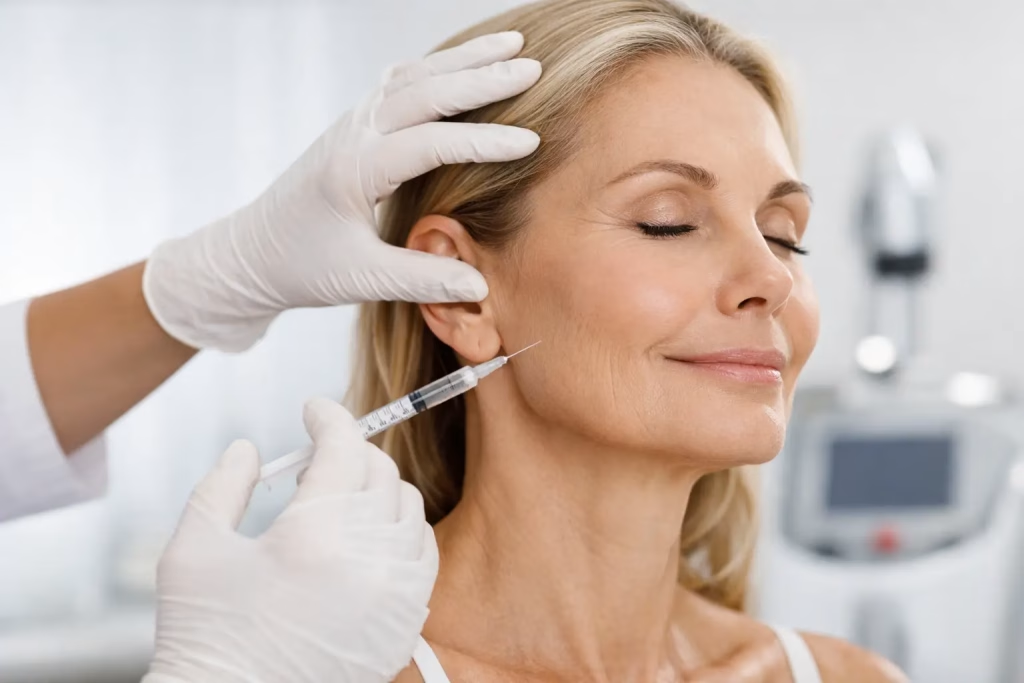
Sagging rarely appears all at once. For most people, it starts as small changes that are easy to miss – a softer jawline, deeper smile lines, skin that no longer rebounds the way it used to, or a tired look that lingers even after rest. An aesthetic treatment for sagging skin & face is not simply about tightening what looks loose. It is about understanding why facial support is changing and choosing the right non-surgical approach for skin, collagen, fat, and facial contours.
The reason this matters is simple: not all sagging is the same. Two people may both feel that their face looks less defined, yet the cause can be very different. One may have early collagen loss and mild skin laxity. Another may be dealing with volume loss, heavier lower-face tissue, sun damage, or a combination of all three. The most elegant results come from treating the true cause, not just the visible symptom.
Why the face starts to sag
Facial aging is structural. Over time, collagen and elastin decline, which reduces the skin’s firmness and elasticity. The fat pads that once gave the face youthful support may shift downward, and facial retaining ligaments become less resilient. Bone structure also changes gradually with age, which affects overall facial support.
Lifestyle accelerates this process. Chronic sun exposure, stress, poor sleep, smoking, frequent weight fluctuations, and dehydration can all contribute to laxity and textural decline. In Singapore’s climate, photoaging is a major factor. Even people who care well for their skin may notice earlier softening around the cheeks, under the chin, and along the jawline because UV exposure compounds natural collagen loss.
This is why a good treatment plan looks beyond the surface. Tightening a face that has lost volume, for example, may not deliver a balanced result. Likewise, adding volume to a face where skin laxity is the main issue can make the lower face feel heavier. Precision matters.
Aesthetic treatment for sagging skin & face: what actually works
When patients ask for non-surgical lifting, they are usually looking for firmer skin, a sharper jawline, less heaviness around the lower face, and an overall fresher expression. Several technologies can address these concerns effectively, but they do so in different ways.
Thermage for collagen remodeling
Thermage uses radiofrequency energy to heat the deeper layers of skin and stimulate collagen remodeling. It is often chosen for patients who want gradual tightening with minimal downtime. The appeal is subtle refinement rather than a dramatically altered look. Skin may feel firmer over time, and the jawline can appear more defined as collagen rebuilds.
Thermage tends to suit mild to moderate laxity. It can be especially attractive for busy professionals who want a treatment with little disruption to their schedule. The trade-off is patience. Results improve progressively, so it is not the best fit for someone expecting an instant lifted effect after one session.
Ultherapy for deeper lifting support
Ultherapy uses focused ultrasound energy to target deeper foundational layers, including the SMAS plane that surgeons address during a surgical facelift. In the non-surgical category, this makes it one of the more compelling choices for lifting support in areas like the brow, lower face, jawline, and under-chin region.
This treatment is often considered when skin laxity is more noticeable or when contour definition has started to soften. It is not a replacement for surgery in advanced cases, but it can produce a meaningful tightening effect in carefully selected patients. Some swelling or tenderness may follow, and final results take time to emerge. For the right patient, that delayed but natural-looking lift is precisely the point.
Injectables and skin boosters as supporting treatments
Not every face that looks saggy needs only an energy device. In some patients, the issue is partly structural volume loss. Strategic injectables may restore support in the cheeks, temples, or chin, which can improve the appearance of sagging indirectly by rebalancing facial proportions.
Skin boosters work differently. They improve hydration quality and skin texture, making the skin look fresher, smoother, and more elastic. They do not lift heavy tissue in the way ultrasound or radiofrequency can, but they can be an excellent companion treatment when crepey or dehydrated skin is making laxity more obvious.
Sylfirm X and regenerative approaches
Where sagging is accompanied by redness, enlarged pores, acne scarring, or textural compromise, regenerative treatments may be part of the conversation. Sylfirm X, for example, can support skin quality while addressing certain vascular and structural concerns. This is useful because firmer-looking skin is not only about lift. Surface refinement changes how light reflects off the face, which can make features appear tighter and more polished.
Choosing the right treatment depends on where the sagging shows up
Facial laxity tends to cluster in specific areas, and each area responds differently.
If the concern is the jawline, lower face, or early jowling, lifting-focused technologies such as Ultherapy or Thermage are commonly considered. If the issue is under the chin, treatment may need to address both skin laxity and localized fullness. If the cheeks look flat or descended, volume restoration may be just as important as skin tightening. If the eyes appear hooded or tired, brow and upper-face lifting strategies become more relevant.
This is why consultation matters. A patient may come in asking for one named treatment because it is trending or familiar, but the better question is whether that treatment matches the anatomy, age, skin thickness, and degree of laxity involved.
What to expect from a doctor-led treatment plan
The most refined outcomes usually come from combination planning. A single treatment can help, but faces age in layers. Skin quality, collagen density, facial volume, muscle activity, and fat distribution all influence how youthful or tired a face appears.
A doctor-led approach typically starts by identifying the dominant issue. If the skin is loose but volume remains good, an energy-based lifting device may take priority. If the face has hollowed and descended, combining lift with selective volumization may be more effective. If the skin barrier is also compromised, maintenance treatments such as Hydrafacial, LDM, or skin boosters can support overall quality and improve how the final result presents.
This layered strategy is especially important for patients who want visible results without looking overdone. Sophisticated aesthetics are not about making every face tighter at all costs. They are about preserving harmony, maintaining natural movement, and restoring definition where it has softened.
What non-surgical treatments can and cannot do
This is the part many clinics gloss over. Non-surgical treatments can improve laxity, contour, and skin quality, but they do have limits. If sagging is advanced, if there is significant tissue descent, or if excess skin is pronounced, surgery may offer the more definitive correction.
That does not make non-surgical treatment ineffective. It simply means patient selection is everything. For mild to moderate laxity, modern devices and injectables can achieve elegant improvement. For more advanced aging, they may still play a valuable role in maintenance, skin quality, or soft refinement, but expectations should be realistic.
Another important distinction is timing. The best non-surgical lifting results often happen when treatment begins before laxity becomes severe. Preventive and early-intervention care generally gives more flexibility and often looks more natural than trying to reverse years of structural decline all at once.
Safety, comfort, and downtime
For many patients, safety is just as important as efficacy. Treatments for sagging skin should be tailored not only to the face but also to pain tolerance, schedule, lifestyle, and skin sensitivity. Some treatments involve little to no downtime, while others may cause temporary swelling, tenderness, or mild redness.
Comfort also varies. Ultrasound-based treatments can feel more intense than superficial facials, and radiofrequency treatments may require thoughtful technique and proper settings for a comfortable experience. In a premium setting such as Kelly Oriental Aesthetic Clinic, the advantage is not only access to advanced technology but also a treatment journey designed around consultation, customization, and aftercare.
That experience matters more than many people realize. When a treatment is performed thoughtfully, with the right energy levels and a clear plan for what comes next, patients tend to feel more confident in both the process and the result.
Signs you may be a good candidate
You may be a strong candidate for non-surgical treatment if you have mild to moderate facial laxity, early jowling, softening around the jawline, under-chin looseness, or a general loss of firmness that makes the face look more tired than before. Patients who want subtle improvement, natural-looking contour, and minimal downtime often do well.
The best candidates also understand that collagen remodeling takes time. These treatments are for people who appreciate refinement, not instant transformation. In many cases, the goal is to look fresher, firmer, and better rested – not obviously treated.
A thoughtful treatment plan for sagging skin should feel bespoke from the start. The right approach respects your facial structure, your timeline, and the level of change you actually want. When those pieces align, aesthetic medicine becomes less about chasing youth and more about restoring definition with precision and grace.
