
Uncategorized
Hydrafacial vs Skin Booster: Which Fits You?
A polished glow before a major event calls for a very different treatment than persistent dehydration, crepey texture, or skin that never seems to hold moisture. That is where the hydrafacial vs skin booster conversation becomes genuinely useful. While both are popular for fresher, healthier-looking skin, they work in very different ways, and choosing well depends on what your skin is asking for.
For many patients, the confusion starts because both treatments are associated with hydration and radiance. But one is primarily a non-invasive resurfacing and cleansing treatment, while the other is an injectable approach designed to improve skin quality from within. If your goal is visible brightness with no interruption to your schedule, one may stand out. If your priority is deeper, longer-lasting hydration and refinement, the other may make more sense.
Hydrafacial vs skin booster: the core difference
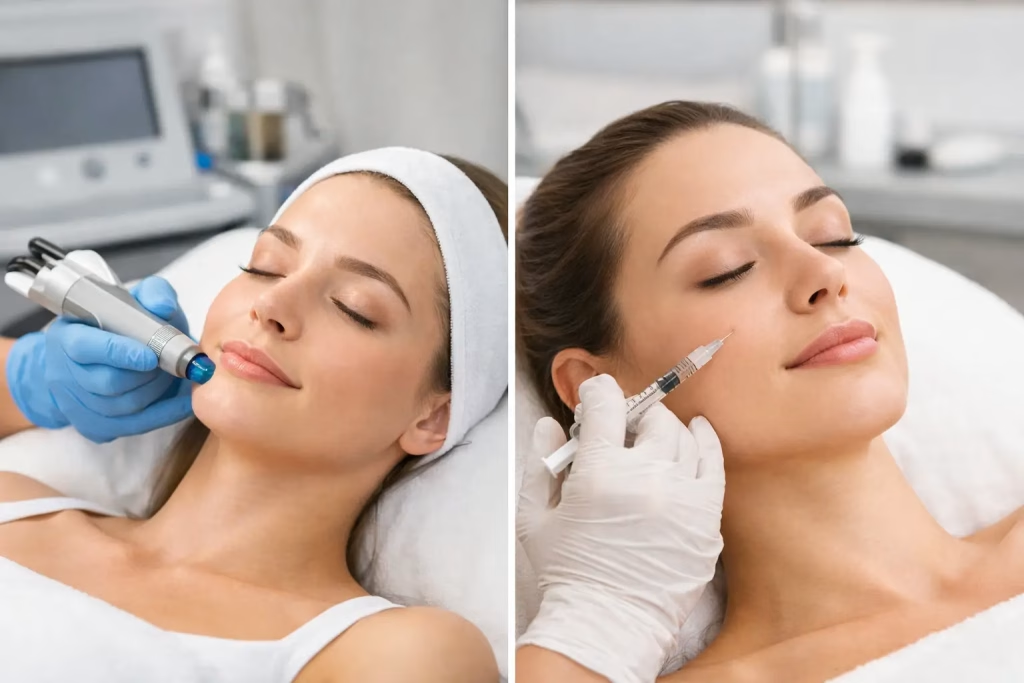
A Hydrafacial is a device-based treatment that exfoliates, clears pores, and infuses the skin with hydrating serums in the same session. It is often chosen by patients who want smoother texture, cleaner pores, and an immediate refreshed look. There is no needle involved, and the treatment feels more like an elevated medi-spa experience than a medical procedure.
A skin booster is typically delivered through microinjections of hyaluronic acid or similar skin-enhancing ingredients into the superficial layers of the skin. Rather than adding volume the way a traditional filler does, it focuses on improving hydration, elasticity, and overall skin quality. The effect is usually subtler at first, then more noticeable over time as the skin becomes plumper and more refined.
That distinction matters. Hydrafacial works from the surface downward. Skin boosters work within the skin itself.
What Hydrafacial does best
Hydrafacial is especially appealing for patients who want skin that looks cleaner, brighter, and more even almost immediately. It combines exfoliation, extraction, and serum infusion in one treatment, which is why many people see it as a reliable monthly reset.
If your skin concerns include congestion, dullness, rough texture, or mild dehydration, Hydrafacial can be a strong fit. It is also a favorite before weddings, work events, travel, or photography because it typically leaves the complexion looking polished without the recovery time associated with more intensive procedures.
There are limits, though. A Hydrafacial does not replace treatments designed for significant acne scarring, deeper wrinkles, skin laxity, or structural volume loss. It is excellent for maintenance and glow, but less transformative if your concern lies deeper in the skin.
Best candidates for Hydrafacial
Hydrafacial tends to suit busy professionals, first-time aesthetic patients, and anyone who wants regular upkeep with minimal disruption. It can also work well for men and women who prefer a discreet treatment with little to no visible recovery.
Sensitive skin patients often appreciate that the treatment can be tailored, though the exact formulation and intensity should still be selected carefully. A proper consultation helps determine whether active acne, rosacea, or a compromised skin barrier calls for adjustments.
What a skin booster does best
If Hydrafacial is about instant polish, a skin booster is about skin quality. The treatment is often chosen when the complexion feels chronically dehydrated, thin, tired, or less supple than it used to be. This is common in skin exposed to air conditioning, stress, frequent travel, UV damage, and the natural decline in collagen and hyaluronic acid that comes with age.
A skin booster does not usually create an immediate dramatic glow in the same way a Hydrafacial can. Its strength lies in gradual improvement. After a series of sessions, the skin may appear more luminous, bouncier, and finer in texture. Fine lines caused by dehydration can soften, and makeup may sit better because the skin holds moisture more effectively.
This option is often favored by patients who want more than a facial but do not want the look of traditional volumizing injectables. It is refined, subtle, and focused on long-term skin rejuvenation.
Best candidates for skin boosters
Skin boosters are often ideal for adults noticing early or moderate signs of aging, recurring dryness, or a loss of smoothness that topical skincare is no longer correcting. They can also be valuable for those whose skin looks fatigued even when they are otherwise well rested.
Because the treatment involves injections, there may be temporary redness, small bumps, or mild bruising after the session. That makes timing important, especially if you have social events or presentations planned.
Which gives faster results?
For speed, Hydrafacial usually wins. Many patients leave the clinic looking more radiant the same day. Pores can appear clearer, the surface feels smoother, and makeup often applies more evenly within a day or two.
Skin boosters are not typically chosen for instant gratification. You may see early hydration after treatment, but the more meaningful improvements tend to reveal themselves gradually over several weeks and often after a course of sessions. If your timeline is short, such as an upcoming event this weekend, Hydrafacial is generally the more practical choice.
If your timeline is longer and your aim is better skin behavior over the next few months, a skin booster may be the better investment.
Downtime, comfort, and maintenance
This is often where the decision becomes clearer.
Hydrafacial is comfortable for most patients and involves little to no downtime. Skin may look mildly flushed for a short period, but many people return to meetings, errands, or dinner plans the same day. Maintenance is often monthly, particularly if your skin is prone to congestion or dullness.
Skin boosters involve needles, so the experience is more medical than spa-like. Numbing cream can improve comfort, but most patients should still expect some temporary after-effects. Depending on the product used and your skin goals, an initial series may be recommended, followed by maintenance sessions spaced farther apart.
Neither treatment is universally better. The better treatment is the one that matches your tolerance for downtime, your expectations, and the depth of correction you want.
Hydrafacial vs skin booster for common skin concerns
For clogged pores, oiliness, and surface congestion, Hydrafacial is often the more logical first step. It actively exfoliates and removes debris in a way skin boosters do not.
For dry, crepey, or aging skin that lacks bounce, skin boosters often offer more meaningful improvement because they target hydration within the skin rather than simply on the surface.
For dullness before an event, Hydrafacial is usually the easier answer. For long-term refinement and a healthier skin texture over time, skin boosters often have the edge.
For sensitive, reactive skin, it depends. Some patients do beautifully with a gentle Hydrafacial protocol, while others benefit more from carefully selected injectable hydration. This is where a doctor-led assessment is especially valuable, because skin sensitivity is not one single condition.
Can you do both?
Yes, and for the right patient, the combination can be very effective.
Hydrafacial and skin boosters are not competing in every scenario. In a well-planned treatment journey, they can complement each other beautifully. A Hydrafacial can keep the skin clear, bright, and smooth at the surface, while skin boosters address hydration and quality within the skin. One supports immediate radiance. The other supports lasting refinement.
The key is sequencing. Treatments should be timed properly based on your skin condition, event calendar, and tolerance for downtime. In a clinic setting that combines doctor oversight with personalized skin planning, such as Kelly Oriental Aesthetic Clinic, this kind of combination approach is often where the most elegant outcomes happen.
How to choose well
If you want a fresh glow, cleaner pores, and no real downtime, start with Hydrafacial. If your concern is deeper dehydration, early aging, or skin that feels less resilient than it used to, a skin booster may be the stronger choice.
And if you are torn, that usually means your skin has more than one need. Many complexions do. The most sophisticated aesthetic decisions are rarely about chasing the trendiest treatment. They are about choosing the treatment that suits your skin today, your lifestyle this month, and your results over time.
Beautiful skin is not always the result of doing more. Often, it is the result of doing the right thing, at the right moment, with a plan tailored to you.
