
Uncategorized
Non Surgical Jawline Contouring Guide
A defined jawline rarely comes down to one issue. For some, the concern is mild skin laxity along the lower face. For others, it is fullness under the chin, weaker chin projection, muscle bulk at the jaw, or gradual collagen loss that softens facial structure over time. A thoughtful non surgical jawline contouring guide should start there – with the understanding that contour is not created by a single treatment, but by identifying what is blurring the frame of the face.
That distinction matters because the best jawline contouring is never generic. A slimmer lower face needs a different approach from a sagging jawline. A patient in their 30s looking for subtle definition will often need something different from a patient in their 50s managing laxity, volume loss, and skin texture at the same time. The most elegant results come from precision, not excess.
What non surgical jawline contouring can really treat
The phrase sounds simple, but jawline contouring covers several concerns that can look similar in photos and in the mirror. Loose skin can create early jowling. Submental fullness can make the chin and neck appear less distinct. A short or recessed chin can weaken side-profile balance, even when body weight is stable. Enlarged masseter muscles can give the lower face a broader, heavier appearance. In other cases, the issue is not fullness at all, but a lack of support from collagen and bone structure.
This is why treatment planning should begin with facial assessment rather than trend-led requests. Asking for a “snatched jawline” is understandable, but medically sound contouring requires a closer look at tissue quality, facial proportions, and how your features move at rest and in expression.
A non surgical jawline contouring guide to the main treatment options
Most non-surgical jawline plans draw from four categories: skin tightening, injectable contouring, fat reduction, and muscle slimming. Each works differently, and each has limits.
Skin tightening for laxity and early jowls
If the jawline has softened because skin is less firm, energy-based tightening treatments are often the foundation. Technologies such as Ultherapy and Thermage are commonly used to stimulate collagen and improve firmness along the lower face and under-chin area.
These treatments are often best for patients who still have reasonable skin elasticity but notice that their facial outline is not as crisp as it used to be. Results are gradual rather than immediate. You may see some early change, but the more meaningful improvement tends to develop over the following months as collagen remodeling occurs.
The trade-off is subtlety. Skin tightening can create refinement, not surgical-level repositioning. If someone has significant heaviness or advanced jowling, expectations need to be realistic.
Injectables for structure and definition
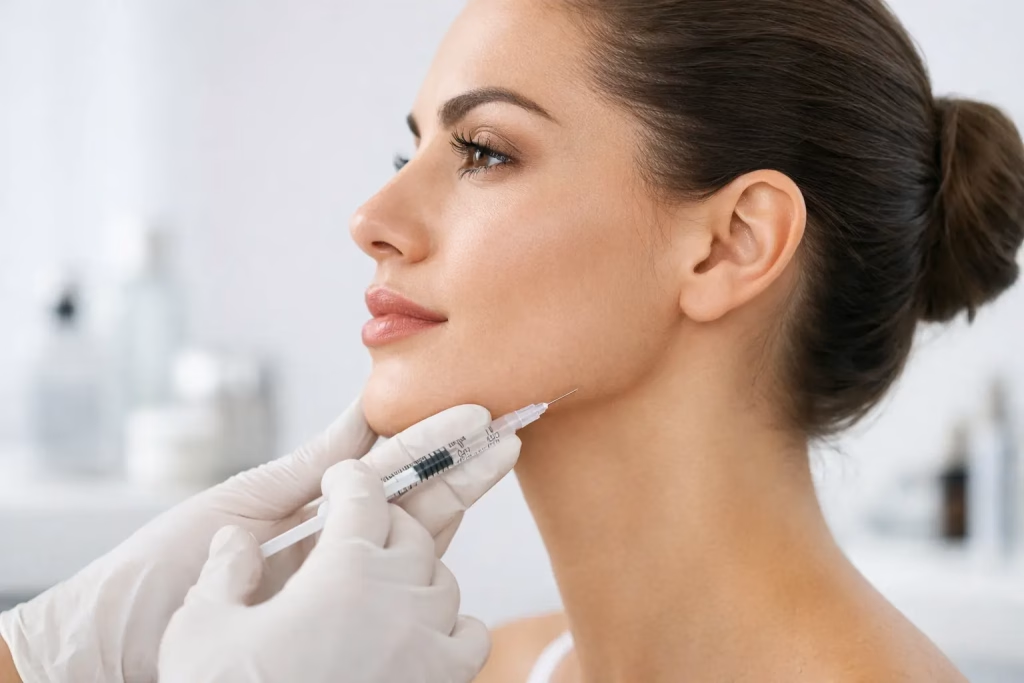
Dermal fillers can be used to sharpen the jawline, improve mandibular angle definition, and support the chin. In the right patient, this can create a cleaner profile and a more balanced lower face without surgery.
This approach is especially useful when the issue is structural rather than purely skin-based. A patient with a weaker chin may benefit from chin projection first, because once the chin is balanced, the jawline often looks more defined overall. Others may benefit from strategic filler placement along the posterior jaw to create cleaner angles.
Technique matters here. Overfilling the jawline can look heavy, unnatural, or masculinized in a face that needs lift rather than volume. The aim should be refinement and proportion, not simply adding product.
Fat reduction for fullness under the chin
When a double chin blunts the angle between the face and neck, contouring may depend on reducing localized fat. Depending on the patient, this may involve injectable fat-dissolving treatments or device-based approaches designed to target submental fullness.
This option is most effective when fullness is caused by fat, not loose skin alone. If skin laxity is also present, fat reduction may need to be paired with tightening so the area looks firmer rather than simply smaller.
Patience is important. Fat reduction usually happens in stages and often requires more than one session. Swelling can also be part of the process, so the social downtime may be longer than many patients expect.
Masseter slimming for a softer lower face
For patients with a broad or square lower face caused by enlarged masseter muscles, neurotoxin injections can slim the jawline over time. This is common in people who clench, grind, or naturally have strong chewing muscles.
This does not sculpt the jawline in the same way filler does. Instead, it reduces bulk at the sides of the face, allowing the lower face to look slimmer and more tapered. Results appear gradually over several weeks.
It is a highly effective option when muscle bulk is the true cause of facial width. If the concern is skin laxity or under-chin fullness, however, it will not address the main issue.
Who is a good candidate for non surgical jawline contouring?
The strongest candidates are patients who want visible improvement, not a dramatic identity change. Non-surgical treatments work well for early to moderate concerns, especially when the skin still has some resilience and the treatment plan is tailored carefully.
You may be a good candidate if you want a cleaner profile, mild lifting at the jawline, improved chin definition, reduction in lower-face width, or better balance between the chin, jaw, and neck. You may be less suited to non-surgical treatment alone if you have significant skin redundancy or are seeking a result that only surgical lifting can realistically produce.
Age is only one factor. Facial anatomy, skin quality, lifestyle, and previous treatments all influence what will work best.
What a personalized plan should include
A proper consultation should look beyond the jawline itself. The cheeks, chin, neck, skin thickness, and bite pattern can all affect the final result. In a premium medical aesthetics setting, the process should feel curated and medically grounded, not transactional.
For example, a patient with mild jowling and weak chin projection may benefit from a combination of chin support and collagen-stimulating tightening. Another with a fuller lower face may need masseter slimming and submental fat treatment rather than filler. Someone with excellent bone structure but poor skin elasticity may see the best payoff from energy-based tightening paired with skin quality treatments.
This is where doctor-led assessment becomes valuable. The face is a connected structure, and treating one area in isolation can produce results that feel incomplete.
Downtime, results, and maintenance
One reason jawline contouring is so appealing is that it can fit into a demanding lifestyle with relatively little interruption. Still, “non-surgical” does not mean zero recovery.
Injectables may cause temporary swelling, tenderness, or bruising. Energy-based treatments may lead to short-term redness or sensitivity, with results emerging over time. Fat-reduction treatments can involve more visible swelling before improvement becomes apparent.
Longevity varies by modality. Filler is temporary and will need maintenance. Neurotoxin for the masseters also requires repeat sessions. Skin-tightening results can last well, but aging continues, so many patients benefit from periodic upkeep. The best plans are often phased rather than one-off.
How to choose wisely in a crowded market
A polished social media result is not the same as a well-executed treatment plan. When choosing a clinic, look for medical credibility, technology that matches your concern, and a consultation process that explains not only what can be done, but what should not be done.
The quality markers are usually clear. You want an assessment that considers facial harmony, a practitioner who discusses trade-offs honestly, and a setting where comfort and safety are treated as part of the standard of care. At a clinic such as Kelly Oriental Aesthetic Clinic, that balance of precision and personalized experience is part of what makes a contouring journey feel considered rather than rushed.
Questions worth asking before treatment
Before committing, ask what is actually causing your jawline concern. Ask whether your result depends on tightening, fat reduction, structure, or muscle reduction. Ask how many sessions may be needed, when you can expect to see change, what downtime is realistic, and how the result will be maintained.
Those questions often reveal whether a plan is bespoke or simply convenient for the provider. A good recommendation should make anatomical sense, even before you discuss packages or timelines.
The most beautiful jawline results are rarely the most obvious ones. They tend to look like better light, better structure, and a fresher silhouette – subtle enough that people notice you look refined, not altered. If you approach treatment with that level of clarity, non-surgical contouring can be a remarkably elegant way to sharpen the profile while still looking entirely like yourself.
