
Uncategorized
Hydrafacial Review: Is It Worth It?
A good Hydrafacial rarely announces itself with dramatic peeling or a week of hiding at home. More often, the appeal shows up the next morning – smoother texture, cleaner-looking pores, makeup sitting better, and skin that looks fresher without looking treated. That is why any honest hydrafacial review should start with expectations: this is not a surgical transformation, but it can be an exceptionally satisfying maintenance treatment when chosen for the right reasons.
For busy professionals and skincare-minded clients, that distinction matters. Hydrafacial has earned its popularity because it offers visible polish with little to no downtime, yet the results depend on your skin concerns, the quality of the treatment protocol, and whether it is being positioned as a quick glow session or part of a more tailored skin plan.
Hydrafacial review: what the treatment actually does
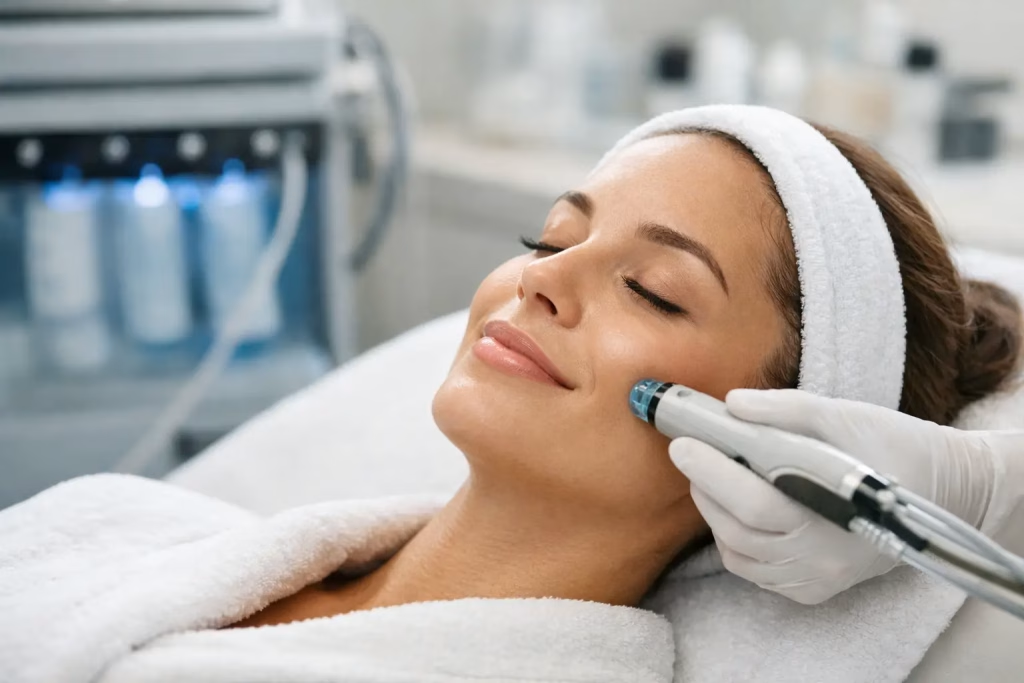
Hydrafacial is a multi-step skin treatment designed to cleanse, exfoliate, extract impurities, and infuse the skin with hydrating serums in one session. The experience is usually more comfortable than traditional manual extractions or harsher resurfacing treatments, which explains why many first-time patients are pleasantly surprised by how gentle it feels.
The treatment uses a device with a vortex-style delivery system. In practical terms, that means dead skin cells are lifted away, debris is loosened from pores, and condition-specific solutions are applied without the scratchy, overworked feeling some facials can leave behind. Most people notice immediate brightness and softness, while concerns like congestion and mild dullness often improve after a single visit.
That said, Hydrafacial is best understood as a high-performance skin health treatment, not a cure-all. It can refine, hydrate, and refresh, but deeper acne scarring, significant laxity, and more stubborn pigmentation often call for a broader medical aesthetic strategy.
Who tends to love it most
If your skin looks tired by the end of the workweek, feels dehydrated in air-conditioned environments, or has visible congestion around the nose and chin, Hydrafacial tends to perform very well. It is especially appealing for people who want their skin to look cleaner and more radiant before an event, after travel, or as part of a regular upkeep routine.
It also suits patients who are cautious about downtime. Not everyone wants the recovery associated with stronger peels or energy-based treatments, particularly when calendars are full and face-to-face meetings are constant. In that setting, Hydrafacial fits beautifully into a modern skincare lifestyle because it offers a polished result without forcing a pause.
For men and women who are new to aesthetics, it can also be a comfortable entry point. The treatment feels approachable, yet when delivered in a medical aesthetic setting, it can be calibrated within a more thoughtful plan for pores, breakouts, dehydration, or early signs of aging.
What results can you realistically expect?
This is where a balanced hydrafacial review becomes useful. The immediate benefits are usually the most impressive: skin often looks more luminous, feels smoother, and appears better hydrated right away. Many patients also notice that blackheads look reduced, makeup applies more evenly, and the overall complexion seems less flat.
If your main concern is dryness, mild congestion, or general skin fatigue, one session may feel rewarding enough on its own. If your concern is enlarged pores, recurring oiliness, or acne-prone texture, consistency matters more. A series often gives better results than a single appointment, especially when supported by the right home care.
The limit is that Hydrafacial does not replace treatments aimed at structural skin change. It will not lift sagging skin the way ultrasound or radiofrequency-based tightening can. It will not remodel acne scars the way fractional resurfacing or certain collagen-stimulating procedures may. It can improve how the skin looks and behaves, but it should not be sold as everything in one room.
The treatment experience: polished, not punishing
One reason patients return to Hydrafacial is the experience itself. The treatment is typically soothing rather than aggressive. You may feel light suction, cool fluid movement, and a sense that the skin is being deeply cleansed without being stripped.
This matters more than it sounds. Treatments that are overly harsh can leave skin inflamed, reactive, or temporarily compromised, particularly in patients already dealing with sensitivity. Hydrafacial tends to strike an elegant balance between efficacy and comfort, which is part of its premium appeal.
In a clinic environment that values personalization, the treatment can be adjusted with boosters, LED support, or complementary recommendations based on what your skin needs that day. That tailored approach is often what separates a pleasant facial from a clinically meaningful skin session.
Pros and cons in a real-world Hydrafacial review
The strengths are clear. Hydrafacial is convenient, comfortable, and immediately gratifying. It is one of the easier treatments to fit into a demanding schedule because there is usually little redness and minimal interruption to daily life. For clients who want skin that looks healthier, fresher, and more refined without dramatic recovery, it checks many boxes.
It is also versatile. Many skin types tolerate it well, and it can work for concerns such as dehydration, mild acne, congestion, and dullness. For patients preparing for weddings, presentations, dinners, or photography, it is a dependable pre-event option when timed properly.
The trade-offs are just as important. The glow is real, but it is not permanent. If you are hoping for lasting correction from one treatment, you may be disappointed. Hydrafacial can also be underwhelming if your issues are deeper than surface texture and hydration. Price matters too. In a premium setting, the value is often tied to treatment quality, customization, and practitioner oversight, but patients should still understand whether they are paying for a true skin strategy or simply a branded facial.
Is Hydrafacial worth it for acne, pores, and pigmentation?
Sometimes yes, sometimes not on its own.
For oily skin and congested pores, Hydrafacial can be an excellent maintenance treatment. It helps clear surface buildup and can leave pores looking less obvious, even though it does not permanently shrink them. Patients with mild acne often appreciate how clean and balanced their skin feels afterward, especially when extractions in standard facials tend to feel rough or inconsistent.
For pigmentation, the answer is more nuanced. Hydrafacial may brighten the complexion and help skin look clearer overall, but melasma and deeper discoloration usually require more targeted interventions. The same applies to post-acne marks that sit below the level of simple exfoliation. In those cases, Hydrafacial can support the skin, but it is not usually the main event.
For sensitive or redness-prone skin, proper assessment matters. Some patients do beautifully with a gentle protocol, while others need a more cautious approach depending on barrier health, rosacea tendencies, or active irritation. This is where a doctor-led or professionally supervised environment becomes especially valuable.
How often should you get it?
For general skin maintenance, many patients do well with monthly sessions. That cadence aligns with the skin’s renewal cycle and helps maintain the smooth, hydrated look people associate with Hydrafacial.
If you are preparing for an event, one treatment a few days before can work well, assuming your skin is already fairly stable. If you are managing congestion, dullness, or ongoing dehydration, a short series may produce a more satisfying result than sporadic appointments.
Still, more is not always better. Skin should be treated according to condition, not habit alone. A refined treatment plan considers season, sensitivity, active breakouts, travel, stress, and what other aesthetic procedures you may be doing.
What makes a Hydrafacial feel premium rather than routine
Technique, customization, and judgment. Those three factors shape the experience more than marketing language ever will.
A premium Hydrafacial should not feel generic. Your skin should be assessed properly, your concerns should guide the protocol, and the treatment should sit within a larger view of skin health rather than being pushed as a standalone miracle. In a clinic such as Kelly Oriental Aesthetic Clinic, that philosophy is what elevates a familiar treatment into a more bespoke experience – one that blends visible results with thoughtful, medically credible care.
If you are choosing where to go, look beyond the promise of glow. Ask whether the treatment is tailored, whether your skin goals are being understood correctly, and whether someone is able to tell you when Hydrafacial is enough and when another treatment would serve you better.
Final verdict
A Hydrafacial is worth considering if you want cleaner, smoother, more radiant skin without downtime and with very little drama. It is one of the more reliable treatments for instant polish, especially for modern patients who want results that fit neatly into real life.
The most satisfying results happen when expectations are elegant and realistic. Think refinement, hydration, and maintenance rather than reinvention. When chosen well and performed with care, Hydrafacial can be less about chasing a trend and more about keeping your skin consistently, quietly at its best.
